
Published: 2026/11/4 19:33 Updated: 2026/11/4 20:26
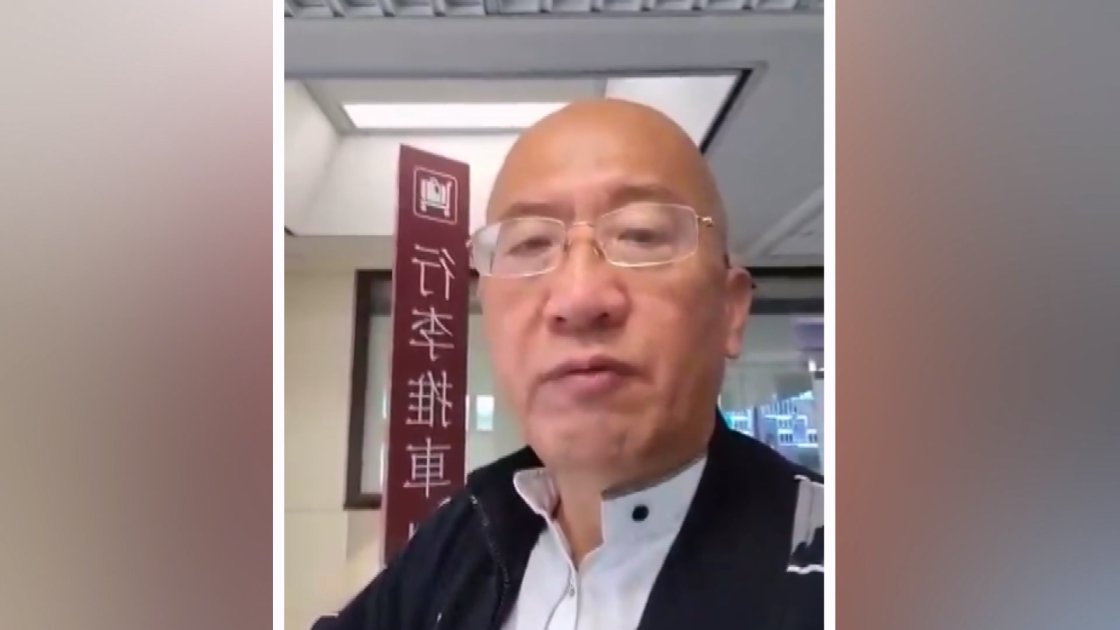
Former Chinese state broadcaster CCTV presenter Cheng Wanjun, who transited through Taiwan on the 2nd after arriving from Thailand, jumped from his flight after landing at Taoyuan Airport, citing persecution by the Chinese Communist Party. He filmed a video appealing for help, asking Taiwan to provide short-term humanitarian assistance and to help him move to a third country. However, after the National Immigration Agency consulted the Mainland Affairs Council, authorities determined that Cheng had not presented specific evidence, did not meet the criteria or qualifications for assistance, and had been sent back to Thailand.
Former CCTV presenter Cheng Wanjun said: “In 2019, because I commented at a unit meeting that a monarch had lost his nation, someone recorded it and reported me. The CCP leadership ordered a thorough investigation, the entire unit was purged, and I personally endured six years in prison.”
In a video recorded at Taoyuan Airport appealing for help, the man, Chinese media professional Cheng Wanjun, said that he arrived in Taiwan from Thailand on the 2nd to transit, but jumped from the flight after landing. He said he had made remarks including the “monarch who lost his nation” comment, was sentenced in China, and after his release went into exile overseas. Fearing deportation risk in Thailand, he decided to seek political asylum in Taiwan.
Cheng said: “To avoid being politically persecuted by the Chinese Communist authorities a second time, I had no choice but to move to Taiwan to seek short-term humanitarian protection.”
Cheng hoped to stay in Taiwan temporarily, with Taiwan assisting his relocation to a third country. However, after the National Immigration Agency consulted the Mainland Affairs Council, it concluded that Cheng did not meet the criteria or qualifications for assistance. It said his claim of persecution could not be verified, that no other third-party evidence supported it, and that he could move freely in China and was not subject to restrictions on personal liberty. It therefore decided to return him to Thailand under existing procedures.
Huang Chen-pang, a senior specialist at the Immigration Agency's border affairs brigade, explained: “The individual refused to cooperate, resisted strongly during boarding, and engaged in self-harm. The Immigration Agency therefore took the necessary measures to maintain flight safety.”
There have been several earlier cases of Chinese nationals seeking humanitarian protection in Taiwan, but the follow-up arrangements have varied. These include the case in September of this year (2026), when Chinese human rights lawyer Wang Xiahong sought help in Taiwan and the government granted him temporary resettlement for three months. In August 2024, a family of three from China, including writer Deng Liting, jumped from their flight in Taiwan seeking help, and were sent to a safe third country according to their own wishes.
Tseng Chien-yuan, standing director of the Chinese Democracy Academy Association, said: “So I think the government’s concern is that if this precedent is set, many people may take the same approach and come to Taiwan, which could place a burden on the government’s management or on national security.”
Tseng Chien-yuan pointed out that Taiwan has no refugee law, so political asylum reviews lack proper legal procedures, and he called for a refugee processing system to be established as soon as possible. As for resettlement to third countries such as those in Europe and the Americas, he hoped it could continue to be coordinated through administrative practice.