
By BBC News Mundo
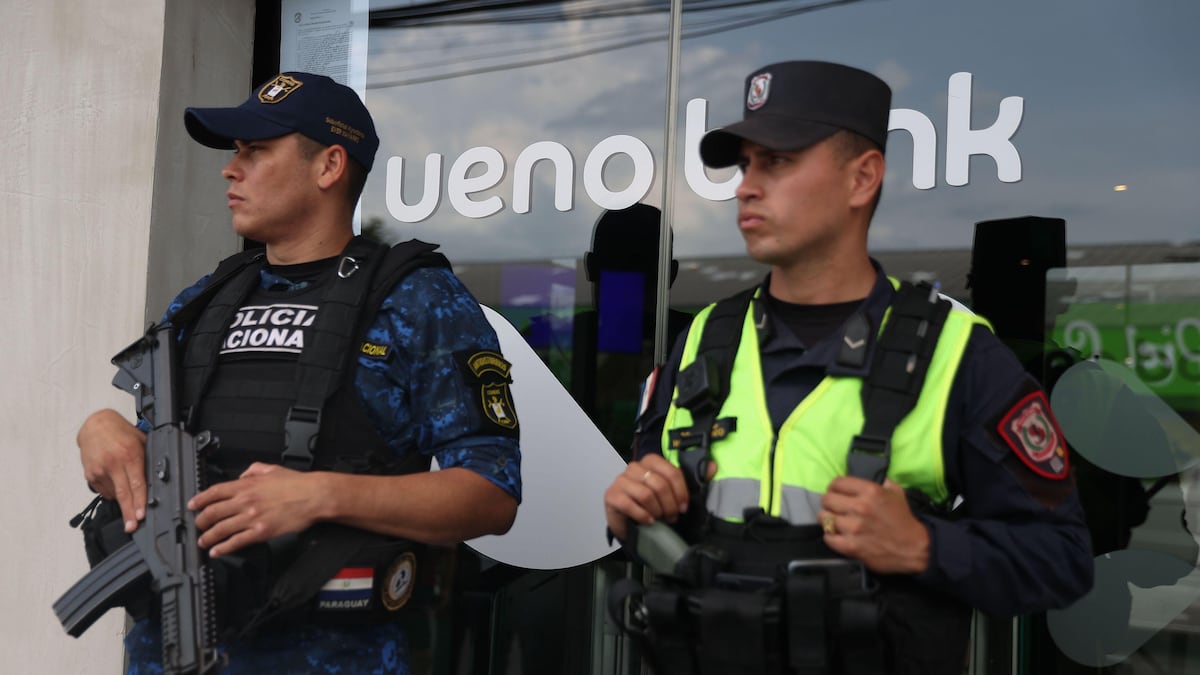
Paraguay's Central Bank (BCP) ordered on Tuesday the intervention of the digital bank Ueno Bank after detecting that its solvency ratio had fallen to less than 50% of the required minimum, a crisis that freezes state funds and the savings of millions of individual clients and retirees
The decision, announced early on Tuesday, was adopted unanimously by the central bank's board and immediately led to the total shutdown of the institution's services.
Users reported that they could not operate through ATMs or online banking.
“We proceeded to close the institution, so the app, the cards and no service of the entity is active as of this date,” confirmed Liana Caballero, a member of the BCP board, at a press conference.
Ueno is one of the country's leading banks and, according to its own figures, has 3 million clients, equivalent to 60% of Paraguay's adult population, and manages more than US$800 million in public money, including about US$380 million invested by the state pension fund, the Instituto de Previsión Social.
The central bank activated the resolution process, under which all of the bank's assets and liabilities are frozen until it is determined what will happen to them and how far the institution's obligations will be covered.
Central bank president Carlos Carvallo said that “the institution will report on the mechanisms for the recovery of funds by savers covered by the deposit guarantee.”
Paraguay's Deposit Guarantee Fund covers savings up to 228 million guaraníes per person (about US$38,200).
Clients whose balances exceed that amount will have to wait for the final balance sheet prepared by the Superintendency of Banks.
Carvallo insisted that the situation at Ueno Bank is “a specific and isolated event” and said that Paraguay's financial system as a whole “remains solid and healthy.”
Scandal in the country
The intervention is the culmination of a scandal that has overshadowed the government of President Santiago Peña since he took office in 2023.
Shortly after taking office, he appointed Carlos Carvallo, then chief executive of Ueno Bank, as president of the Central Bank of Paraguay, which critics denounced as a conflict of interest.
Although the central bank said Carvallo had avoided taking part in the supervisor's decisions about the institution whose board he had sat on, Carvallo himself said on Tuesday that he had signed his resignation but would remain at the head of the central bank until the Ueno resolution process concluded.
“My resignation is signed, more than ever for the simple reason that the central bank needs calm to do its work,” he said at a press appearance.
Shortly after news of the intervention and the freezing of clients' assets became known, Paraguayan media reported the detention of several of the bank's executives, including its president, Miguel Vázquez.
The intervention quickly had political repercussions.
Pedro Alliana, Peña's vice president, announced that he is putting his candidacy for the presidency for the ruling Colorado Party “on pause” because of the need to “fix the house” after what happened with Ueno Bank.
Ricardo Estigarribia, a presidential pre-candidate for the Authentic Radical Liberal Party (PLRA), the main opposition party in Paraguay, announced that his group would push for impeachment proceedings against Peña and Alliana in Congress.
“What happened is very serious. They looted the country, they looted the retirees' money, and this cannot be left like this. There cannot be impunity,” Estigarribia said in statements cited by the newspaper ABC.
How it came to this and what happens now
Carvallo reported that the decision to intervene the bank was made after verifying that its solvency had fallen below the legal minimum, and after months of investigation revealed that loans had been granted to companies linked to the group that owns the institution.
The BCP announced that it will deploy officials to take control of the institution and will impose sanctions on those responsible.
However, the central bank did not guarantee that all affected parties will be able to recover all of their deposited assets.
Liana Caballero, of the central bank board, said: “On the domestic side we have to carry out the balance of excluded assets and liabilities to see how far it could be covered when it exceeds 75 minimum wages,” the amount that the Deposit Guarantee Fund guarantees by law.
“The BCP will deploy its full strength so that the process is as fast as possible, and the priority will always be small savers,” Carvallo said.