
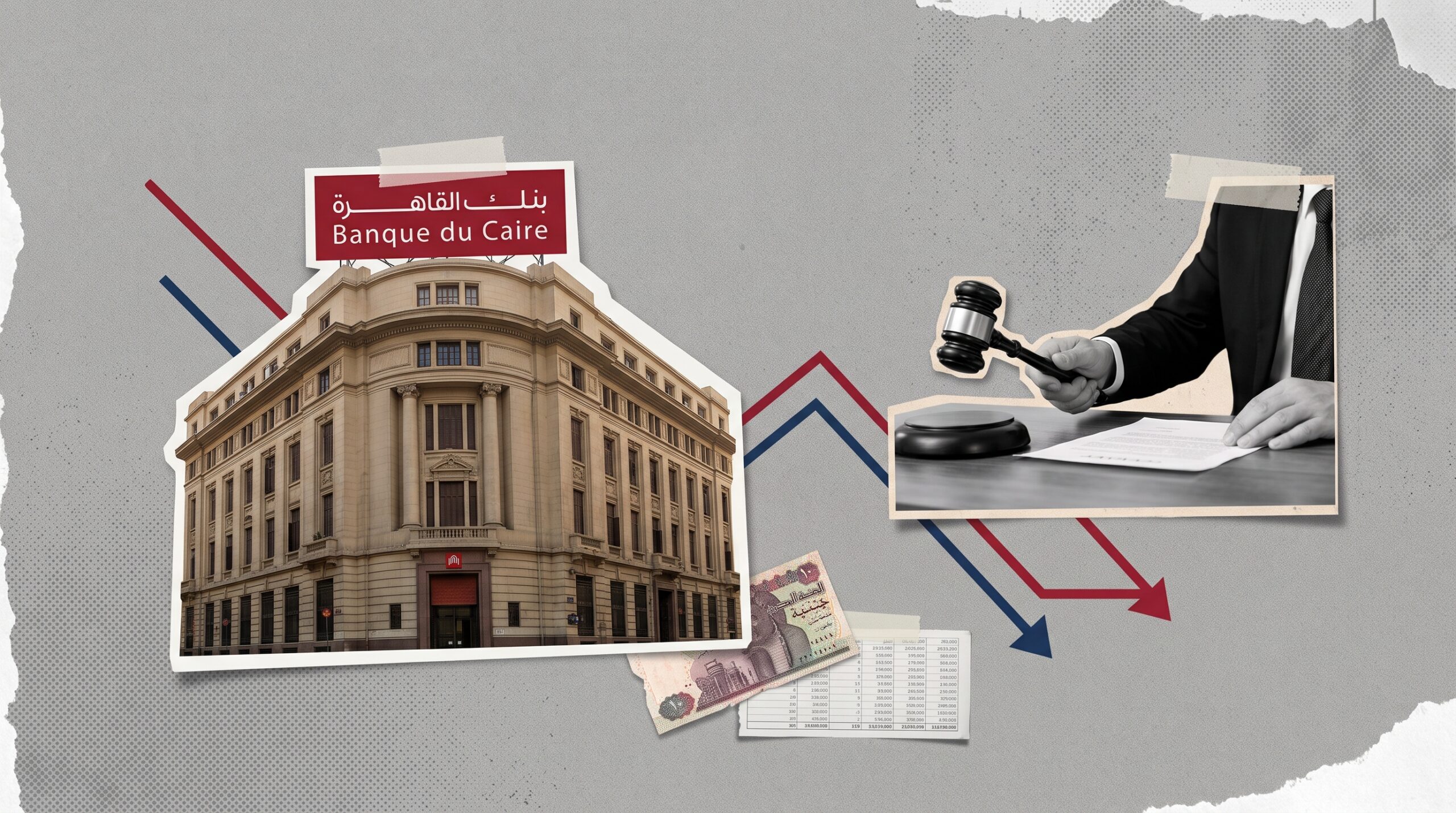
The Egyptian government announced on Monday, 2 November, the start of trading in Banque du Caire shares on the Egyptian Exchange, following a public and private offering of 45% of the bank's capital. The offering was worth about EGP 36.37 billion, making it the largest offering by value in the history of the Egyptian capital market, at a price of EGP 5.30 per share. This values the bank at about EGP 80.8 billion.
The state sold the stake through Banque Misr, which it owns and which owns Banque du Caire. The announcement of the offering stated that Banque Misr, the existing shareholder, was selling shares 'from the existing shares it owns' and described it as the 'selling shareholder'. Banque du Caire issued no new shares, which means the proceeds go to Banque Misr rather than to Banque du Caire's capital. Banque Misr retains a 55% stake. At the central bank's exchange rate on the day of the offering, EGP 55.51 to the dollar according to the official bulletin, the proceeds equal about $655 million, and the bank's full market value equals about $1.46 billion, according to Zawya Thalitha's calculation.
The move comes about nine years after the bank's shares were temporarily listed on the exchange, as part of the government's privatisation programme. The state says the programme aims to expand private-sector participation in ownership of public assets and strengthen the role of the capital market in attracting investment. The offering initially targeted the sale of 30% of the bank's capital, about 4.575 billion shares, before the share was raised to 45% due to strong investor demand. The offered shares were split between qualified investors and the public, with the private placement taking 95% and the public offering 5%.
A well-informed government source told Zawya Thalitha that financial pressures and the government's growing need for cash explain the timing of the sale of a stake in Banque du Caire, given the difficulty of raising sufficient funding from traditional sources. The source also said the government seeks to implement the targets of the State Ownership Policy Document, which aims to reduce the state's presence in a number of economic activities and open more space for private-sector investment.
The source explained that the government worked to attract international investors from Europe and the Gulf states to the deal, and held roadshows in European and Arab markets to introduce the offering and reach funds and investment institutions interested in the Egyptian market. According to the source, these efforts are not limited to marketing the Banque du Caire offering. They also aim to widen the pool of potential investors for upcoming offerings and secure foreign cash inflows through the sale of stakes in state-owned assets.
According to the source, this approach extends to the broader government offering programme. The government is preparing to announce, in December, the listing of about six companies on the exchange, as part of its plan to exit stakes it owns. The source named three of them: Misr Life Insurance, Al Nasr Glass and Crystal Manufacturing, and the Transport Vehicles and Equipment Manufacturing Company (Yaiat). The government aims to proceed with the remaining offerings according to each company's readiness, valuations and market conditions.
Regarding the future of the relationship with the International Monetary Fund, the source confirmed that the government is already studying a proposal to begin a new programme with the Fund after the current one ends. However, the programme would not be as large as previous ones, given the limited alternatives available for providing liquidity and covering financing and deficit needs. The source linked this approach to mounting pressure on public finances and the rising cost of the war in the region and its economic repercussions, which are aggravating financing needs and narrowing the government's room for manoeuvre.
The source expects the government to take practical steps along this path early next year, but stressed that the matter is still under study and consultation, and has not yet reached an agreement or formally announced negotiations.
The Government Celebrates
As trading began on Monday morning, the Egyptian Exchange held an official ceremony to mark the start of trading in Banque du Caire shares on the main market. Attending were Prime Minister Mostafa Madbouly, Central Bank Governor Hassan Abdullah, Financial Regulatory Authority Chairman Islam Azzam, Egyptian Exchange Chairman Omar Radwan, and leaders of Banque Misr and Banque du Caire, along with a number of banking officials.
The ceremony followed the completion of the offering of 6.8625 billion shares, representing 45% of the bank's total capital, at a final price of EGP 5.30 per share, for a total value of EGP 36.37 billion. This makes it the largest operation in the history of the Egyptian Exchange in terms of nominal value in pounds. Banque Misr retains a 55% stake in Banque du Caire's capital, which ensures continued state control of its management through the main shareholder.
During the ceremony, Madbouly described the offering as a practical implementation of the State Ownership Policy Document and proof of the government's seriousness in completing its government offering programme and broadening the ownership base of companies. He said the operation comes amid earlier doubts about the government's commitment to implementing the programme, and considered its completion an important step in the path of economic reform and evidence of the Egyptian capital market's ability to absorb large offerings and attract domestic and foreign investment.
The prime minister noted that the implied market value of Banque du Caire exceeded EGP 80 billion, while the value of the offered shares reached about EGP 36.37 billion. He said these figures reflect the strength of the bank's financial position and the soundness of the Egyptian banking sector. He affirmed the government's continued implementation of the offering programme, aiming to raise the efficiency of companies, strengthen their competitiveness, attract more foreign investment and expand partnership with the private sector.
In the same context, Financial Regulatory Authority Chairman Islam Azzam said the listing of the bank represents an important stage in efforts to improve the efficiency of managing public assets, broaden the ownership base, and attract investors capable of developing assets, as well as increase market capitalisation and deepen the capital market. He explained that the offering procedures included reviewing the disclosures and data in the prospectus, the aspects related to the fair value of the share, and fulfilling the regulatory and legal requirements for listing and trading.
Azzam reviewed the bank's financial indicators, noting that total assets reached EGP 533 billion at the end of 2025, loans reached EGP 258 billion, customer deposits reached EGP 401 billion, and net profit reached EGP 16.1 billion, with an annual growth rate of 30%. The capital adequacy ratio reached 22.06%. Officials used these indicators to confirm the strength of the bank's financial position and its investment appeal.
In the authority's assessment of the deal's impact on the capital market, Azzam said the listing of Banque du Caire adds market value estimated at about EGP 80.8 billion, equal to nearly 2.1% of the market value of companies listed before the listing. It also increases the diversity of sectors represented on the exchange and strengthens its ability to attract investment. He stressed that the authority's role was not limited to completing the offering procedures, but included protecting investor rights, ensuring disclosure and transparency, and equal opportunity, as well as reviewing aspects related to the fair value of the share.
At the central bank level, Governor Hassan Abdullah said the start of trading in Banque du Caire shares reflects confidence in the offering and in the Egyptian banking system. He considered completing the operation the culmination of efforts lasting years, in which the state, the central bank and Banque du Caire's management took part. He thanked the entities that contributed to the deal's completion, and said the coming period may bring surprises related to new offerings, without disclosing details.
Egyptian Exchange Chairman Omar Radwan said the listing of the bank represents a new phase in the capital market's journey. He noted that the offering attracted more than half a billion dollars transferred from abroad, in addition to domestic demand from institutions and individuals. He pointed out that the public tranche was oversubscribed more than 27 times, with purchase orders exceeding 9.28 billion shares. He considered the strong demand a sign of investor confidence in the Egyptian economy and the market's capacity to absorb large offerings. He also spoke of the exchange's plans to develop new financial instruments and attract more individual and institutional investors, as well as regional and international investment funds.
Among the messages officials emphasised during the ceremony was the participation of international development finance institutions in the offering, led by the International Finance Corporation and the European Bank for Reconstruction and Development. Each signed as a principal investor, taking a stake of 15.74% of the private placement, with investments totalling about $200 million according to the published deal data. The central bank governor said the participation of the two institutions reflects confidence in the Egyptian banking sector, while the exchange chairman cited the volume of money transferred from abroad as an indicator of the Egyptian market's ability to attract foreign investment.
Foreign investors were not limited to the two institutions. According to Enterprise, the offering prospectus revealed four funds that committed up to $256 million: the British hedge fund Helicon, with about $100 million; the British fund Redwell, with about 490.4 million shares; Sustainable Capital, based in Mauritius, with about 784.7 million shares; and the Emirati fund Al Waha Investment, with about 395 million shares. Banque du Caire CEO Hossam Abaza said the offering saw participation from foreign, regional and Gulf investment institutions, without naming them. He said the private placement was covered about six times, and rose to 19.8 times after excluding orders from the main investors.
How Did the Stock Move in the First Session?
In trading, the share rose noticeably in the first minutes of the session, climbing by about 4.7%