
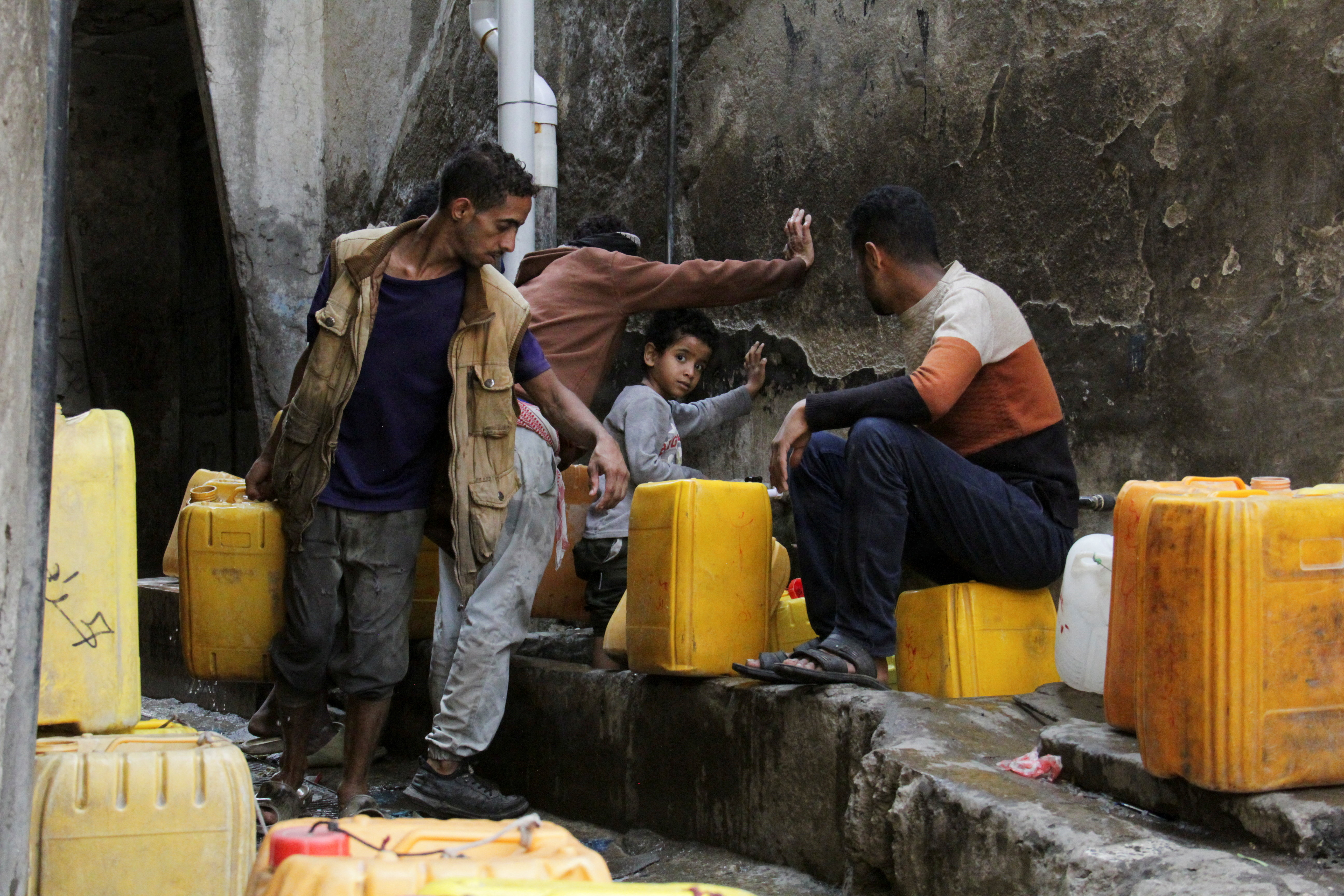
"Yemen was once called 'Arabia Felix'", says Samer Abdel Jaber, regional director of the UN World Food Programme (WFP).
"That is why it is so terrible to see what is happening in the country now", the director adds, when Danwatch meets him at the UN city in Copenhagen.
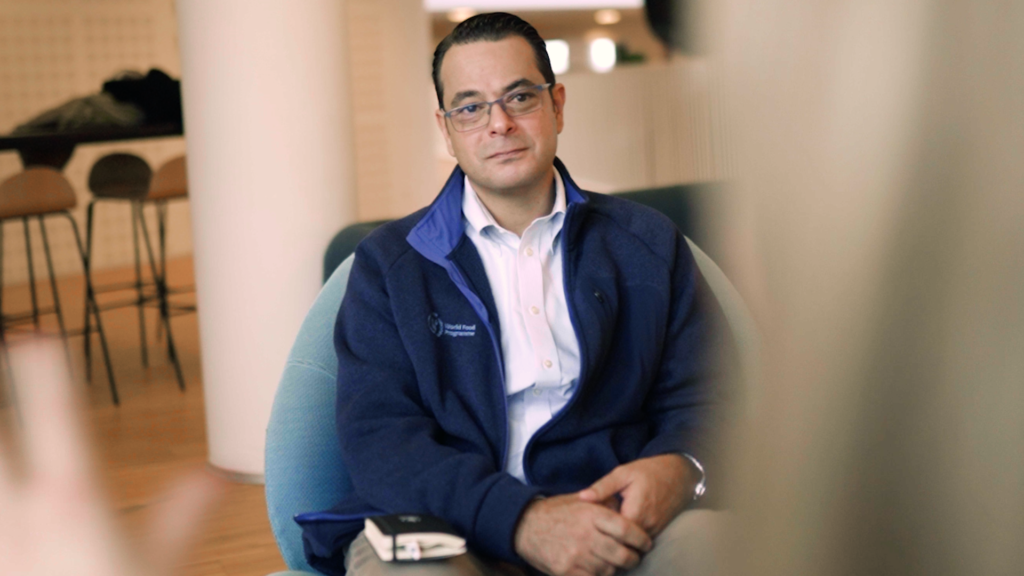
"In southern Yemen we have had to cut the number of food aid recipients from 3.7 million to just 1.5 million people", Samer Abdel Jaber, UN director, tells Danwatch. Photo: Lucas Ørsted
While most Danes are on autumn holiday, Samer Abdel Jaber is in Denmark to, among other things, speak with the Danish Parliament's Foreign Affairs Committee about the current situation in Yemen.
After a decade of one of the world's worst humanitarian crises and a resumption of the war since the summer, the country now faces a new, critical turning point.
The situation in Yemen's third-largest city, Taiz, which is under Houthi blockade, is causing deep concern within the UN system.
"Taiz has been surrounded by the de facto authorities (the Houthi movement, ed.) in northern Yemen. This means that 600,000 people whom we have supported have been completely cut off. We can neither get humanitarian aid nor commercial goods in", explains Samer Abdel Jaber.
In recent months, fighting between the Houthi movement on one side and the Saudi-backed Yemeni government on the other has escalated, and WFP estimates that up to 200,000 people have been displaced within the country in the past month.
"WFP is working around the clock to find a humanitarian corridor before local food stocks run out completely", stresses Samer Abdel Jaber.
Neutrality under pressure
Beyond the acute crisis, the UN and its agencies also face a dilemma, where the limits of their principles and neutrality are being pushed to the extreme.
For how do you help a population when those you must negotiate with also use food as a weapon or directly attack humanitarian partners?
Danwatch has previously uncovered how Danish aid can become a tool for the warring parties in Yemen.
By mapping where international emergency aid, including Danish aid, ends up in the country, Danwatch was able to show how a large share lands in the hands of the Houthis.
Experts warned at the time that the rebel movement misuses emergency aid, among other things to recruit child soldiers.
"Neutrality in humanitarian work is becoming more and more difficult to protect. We are directly shot at in many of the areas where we operate. This makes it extremely difficult for us to negotiate access", admits Samer Abdel Jaber, adding that WFP faces similar problems in Gaza, among other places.
When asked whether warring parties in the global conflicts systematically destroy civil society's food systems as a deliberate war strategy, the director answers:
"I have no basis for saying whether it is deliberate. I can only observe that we see the consequences of the destruction when our own convoys and warehouses are attacked".
Last year WFP lost access to northern Yemen, and today 72 UN staff, including 37 from WFP, are still being held by the Houthis.
When WFP negotiates with local authorities for access to starving civilians, it is thus negotiating with the same actors who hold its own colleagues hostage.
At the UN city, Danwatch asks how WFP balances this dilemma.
"I do not wish to talk about that", comes the reply from Samer Abdel Jaber, who stresses that it concerns the safety of the organisation's staff in the country.
The hungry left behind
Hostage-taking and blockades are not the only challenges in Yemen, however. Declining international donations are forcing WFP to set priorities on the ground.
"In southern Yemen we have had to cut the number of food aid recipients from 3.7 million to just 1.5 million people", the director says, and continues:
"We have to target very strictly, but we know full well that the people we cut off still have an urgent need for food".
To handle the new wave of internally displaced people, the organisation has had to take an emergency loan from the UN's internal crisis account, which is partly funded by donations from Denmark, while it waits for more permanent funds to hopefully arrive.
Samer Abdel Jaber stresses that the unrest in the country is not confined to problems within Yemen's borders, but has also created instability in a wider perspective.
"Attacks on logistical hubs such as the Bab al-Mandeb strait have been a contributing factor to the global food price index now being higher than in 2022, when the war in Ukraine triggered a violent price shock on world markets", he says, referring to calculations made by the UN Food and Agriculture Organization (FAO).
With higher food prices and the severe destruction of local infrastructure, WFP says it will take decades to rebuild Yemen's ability to feed itself.
In other words, the outlook is long before fortune will smile on Yemen again.
"But we must remain hopeful", concludes Samer Abdel Jaber.