
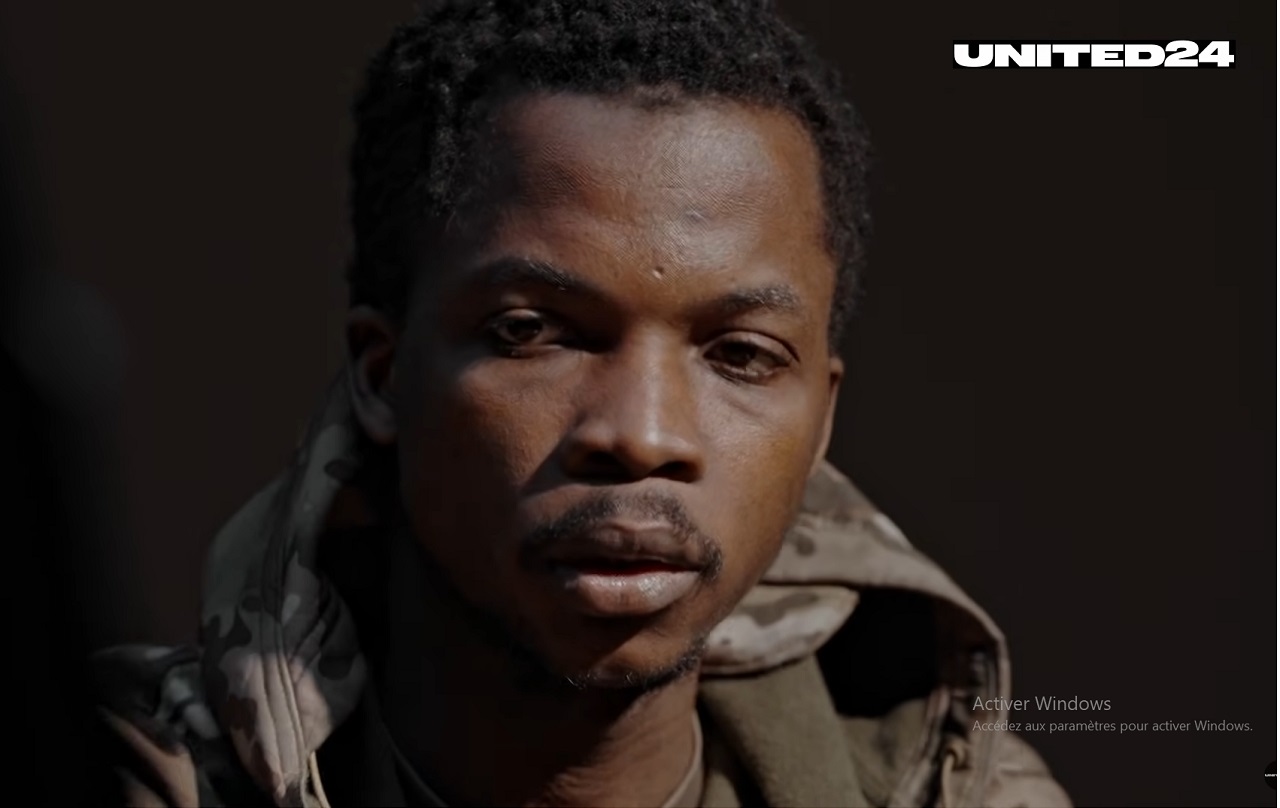
As Lomé and Moscow accelerate their cooperation at every level, young Togolese find themselves drawn into a distant war that exceeds them.
Summer 2026. Images of torrential rain flooding several neighbourhoods of Lomé are circulating on social media and on the front pages of local newspapers. In the capital, the emergency is the flooded streets. Yet at the port, another development is drawing the attention of specialists in this West African country of 9 million people. The Mikhail Britnev, a cargo ship flying the Russian flag and targeted by US sanctions, docked on 9 July. Satellite images suggest it is carrying military vehicles. A few days later, a column of armoured vehicles and trucks crossed Togo, then Burkina Faso, heading for Mali. According to the weekly Jeune Afrique and other local sources, the vehicles are intended for Malian forces and their Russian allies.
In recent years, Togo, a former German colony and then a French one from 1914, has become fertile ground for Moscow's expansion in the Gulf of Guinea. After the Sahel, where Wagner and now the Africa Corps, which operates under the Russian Ministry of Defence, have been widely deployed, Russia is seeking to make the country and its Atlantic coastline a foothold in the region.
“Togo is an experimental field in its relations with both France and Russia,” says Folly Ékoué Gada, a historian and lecturer at the University of Lomé. “Lomé has never made the severing of diplomatic relations its mode of action,” he continues. “And today the country is seeking to diversify its partners because of its security needs.”
Like its coastal neighbours in West Africa, the country faces the spread of jihadist groups from the Sahel. In the north, attacks have intensified since 2022, particularly in the Savanes region, on the border with Burkina Faso. Between January and July 2025 alone, 15 attacks attributed to the Group for the Support of Islam and Muslims (JNIM), affiliated with al-Qaeda, killed 62 people, including 54 civilians and 8 soldiers, according to Togolese Foreign Minister Robert Dussey.
Yet Togo has chosen to maintain close ties with the juntas of Mali, Burkina Faso and Niger, despite coups and regional sanctions. By positioning itself as the preferred bridge to these Sahelian regimes, which are already aligned with Moscow, Lomé was preparing its own transformation.
Masked diplomacy and security opacity
On 19 November 2025, under the gilded splendour of the Kremlin, Togolese President Faure Gnassingbé shook hands with his Russian counterpart, Vladimir Putin. The photograph marked a bilateral military cooperation agreement and confirmed the shift. Long a pillar of Françafrique, Togo now openly displays its alignment with Moscow.
Behind this turn, economic survival is driving the manoeuvre. The port of Lomé, a vital maritime outlet for the landlocked Sahel, accounts for 30 to 40% of the country's activity. To preserve its quays, the Togolese government has become the logistical facilitator of the juntas, even at the cost of opening the way for Russian cargo and strategic interests.
“In Lomé, Ankara and Moscow, there is complete silence on troop numbers and missions,” an opposition representative complains, denouncing “the opacity surrounding these strategic decisions and the abuses that may follow” in light of the alleged presence of hundreds of Russian paramilitaries in the north of the country. Faure Gnassingbé, son of the late General Eyadéma, remained in his father's shadow until the military put him at the head of Togo in 2005. Twenty-one years later, he continues to cultivate his art of secrecy, which has become a mode of governance. Defence agreements are signed behind closed doors, armoured columns move under the radar, and diplomacy proceeds masked. This opacity shuts down all public debate and casts a heavy shadow over the realities of a country running out of breath.
Source: Le Point