
The Jakarta Composite Index (IHSG) fell 16.7% in October 2026 to 5,057. The Financial Services Authority (OJK) acknowledged that the correction followed an announcement by MSCI.
The announcement opened a consultation on a plan to reclassify Indonesia's stock market from an emerging market to a standalone market. The OJK said the correction was a consequence of various steps to improve the integrity of Indonesia's capital market.
OJK Chairwoman Friderica Widyasari Dewi said Indonesia's capital market had shown gradual recovery in the third quarter of 2026 despite global uncertainty.
The IHSG rose 7.58% quarter on quarter (qoq) as foreign funds returned to the domestic stock market, particularly in July and August.
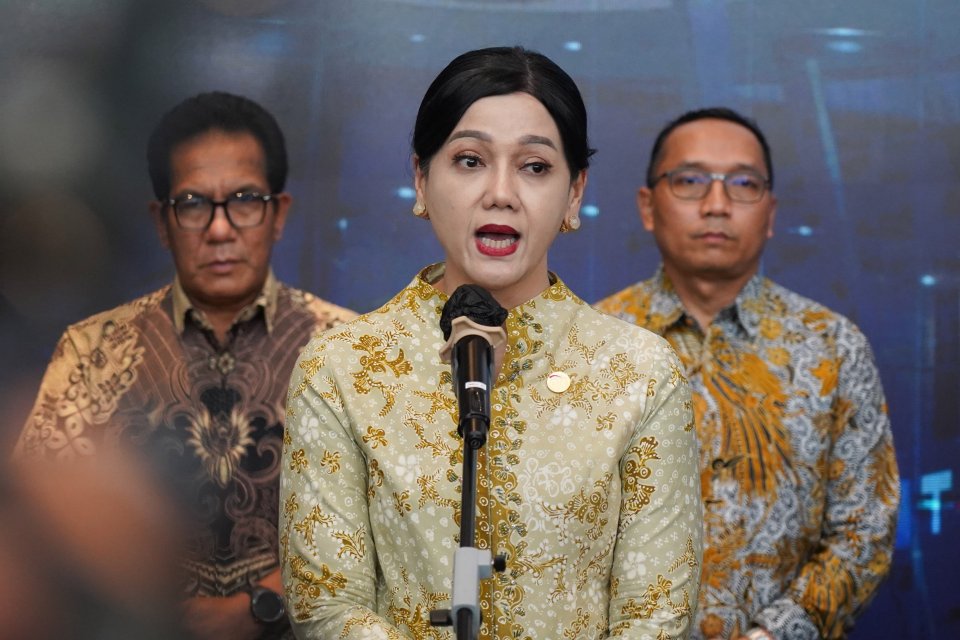
"In October 2026, the IHSG corrected after the MSCI consultation announcement. As of 30 October 2026, the IHSG closed at 5,057, down 16.7% month to date," said Friderica, who is popularly known as Kiki, at a press conference of the Financial System Stability Committee (KSSK) at the Bank Indonesia building on Tuesday (3/11).
Nevertheless, Kiki said several indicators of the domestic capital market still showed positive developments amid market turbulence. Corporate interest in raising funds through the capital market also remained high.
As of 28 October 2026, funds raised in the capital market reached Rp 202.04 trillion. This was dominated by debt securities and sukuk (EBUS) issuance worth Rp 150.43 trillion.
In addition, the investor base continued to grow. The number of single investor identification (SID) accounts reached 33.36 million as of 26 October 2026, up 63.94% year to date (ytd).
Meanwhile, the OJK said the investment management industry remained relatively stable. The net asset value (NAV) of mutual funds reached Rp 640.05 trillion as of 27 October 2026, up 0.46% month on month. This growth was supported by net inflows of Rp 14.11 trillion during October.
Meanwhile, pressure on the stock market continued through trading on Tuesday (3/11). The IHSG closed down 3.78% at 4,904.
A number of large-capitalisation stocks, particularly from the banking sector, were the main drag on the index. Shares of PT Bank Central Asia Tbk (BBCA) fell 2.81% to Rp 4,840. Shares of PT Bank Rakyat Indonesia Tbk (BBRI) slumped 5.67% to Rp 2,660, while PT Bank Mandiri Tbk (BMRI) dropped 2.97% to Rp 3,590.
Pressure also came from PT Alamtri Resources Indonesia Tbk (ADRO), whose shares fell 4.53% to Rp 2,320.
Responding to the weakness in the IHSG, Kiki said developments in Indonesia's capital market cannot be separated from global market dynamics. According to her, geopolitical conditions, inflation, and expectations regarding interest rates also influenced the movement of the index.
She said the current correction of the IHSG also needs to be viewed in the context of the structural reforms underway in the capital market. Kiki likened the process to a detoxification effort to remove practices considered unhealthy from the capital market.
"Of course we must also look at the fundamentals. As for the fundamentals, if we look at the performance of issuers in the second quarter, which I mentioned earlier, the performance was very good," Kiki said.