
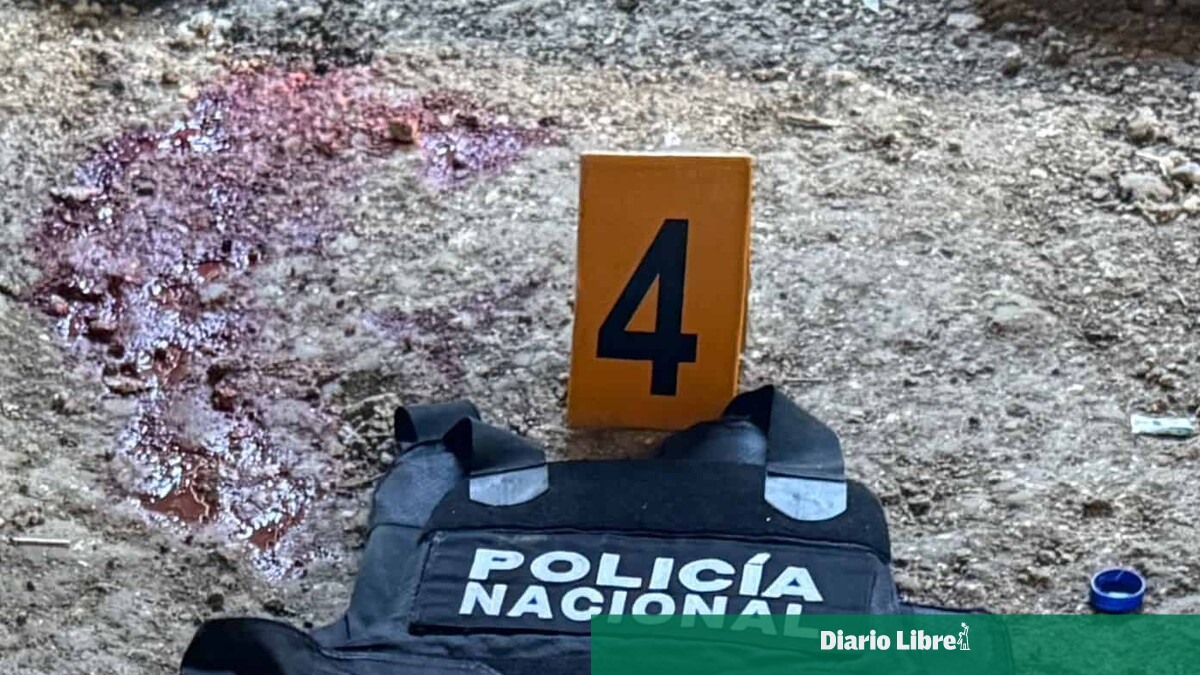
The deaths of citizens during National Police operations, which the authorities present as "exchanges of gunfire," have prompted statements from church leaders, community organizations, human rights bodies, bar associations, jurists and political parties. They question the lethal use of force and demand that the circumstances of each death be clarified.
The demands, which gained strength between September and October of this year, range from calls on President Luis Abinader to halt these actions, to legal actions before the Office of the Attorney General (PGR). Some groups have also asked the National Congress to summon the Minister of Interior and Police, Faride Raful, and the director of the National Police, Major General Ernesto Rafael Rodríguez García, to answer questions.
The sectors that have taken a position agree on the need to guarantee the right to life and due process, although they have used different mechanisms to voice their concerns and demand answers from the authorities.
The Church calls for preserving life
On October 28, Monsignor Andrés Amauri Rosario, auxiliary bishop of the Archdiocese of Santiago, called for the preservation of human life.
Rosario acknowledged the difficulties officers face during the pursuit of crimes, but asked that their training be improved and that deaths not become a habitual response to criminality.
On October 19, the Salesian community of Villa Juana, in the National District, questioned the deaths recorded during the alleged police confrontations. Priest Ronny Estefan, pastor of the Sagrado Corazón de Jesús church, argued that physically eliminating people accused of crimes does not solve insecurity.
On September 24, Monsignor Carlos Tomás Morel Diplán, then coadjutor archbishop of Santo Domingo, rejected the idea that crime should be confronted by eliminating people. "Solving problems by eliminating people is not the solution," he said in an interview on the El Despertador program, of Noticias SIN.
Codue calls for investigations into the deaths
The Dominican Council of Evangelical Unity (Codue) called for independent investigations to clarify the circumstances of each death.
On September 30, its president, Pastor Feliciano Lacen Custodio, said the cases must be investigated promptly and transparently to establish possible responsibilities.
Lacen argued that the fight against crime must combine crime prevention, effective patrolling, the professionalization of officers and criminal prosecution that respects due process and fundamental rights.
Participación Ciudadana and Finjus call for oversight
On September 30, Participación Ciudadana rejected the alleged exchanges of gunfire and questioned whether these actions are being used as a response to crime.
The organization said that deaths during police operations can undermine efforts to reform the institution and demanded independent investigations.
It also asked that the weapons allegedly used by the dead be examined, to verify whether armed confrontations took place and to prevent possible illegal actions from going unpunished.
On October 1, Servio Tulio Castaños Guzmán, executive vice president of the Institutionality and Justice Foundation (Finjus), said that fighting crime does not justify extrajudicial executions and recalled that the use of force must be necessary and proportional to the threat officers face.
Castaños Guzmán acknowledged that police officers need legal backing to protect citizens and ensure their own safety, but insisted on the importance of establishing controls over their actions.
Community organizations call for investigations
On September 20, the Coordinadora de Organizaciones Barriales Don Bosco (Codonbosco) and the Association of Housewives' Committees of the National District and Santo Domingo province (Acadisando) asked President Abinader to urge the National Police to respect human rights in their operations.
The organizations demanded that cases with suspicions of police abuse be referred to the Public Prosecutor's Office to determine the circumstances of the deaths and establish possible responsibilities.
In their statement, they cited 172 young people killed in alleged exchanges of gunfire, according to their own records.
Calls for a "ceasefire"
On October 1, the Dominican Institute of Criminal Law (IDDP), through lawyer Cándido Simón, asked President Abinader to order a "ceasefire" in response to the deaths that occurred during police operations.
Simón argued that the police have the power to identify and detain people accused of crimes, but "not to kill them." He also questioned the lack of videos that could verify the circumstances of the alleged confrontations and called for independent investigations.
In the same statement, lawyer Manuel Sierra recalled that the death penalty is not established in the country and called for transparency about police protocols.
Then, on October 21, lawyers Carlos Balcácer and Simón, along with other jurists, filed a criminal complaint against the director of the National Police, Ernesto Rafael Rodríguez García, on the grounds that he had allegedly induced the deaths of young people identified as suspected criminals.
The action also named officers of the Central Directorate of Criminal Investigation (Dicrim). The lawyers demanded the intervention of the Public Prosecutor's Office and warned that they would go before a judge if they did not receive a response from the prosecutor's office.
National Human Rights Commission files complaint
On October 8, the National Human Rights Commission of the Dominican Republic (CNDH-RD) filed a complaint with the Inter-American Commission on Human Rights (IACHR) about the deaths that occurred during interventions by police officers, some of which it believes may amount to extrajudicial executions.
In the document, dated October 2, the organization requested that each death be subjected to an independent, impartial and scientific investigation.
The CNDH-RD said it had documented approximately 205 deaths that it classifies as presumed extrajudicial executions during 2026. It also called for forensic, ballistic and criminalistic expert analyses to clarify the circumstances of the cases.
The body clarified that it does not contend that all people who died during police operations were victims of extrajudicial executions, but that it is for independent investigations to determine whether the use of force was legitimate, necessary and proportional.
Independent investigations requested
On October 12, seven lawyers, led by Carlos Balcácer, filed a petition with the Office of the Attorney General requesting an immediate and independent investigation into at least 47 deaths of young people during police operations.
The jurists questioned why the deaths had been presented as lawful actions or exchanges of gunfire without a