
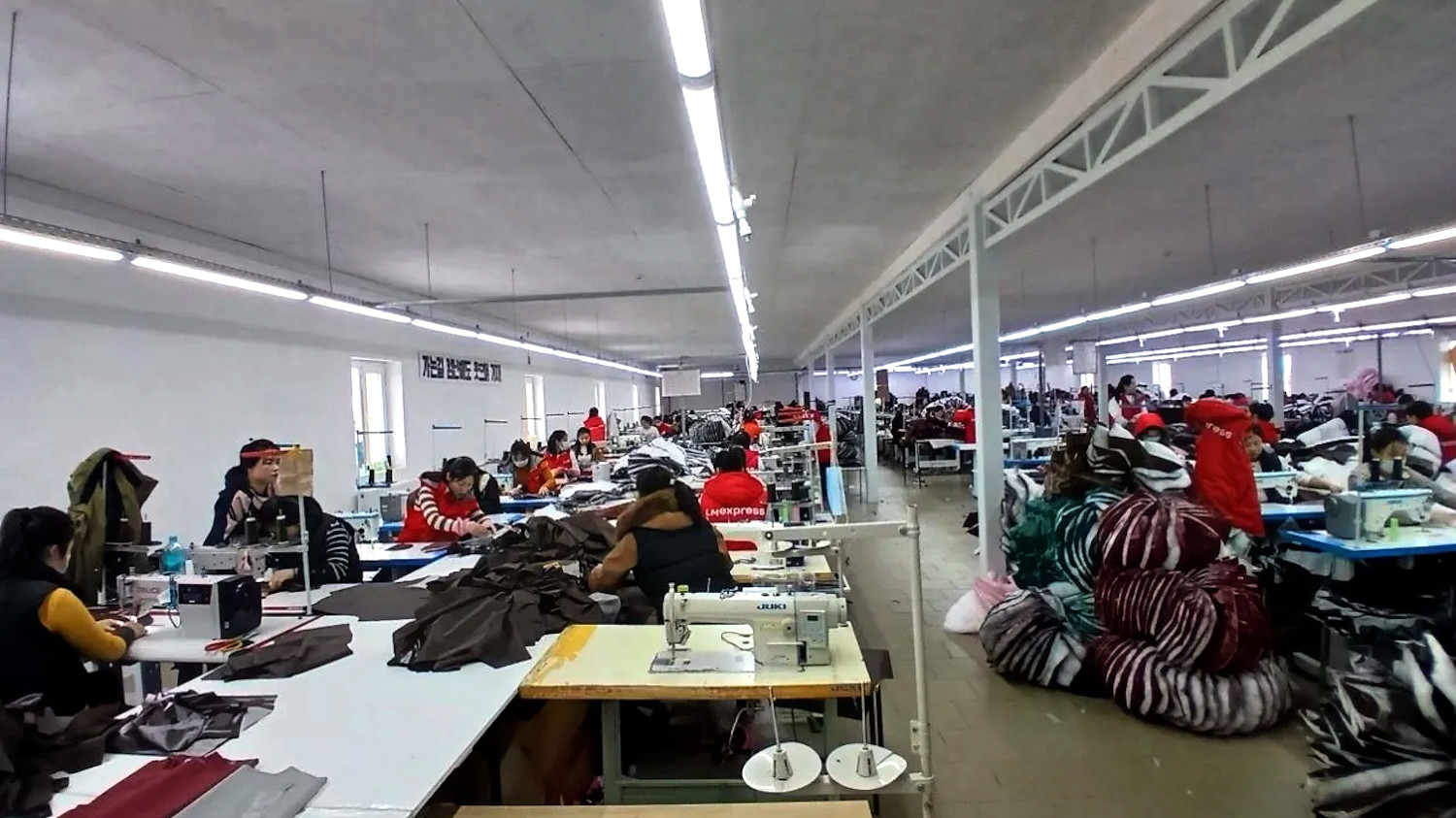
Russia needs every pair of hands
The war in Ukraine, now nearly five years old, is not only causing growing difficulties for the Russian economy but is also steadily draining resources the country was thought to have in inexhaustible supply. Alongside financial strain, labour is an increasing problem: while hundreds of thousands of soldiers fight at the front, factories must keep running, and sustaining that is a serious challenge.
For this reason, the Russian leadership may need every available working hand, to the point that it has begun recruiting North Korean workers.
It has long been known that soldiers of the Asian dictatorship are fighting on the Russian side at the front. Now, however, the London-based Global Rights Compliance has presented evidence that tens of thousands of North Koreans are also working in Russian state-owned factories. Moreover, this takes place under a state-backed programme.
Who is Vladimir Sokolov?
The London-based legal foundation investigated the North Korean workers for nine months, and as a result uncovered the network led by Moscow businessman Vladimir Sokolov. He is responsible for bringing in Asian workers, organising everything from recruitment to visa processing and worker placement.
The investigation revealed that Sokolov operates the website kdnr.su, which "sells" North Korean workers to Russian factories. The platform charges 100,000 to 150,000 roubles per worker and requires companies to employ at least fifty people, meaning that "small orders are not accepted."
The investigation found that a company needing workers must contact the agency's operational head, Ruslan Zhukov. He confirmed to the foundation's specialists that Korean workers have been working in the country since at least 2025.
According to documents the foundation has seen, the Russian and North Korean leaderships both officially support this labour-hire model. This is also indicated by the fact that official delegations from the North Korean embassy visit the Russian companies that apply, to assess working conditions.
After Sokolov learned of the investigation, all compromising data was removed from the company's website, but it still appears on archived pages. On October 12, the European Union placed the businessman on its sanctions list, citing his dealings with the North Korean regime.
Sokolov has officially worked since 2020 as an assistant to former chess grandmaster Anatoly Karpov, who currently sits in the Russian legislature, the Duma. The businessman often describes himself as a private investigator or journalist. Estimates suggest Sokolov can earn up to 70,000 dollars a year by brokering North Korean workers.
Working in inhuman conditions to fund the dictatorship
The investigation also found that guest workers are mostly officially completing "professional internships" at the factories. This matters because most of them are officially in Russia on student visas, which avoids the need to sign formal employment contracts, something UN sanctions prohibit.
Since 2020, Russia has allowed students to take unlimited work alongside their studies without any further administrative obligations.
In 2025, Russia officially issued 36,413 visas to North Korean citizens, roughly four times the number issued a year earlier. Student visas accounted for more than 98% of all residence permits. South Korean intelligence estimates that more than 50,000 North Koreans work in Russia, and many of them receive no information about their future work and living conditions when they leave their country.
Workers at Russian factories often have their documents confiscated, their movement restricted, and are threatened with punishment if they break the agreement. This is not even kept secret: an advertisement on the kdnr.su site made clear that the "rented" workers will not leave their jobs.
On top of this, North Koreans often live in inhuman conditions. According to the Global Rights Compliance investigation, they must work six to seven days a week, up to 18 hours a day, while the North Korean state receives 90% of their wages.
Estimates suggest that foreign workers bring between 450 and 800 million dollars a year in revenue to the Korean leadership, which is channelled directly to the military industrial facility responsible for the country's ballistic missile programme. In other words, through their work in Russia, North Koreans directly finance the maintenance and development of the dictatorship's nuclear programme.
Forced labour plays a role not only in the Korean but also in the Russian war machine. Nine factories employing such guest workers have been identified, at least two of which are directly linked to the Russian defence industry. According to the foundation, Kim Hyok, an official at the North Korean embassy in Moscow, personally visited, among others, the KPP Ruskon plant, where military food rations and canned goods are produced. Photos show that at least thirty North Korean workers are employed at the plant.
Cover image source: Global Rights Compliance