
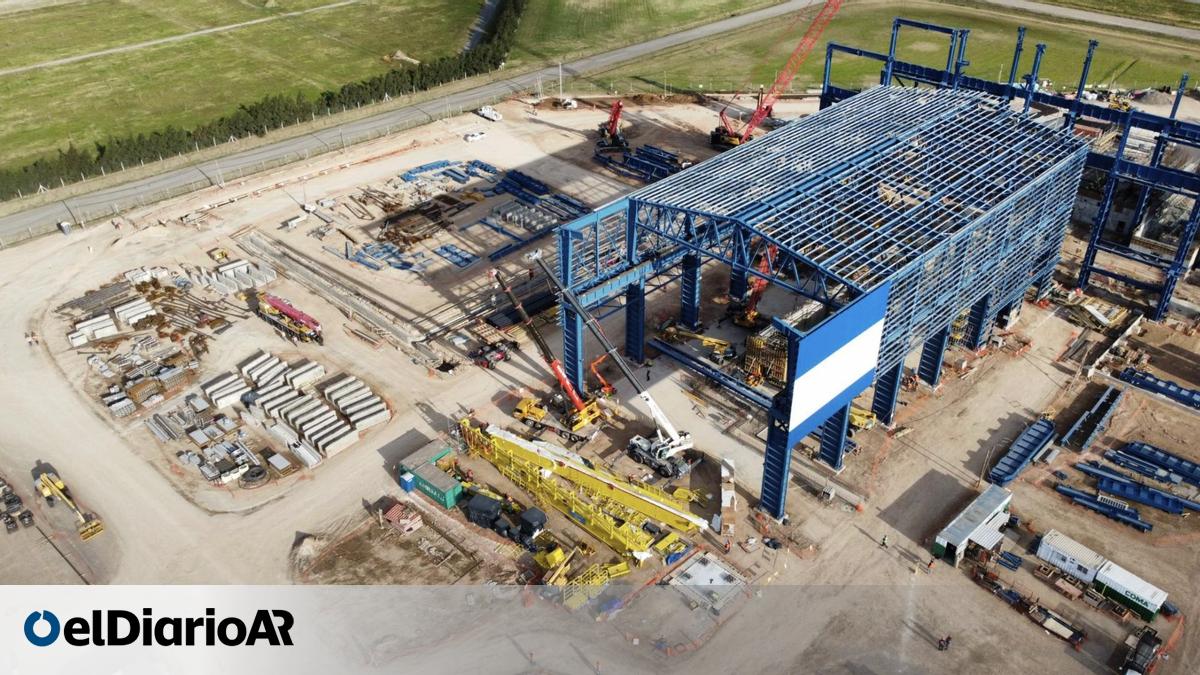
San Nicolás de los Arroyos, in northeastern Argentina, is a riverside city with decades of steelmaking tradition. The noise of heavy machinery coming from a 15-hectare site is the sound of its next era taking shape. A new $300 million steel plant is under construction, with capacity to produce 360,000 tonnes of low-emission steel a year. In local workshops, its first operators are being trained to run both an electric arc furnace and the recycled scrap processing systems that will feed it.
When it begins operating at the end of 2027, the plant will be the first steel production facility of Sidersa, an Argentine company that until now had specialised in the marketing and distribution of steel products.
Sidersa has committed to creating more than 300 direct jobs and 3,500 indirect jobs in a community whose history has long been tied to soot and the huge chimneys of traditional steelmaking. But these plans, partly financed by a Chinese state bank, call for lower emissions. Sidersa describes the plant as a symbol of the low-emission steel that “the world will want” and that Argentina can offer.
Given that the steel sector accounts for between 7% and 9% of global CO2 emissions, the shift toward greener processes has become an increasingly urgent imperative for industry and policymakers. Producing steel from recycled scrap in electric arc furnaces, as Sidersa plans to do, reduces emissions by an average of 70% compared with conventional steelmaking, which uses iron ore in blast furnaces fed with coal.
This is not a new technology for Argentina. What distinguishes this project is the scale of the investment and the political context in which it is taking place. However, how sustainable this steel is will depend on the source of its electricity and on the supply of the scrap it needs.
Requirements for cleaner steel
The process chosen for Sidersa's plant in San Nicolás avoids the blast furnace stage, which consumes large amounts of coal and generates high emissions. In Argentina, electric arc furnaces accounted for around 57% of steel production in 2023, according to data compiled by the Inter-American Development Bank (IDB).
However, using an electric furnace does not automatically make steel production environmentally friendly. First, the cleanliness of the furnace depends on the electricity grid that powers it. The steelworks will initially draw power, at least, from the national grid, which is currently dominated by gas-fired thermal plants. Sidersa has said it is considering supplying the plant directly from renewable sources in the future.
During 2025, variable renewable sources (wind, solar, small-scale hydroelectric, biomass and biogas) covered 18.9% of Argentina's electricity demand. Including large hydroelectric plants, that figure exceeds 40%.
However, the high-voltage grid is operating at the limit of its capacity. “The electricity grid in Argentina has been saturated for more than a decade,” explains Adrián Sergenty, an engineer and political scientist specialising in energy policy, speaking to Dialogue Earth. “The company will have to decide whether to build its own facilities or partner with a nearby renewable energy generator that can guarantee supply directly.”
Second, there is the basic raw material: scrap. The global scrap market faces growing scarcity and export restrictions. “Our surveys show there is enough availability in the domestic market to supply us 100% with national scrap,” explains Alejandro Galdeano, manager of Sidersa's steelworks, speaking to Dialogue Earth. However, scrap collection in Latin America involves informal networks and transport logistics that pose their own environmental challenges, such as the open-air burning of cables to recover copper and the uncontrolled disposal of materials with no value.
Sidersa says it is drawing up a supply plan that takes into account both large suppliers and collaboration with various local authorities across the country. Its goal is to establish scrap collection points that allow local communities to remove waste from their surroundings.
An steel industry expert consulted by Dialogue Earth, who asked to remain anonymous, explains that the viability of the project depends not only on the technology chosen or access to renewable energy, but also on the economic and commercial context. The expert says the plant will only be able to reach its planned output if there is sustained demand in the domestic market.
The specialist adds that reaching the production scale estimated by Sidersa would require “some kind of miracle.” He considers it would only be possible through extraordinary growth in local steel demand or a loss of market share by international competitors such as Acindar, Sipar Acero or Acerbrás.
If Sidersa manages to produce steel with lower emissions, this could give it a competitive advantage in exporting to jurisdictions with high environmental standards, such as Europe. Since the beginning of this year, the European Union's Carbon Border Adjustment Mechanism has applied to imports of iron and steel, linking their cost to the carbon emissions embedded in those products.
For now, however, production is focused almost entirely on Sidersa's domestic market.
Environmental concerns
San Nicolás has good reasons to be wary of the grand promises made by companies. The city is home to the historic General Savio steel complex, operated by Ternium Argentina. The company faces lawsuits over its management of waste and effluents. In 2023, an expert report prepared as part of an environmental court order highlighted the lack of a permit for discharging industrial liquid effluents and the presence of heavy metals in local groundwater.
Sidersa also faces an environmental dispute over the plant's construction. The NGO Unidos por la Vida y el Medio Ambiente (UPVA) has accused it of causing “enormous environmental damage” by illegally extracting tosca (a material used to level and lay foundations on industrial sites) from a quarry near the Ramallo stream, without provincial or municipal authorisation. The courts have opened civil and criminal proceedings. Construction work continues.
According to Sidersa, these accusations refer to a supplier who claims the rubble was extracted from quarries authorised by Buenos Aires, the provincial authority in San Nicolás. Sidersa maintains that the extraction was carried out legally and with the necessary authorisation, as stipulated in the contract.
“We regret the lawsuit that has been filed, which we are answering through the appropriate legal channels,” says Lucrecia Payer, Sidersa's director of institutional relations, speaking to Dialogue Earth.
Chinese financing and the RIGI
Initially, Sidersa sought financing from the private arm of the IDB, IDB Invest, and from the International Finance Corporation of the World Bank Gro