
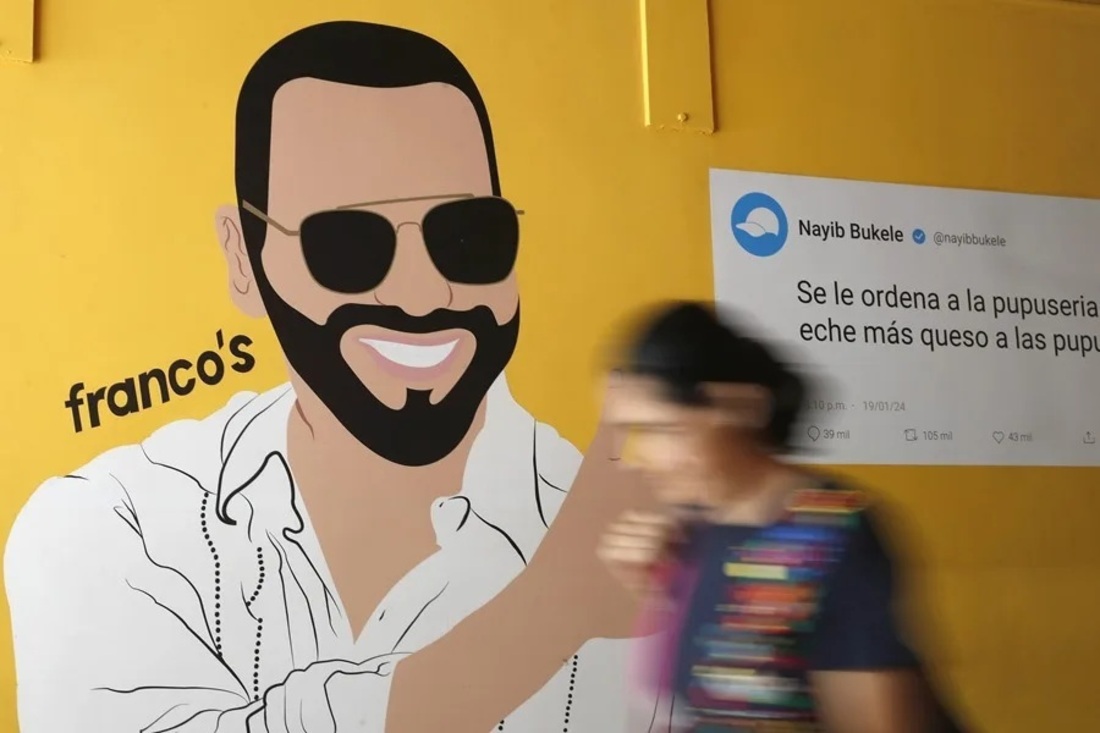
On October 13, Latin America's favourite strongman made a surprising admission. Asked about reviewing prisoners' cases, Nayib Bukele said his government was studying the possibility of granting early release to roughly half of those imprisoned for collaborating with gangs. “He is guilty,” he explained, “but let him out on parole.”
Three days later, and after a flood of unfavourable headlines, Bukele returned to the podium, insisting that the press had misrepresented his words. According to him, only the cases of 10,629 of the more than 93,000 detainees would be reviewed, and those who met the requirements would first have to earn their release through a prison work programme.
For a leader as inflexible as Bukele, even a limited review is a significant step back. Just last year he promised that prisoners would not be released “now or ever,” and said he “didn't give a damn” that his critics called him a dictator. So why would the region's most defiant leader suddenly waver, not once but twice?
Growing pressure
Since Trump's return to the White House, Washington's protection has largely kept Bukele's critics at bay. But with forecasts that the US midterm elections could produce a less lenient Congress, and with Democrats already voicing concern about the regime, that tolerance may not survive the next vote.
Foreign investors would also probably welcome a more moderate image. Few companies want their names associated with headlines about mass detentions, which may explain why Bukele first raised early releases when announcing a $2.9 billion investment from the Spanish energy group Cox.
Closer to home, pressure from detainees' families and human rights organisations is another likely concern. According to the human rights organisation Socorro Jurídico Humanitario, at least 554 prisoners have died in custody, and security forces and prison staff face more than 6,400 complaints of abuse. Next week, the Inter-American Commission on Human Rights will hold a hearing on the treatment of people detained under the state of exception, which could become a first step towards binding rulings from the Inter-American Court.
Meanwhile, national public opinion pulls in two directions. Just over four months before the elections, seven in ten Salvadorans already name the economy as their main concern. Bukele's strategy, focused almost exclusively on security, has carried him this far, but his popularity will keep eroding if he cannot deliver economic results as convincing as those he has achieved on crime.
Yet although keeping the peace through a prison system that holds roughly 2% of the population is costly, by the president's own estimate $200 million a year, the offensive against the gangs has not lost its appeal. In the same IUDOP poll, conducted in May, nearly 70% of respondents wanted the state of exception extended. This helps explain Bukele's subsequent retreat, but it raises an obvious question: why risk such an unpopular offer in the first place?
Debts and imitators
Some analysts in the region suspect that Bukele has other debts to settle, not with voters but with the gangs. This hypothesis, first raised by Salvadoran journalist Walter Raudales, may not be as far-fetched as it first appears. In 2023, US prosecutors alleged that Bukele's government had eased prison conditions for MS-13 leaders in exchange for votes and a reduction in public killings. The prison director who would oversee the releases, Osiris Luna, is precisely the official the US Treasury Department sanctioned for negotiating those benefits.
Raudales also wonders whether a disorderly release could be the prelude to “new outbreaks of crime,” which would justify maintaining the state of exception for years. Salvadoran politics has precedents too. ARENA's Plan Mano Dura was launched in 2003, just as homicides were falling, and the party's then-leader later admitted that crime had been “deliberately politicised” for electoral gain. The iron fist has proved to be a gift that keeps paying political dividends.
Across the region, many have rushed to copy the formula, hoping to emulate Bukele's success. According to InSight Crime, 16 mega-prisons have been proposed in ten countries since the opening of CECOT in 2023. Some have gone even further: Daniel Noboa has declared that Ecuador is at war with criminal groups, while Colombia's Abelardo de la Espriella has taken to posting on social media alongside the bodies of so-called “narcoterrorists” killed by security forces.
A shrewd Bukele may have seen, in a market saturated with imitators of his product, an opportunity to offer something new. Responding with clemency to what he calls the “remission” of the gangs' “cancer” would certainly set him apart from an increasingly hardline crowd. Stepping back while his admirers advance has another advantage: if Washington changes its stance, it will be them, not Bukele, who are first in the line of fire.
Freedom by decree
Whatever Bukele's motives, human rights defenders should not harbour too many illusions. Even the possible releases depend on presidential whim, not due process, and Bukele has already shown that what he grants today he can withdraw tomorrow.
Since 2021, Bukele's Legislative Assembly has packed the Constitutional Chamber and the Attorney General's Office with government loyalists. Habeas corpus petitions, once an effective check, are now almost never admitted. The courts that still function convict en masse.
The review process is equally opaque. According to Ibrajim, the president's brother, cases are assessed by an anonymous “independent team” made up of prosecutors, prison administration representatives and members of the first lady's office. Salvadoran law contains no equivalent mechanism. Parole is reserved for convicts who have served two-thirds of their sentence, and more than 90% of detainees have yet to be tried.
For the few who might meet the requirements of the revised plan, release means accepting the government's version of events and the label that comes with it. As Abraham Ábrego, legal director of the human rights organisation Cristosal, points out, Bukele's vocabulary leaves no room for the innocent: there are only “collaborators.” Calling them anything else would mean admitting that there were arbitrary arrests and could open the door to costly compensation claims. Bukele is no longer just judge and jury. He is also a liberator, subject to the ebb and flow of political convenience.
The show must go on
“There is one thing that scares me,” Bukele told his cabinet in November 2023, “and that is leaving a bad legacy.” The past week will not have helped to dis