
Italian Business Delegation Heads to Brazil and Argentina to Pursue Mercosur Opportunities
More than ninety companies are ready to fly to Brazil and Argentina to forge new commercial ties and move beyond the challenges posed by Chinese competition in Europe. Here are all the details and figures.
03/09/2026
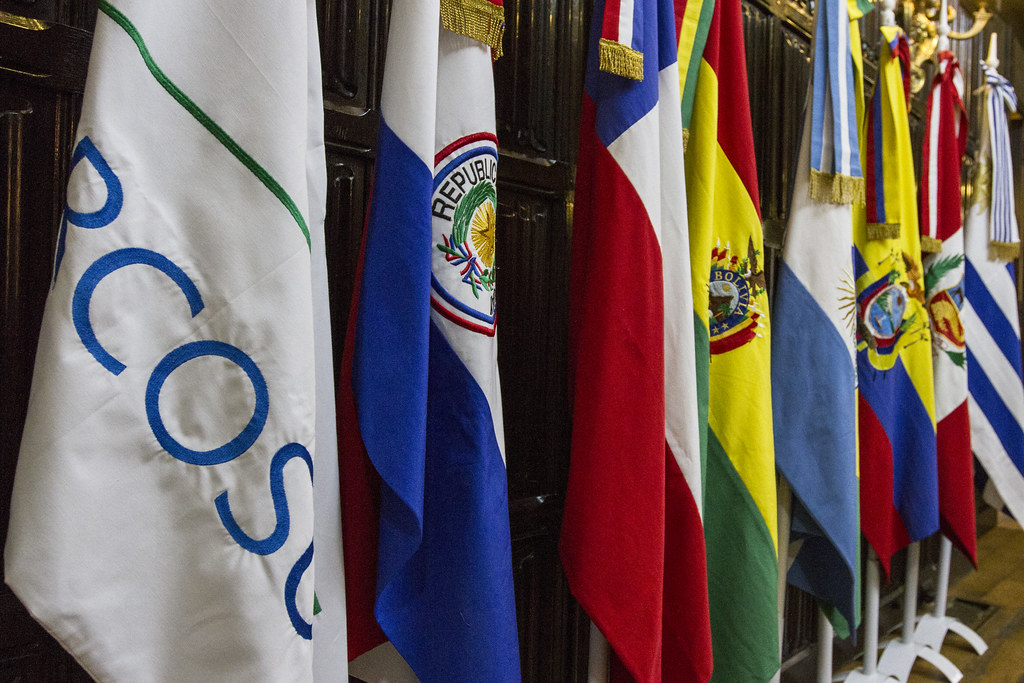
Mercosur is calling, and Italian firms are answering, seeking fresh growth prospects — ideally far removed from China, which brings more headaches than benefits. Just months after the signing of the EU-Mercosur agreement, the South American trade bloc was founded in 1991 and comprises Argentina, Brazil, Paraguay, and Uruguay (Venezuela joined in 2012, but its membership was suspended in 2017). The bloc constitutes the world's sixth-largest economy with a total population of 270 million people. Now, the first business-oriented mission organized by a European country in the region since the agreement's approval is getting under way.
More than 90 Italian companies will depart on September 6 for Argentina and Brazil as part of a delegation led by Confindustria and ICE, in collaboration with the Italian Chamber of Commerce in the Argentine Republic and the Italian Chamber of Commerce of São Paulo, in close coordination with Italy's Embassies in Buenos Aires and Brasília.
Until September 11, the delegation will visit Buenos Aires, São Paulo, and Brasília, with the goal of opening a new phase in relations with the two largest Mercosur economies, diversifying export markets, and transforming the opportunities offered by the agreement into investments, industrial partnerships, and new value chains. "In an increasingly complex and changing geopolitical scenario, diversifying markets means reducing dependencies and making Italian industry stronger and more resilient. We must consolidate our presence in mature markets, which remain strategic, while at the same time opening new opportunities for our companies. Mercosur represents, in this sense, an area of great potential: we do not want merely to export more, but to build industrial partnerships, investments, and joint supply chains capable of generating growth and mutual value," said Confindustria President Emanuele Orsini, in outlining the mission's aims.
Orsini will lead the delegation, alongside a broad representation of the Association's and Confindustria System's top management. The participation of ministers Antonio Tajani and Giuseppe Valditara and heads of Country System institutions is expected. Confindustria's participation will also include vice president for exports and investment attraction Barbara Cimmino, vice president and president of small industry Fausto Bianchi, vice president for education and open innovation Riccardo Di Stefano, and vice president for energy Aurelio Regina. Also present will be ICE President Matteo Zoppas, Sace CEO Michele Pignotti, Simest Managing Director Regina Corradini D'Arienzo, and representatives of ABI and CDP.
The mission is part of the new phase opened by the EU-Mercosur agreement and aims to transform the agreement's opportunities into industrial collaborations, investments, and integrated supply chains. It is not just about growth in commercial exchanges, but a more structured partnership in strategic sectors, capable of pooling technologies, expertise, and productive capacity, facilitating Italian companies' access to major infrastructure projects, and strengthening cooperation in research, innovation, and human capital development.
The first signals on the export front are nonetheless positive. In 2025, Italian exports to Mercosur reached 7.5 billion euros. In May 2026, the first month of the agreement's application, Italian exports to the bloc stood at 745 million euros, up 21.1% compared with the same month in 2025. At full capacity, the potential of Italian exports to the region is estimated at 14 billion euros. Brazil and Argentina account for over 90% of Italian trade with Mercosur: in 2025, Italy exported 5.8 billion euros to Brazil and 1.2 billion to Argentina.