
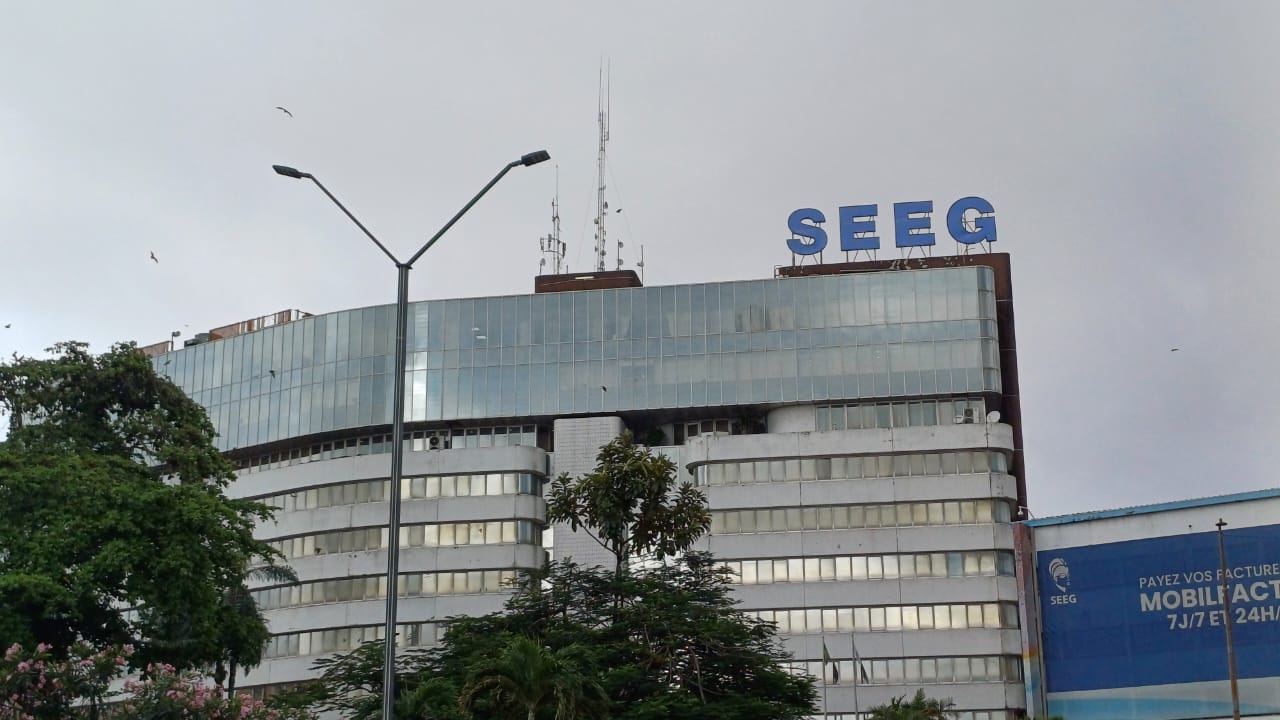
Gabon's State Utility SEEG to Cease Operations on December 31, 2026
The Société d'Énergie et d'Eau du Gabon (SEEG), a historic pillar of public service since 1950, will cease to exist at midnight on December 31, 2026, to be replaced by two separate entities, announced Philippe Tonangoye, minister of universal access to water and electricity, in a note to administrators and shareholders following a financial audit that reveals the scale of the company's accounting collapse.
Starting January 1, 2027, "La Gabonaise des Eaux" and "Électricité du Gabon" will take over the management of drinking water distribution and electricity respectively, ending 76 years of integrated management of both services.
A Documented Financial Fiasco
The decision is based on certification of SEEG's accounts covering fiscal years 2019 to 2024, approved by shareholders at two general assemblies in December 2025 and April 2026. The financial statements, validated with numerous reservations, paint a picture of a structurally exhausted enterprise.
Revenue remained virtually stagnant between 2020 and 2023, before a modest 2% increase in 2024 to 212.6 billion CFA francs. Over the same period, financial charges multiplied fourteenfold since 2019, reaching a peak of 8.56 billion CFA francs — a sign, according to the ministry, that debt no longer finances investment but now serves to cover losses from current operations.
Operating profit thus became deeply negative (−23.8 billion CFA francs), preventing the company from covering its financial costs through its operations alone. Net income, positive in 2018, transformed into a loss of 45.6 billion CFA francs in 2024. Working capital requirements collapsed, moving from a surplus of 44 billion CFA francs in 2022 to a deficit of 50.5 billion two years later, reaching −177 billion at fiscal year end — a level described as an "ultimate warning" by the ministry.
Payroll grew 46% over five years while the company's value added dropped 72% between 2021 and 2023.
Reform Approved by Cabinet
The government invoked articles 664 and 665 of the OHADA Uniform Act on commercial company law, which require convening an extraordinary general assembly when a company's equity falls below half its capital stock due to accumulated losses.
Two bills enacting the creation of new entities were adopted by cabinet on June 25. A steering committee, chaired by President Brice Clotaire Oligui Nguema and including social partners, was installed for six months to secure the transition, particularly the handling of debts, migration of IT systems, and distribution of personnel between the two future companies.
The government, which holds 56% of SEEG's capital through the Gabon Sovereign Wealth Fund, must still obtain approval from strategic shareholders to reach the two-thirds qualified majority required under OHADA law to validate the split.
Legal Lock on Claims
Aware of the risks attached to bank guarantees and mortgages burdening SEEG's assets, the executive proposed to administrators a five-point prudential measure: freezing of irreversible legal acts, audit of bank commitments, asset appraisal, negotiations with creditors, and contradictory confirmation of debts. The stated aim: that no debt be transferred to the two new mixed-economy companies.
The government justifies this reform by citing persistent loss of confidence between the operator and users, noted as one of the causes of recurring water and electricity outages across the country, alongside non-payment of bills, meter tampering, and cable theft.
Carl Nsitou