
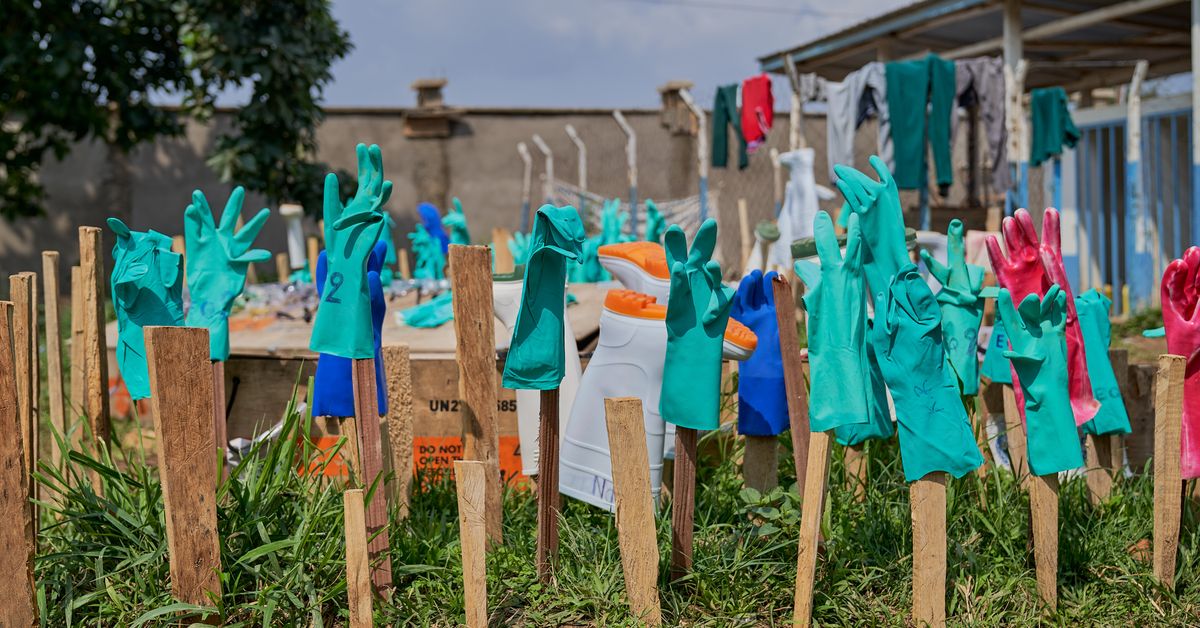
According to the World Health Organization, the epidemic is still expanding, and its full extent is not yet clear. More than 1,500 people have now died from the disease.
Fighting Ebola requires careful protection. In the video, workers are shown in an Ebola treatment centre and transferring bodies in Bunia in the Democratic Republic of the Congo.
- Eeva Eronen
30.7. 19:31
– People are afraid because this disease spreads very quickly, says Onesphore Bangenza.
He describes the situation in the city of Bunia in the Ebola-affected area of the Democratic Republic of the Congo. Bangenza leads an Ebola team at the Mercy Corps aid organisation.
According to Bangenza, people's concerns are heightened by the fact that there is no vaccine against the Ebola virus causing this epidemic. In addition, the disease is spreading in a conflict zone where many have been forced to flee their homes.
– This frightens people and they wonder how and when this will end, Bangenza describes in a video call.
Bunia is in Ituri Province in the Congo, where nearly 90 percent of confirmed cases have been reported. The province has been torn by armed conflict for decades, and over 900,000 people live displaced from their homes.
Good hygiene is vital in an Ebola situation, but refugee camps are severely lacking in water, according to the New York Times. The situation is starkly illustrated by the fact that at the Tsere refugee camp near Bunia, over 6,000 people share a single water tank.
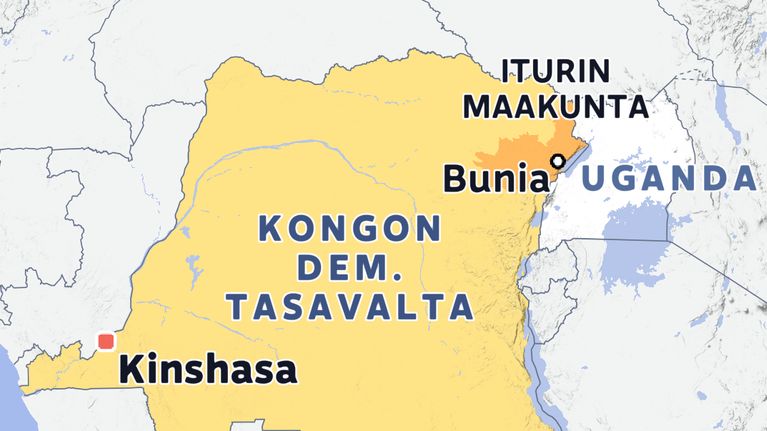
Image: Juha Rissanen / Yle, source: Openstreetmap, Mapcreator
Epidemic threatens to become Congo's worst
According to information released Thursday by the Democratic Republic of the Congo's government, 1,502 people had died from Ebola in the country by Tuesday. The death toll has grown by about 50 percent in roughly a week, according to news agency AP. There were over 3,440 confirmed cases.
The epidemic threatens to become the country's worst in terms of the number of infections.
In the Democratic Republic of the Congo's most severe Ebola epidemic to date, from 2018 to 2020, fewer than 3,500 people fell ill. Nearly 2,300 of those infected died. That epidemic lasted almost two years. Now confirmed cases have accumulated almost as many in two and a half months.
The epidemic now afflicting Congo has killed more people faster than any previous Ebola epidemic, AP reports.
The worst Ebola epidemic so far spread through West African countries from 2014 to 2016. More than 11,000 people died from the disease and about 28,600 people were infected in Guinea, Liberia and Sierra Leone. At that time, the epidemic lasted eight months before 1,000 people had died, AP reports.
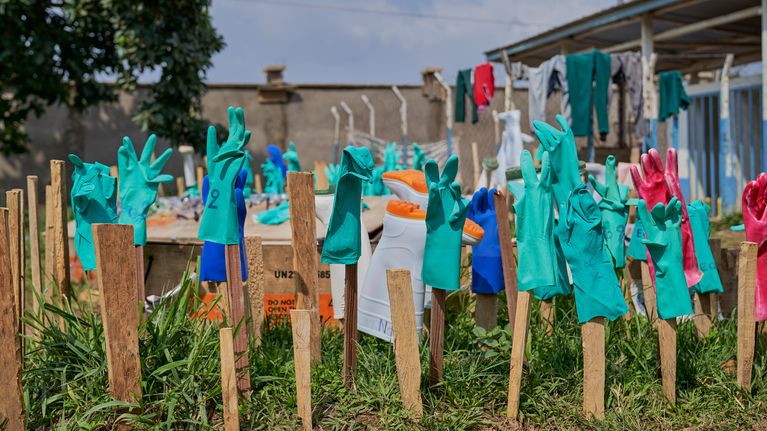
Rubber gloves drying in the courtyard of an Ebola centre in Ituri on July 22. Image: Dieudonne Dirole / EPA
Misconceptions hinder efforts to stop the disease
A few days ago, an aid worker named Kate White who left Bunia says the atmosphere in the area can be described as resigned.
– There is no licensed vaccine or medicine for the disease. This may have been misinterpreted in some communities: why seek help if there is no treatment, says White, who works for Doctors Without Borders, to Yle from the capital Kinshasa.
This misconception certainly needs to be corrected, White says. Early diagnosis and treatment can do a lot, even without a vaccine or specific medicine.
Misinformation circulating in the area has made it harder to stop Ebola, and some people have even attacked health centres.
According to the World Health Organization (WHO), factors hindering Ebola control include, for example, too-slow seeking of treatment and people being buried without necessary precautions.
The bodies of those who died from Ebola are highly infectious. According to the region's traditional funeral practices, relatives wash and prepare the bodies. Restricting traditional burial practices has provoked anger among people.
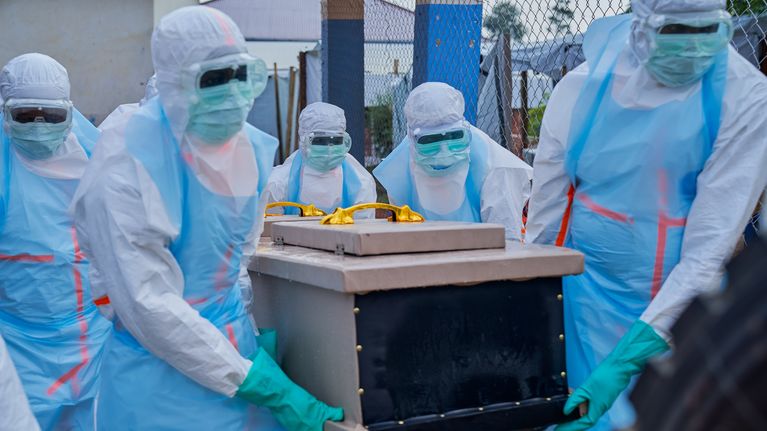
Staff transferred a coffin to a car in Bunia on July 22. Image: Dieudonne Dirole / EPA
Epidemic continues to expand
The WHO estimates that the epidemic is still growing and its full extent is not entirely clear.
– Ituri remains the centre of Ebola, and cases are occurring in multiple disease hotspots, says WHO spokesperson Christian Lindmeier by email.
According to Lindmeier, contact tracing of infected people remains inadequate. This suggests that not all transmission chains have been identified.
Mercy Corps official Bangenza also finds some positive developments.
– Community engagement is really important. They are beginning to think that they can participate in solving the problem themselves. This is really good, Bangenza says.