
Beijing Accuses US of Training AI with Chinese Models as Tensions Escalate
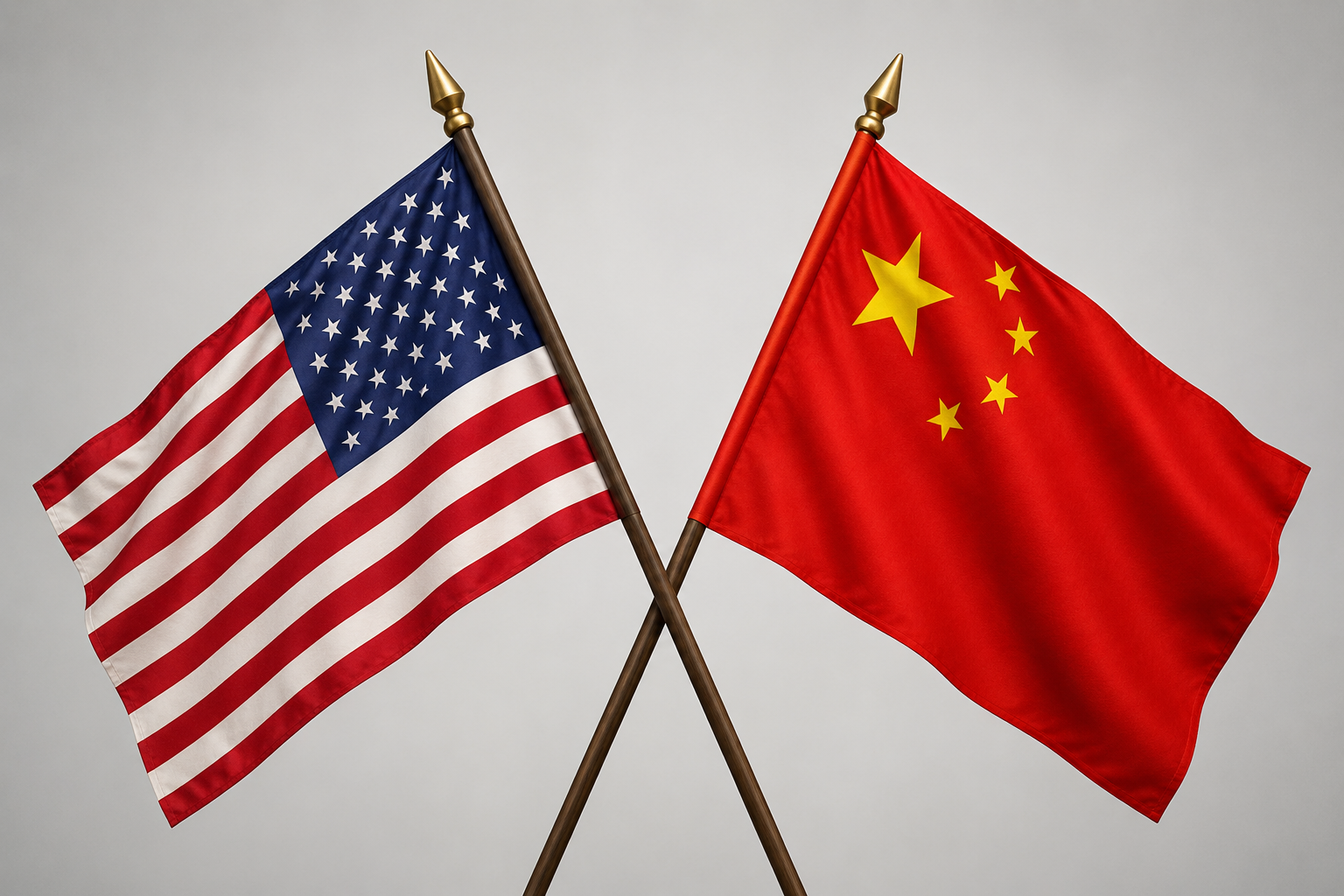
The artificial intelligence war is less noisy than traditional conflict. But no less dangerous. In the great game of cutting-edge technologies, where Chinese technology — low-cost but decidedly riskier for national security — clashes with American technology, which is higher quality and perhaps more advanced, Washington and Beijing continue to pursue global AI supremacy. While Europe works toward its own technological sovereignty, Beijing is seizing the moment to accuse the United States of training artificial intelligence using Chinese models, turning back Washington's accusations that Chinese companies are using the most advanced American models.
Specifically, the United States had accused China of exploiting American technology through data distillation techniques, as in the case of the Chinese model Kimi K3 by Moonshot AI, which would have been trained by copying Anthropic's system. China's Ministry of Commerce responded by saying the American accusations lack factual and legal foundation and represent "a typical example of artificial intelligence hegemony." The Chinese ministry also urged Washington to "abandon the mentality of hegemony," stop threats of sanctions against Chinese companies, and instead strengthen bilateral dialogue on artificial intelligence. Otherwise, Beijing warned it would respond to any measure that substantially damages China's interests.
The tone is unmistakably threatening. "For every action that causes substantial harm to Chinese interests, China will adopt all necessary measures to firmly safeguard its legitimate rights and interests," a ministry spokesman declared in a statement. These comments mark an escalation in a dispute centered on Beijing-based Moonshot AI, whose recently released Kimi K3 model has attracted attention for its programming capabilities. This has intensified debate in Washington over whether Chinese developers are copying American models or rapidly closing the technological gap through their own research.
Yet China faces a stark contradiction. All this clashes somewhat with the recent crisis that has emerged at the highest levels of the Communist Party. The party fears that advances in artificial intelligence in China could lead to progressive professional and, especially, human impoverishment. As this publication reported days ago, last summer, Chinese Vice Premier He Lifeng asked major employers across the country — tech groups, banks, automakers, and other large enterprises — to assess what impact AI might have on their workforces. Something does not add up.
All of this comes as ChangXin Memory Technologies makes a record debut on the Shanghai Stock Exchange. The Chinese memory chip manufacturer's stock surged a maximum of 535 percent on its first day of trading, hitting a peak of 55.03 yuan before settling and closing up 466 percent at 49 yuan at the end of the session. The market capitalization reached approximately 3.7 trillion yuan (equivalent to 547 billion dollars), briefly allowing the company to surpass tech giant Tencent as China's highest-valued listed company.