
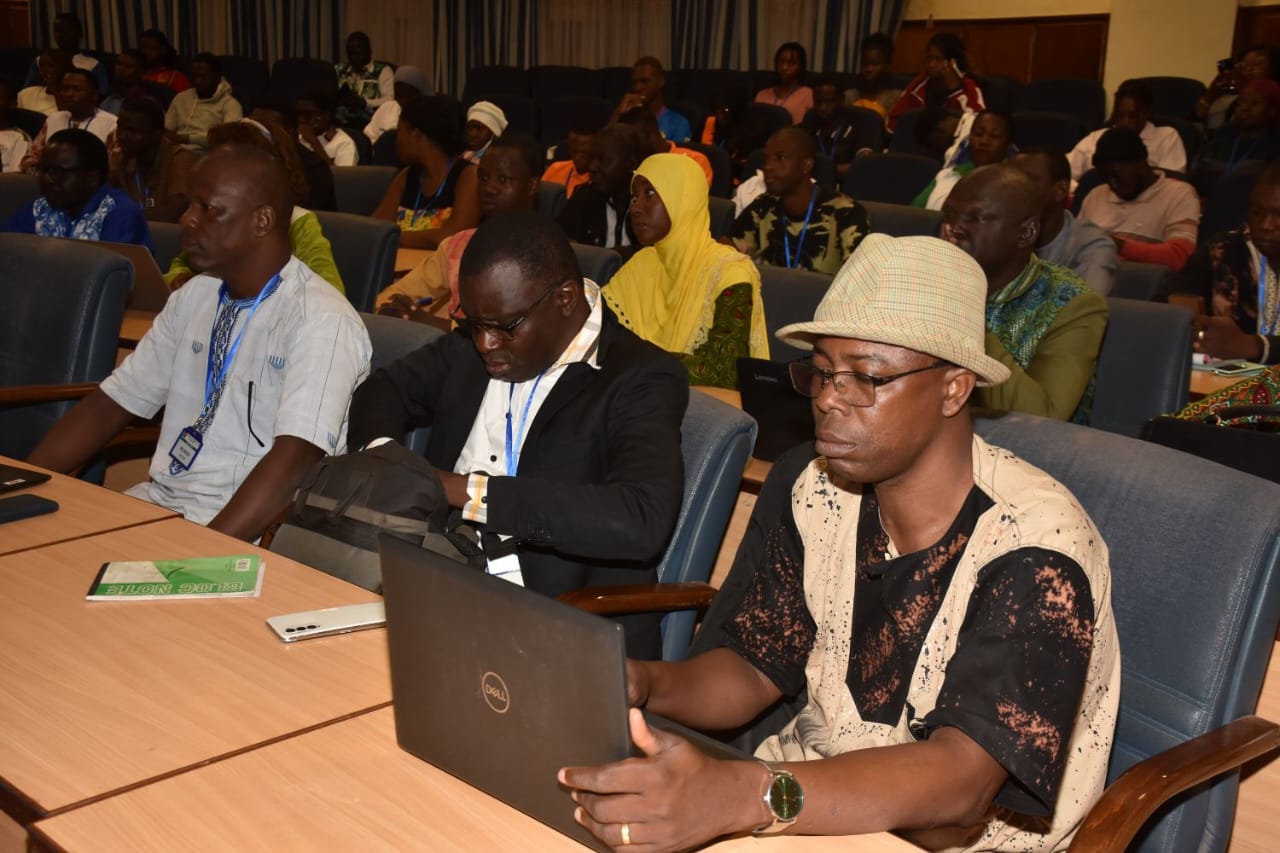
The opening ceremony of the 6th edition of the 24-hour debate on demography took place on Thursday, July 23, 2026, in Ouagadougou.
Organised as part of commemorative activities for the 36th World Population Day, the 6th edition of the 24-hour debate on demography is intended as a space for strategic reflection on an essential question: how to transform the immense potential of Burkina Faso's youth into a genuine engine of sustainable development. To enable stakeholders to consider this issue, Boureima Ouédraogo, missions officer and representative of the Secretary-General of the Ministry of Economy and Finance, officially opened the day's proceedings on Thursday, July 23, 2026, in Ouagadougou.
"Demographic dividend and sustainable development in Burkina Faso: How to transform the potential of youth into a genuine lever for the future?" is the theme of this edition. Issa Zongo, director of population policies at the General Directorate of Economy and Planning, delivered an opening presentation on "ICPD+30: Situation of the world population and demographic dividend in Burkina Faso". In addition to this presentation, there was a discussion on "Training-employment alignment: adapting technical education to the realities of the Burkinabè labour market to strengthen socioeconomic integration", followed by exchanges, synthesis of proceedings, and recommendations. For Boureima Ouédraogo, missions officer at the Ministry of Economy and Finance, the demographic dividend is the product of coherent public policies, continuous investment, and also the result of effective governance that transforms human potential into economic wealth and social progress.
He indicated that the 6th edition of the 24-hour debate on demography is a privileged opportunity to deepen collective reflection on population issues and challenges. The population, he explained, is the foundation of all development policy and remains the ultimate beneficiary of that development policy. This underscores the importance of meeting to identify progress in population policy and answer questions of clarification for policymakers and scientists. The opening presentation revealed significant progress in population policy. These include, among others, the reduction of various mortality rates and the increase in life insurance. He highlighted challenges to address, such as capturing demographic dividends aimed at accelerating economic growth. Boureima Ouédraogo expressed the hope that the debates would produce recommendations that will enable policymakers to capture demographic dividends.
Gbetcheni Constantin Bertrand KAMBIRE