
New HIV infections and AIDS-related deaths reached the lowest global levels in 2025, according to reports released on Monday (27) by the Joint United Nations Programme on HIV/AIDS (UNAIDS).
However, the organization warns that this progress is threatened by declining funding for prevention and treatment efforts.
Worldwide, 1.2 million new HIV infections were recorded, representing a reduction of approximately 40% since 2010. The number of AIDS deaths last year reached 570,000.
On the other hand, the number of new cases increased in 21 countries and three regions of the world. Brazil is among these countries, and according to UNAIDS, it has increased access to prevention medications by 41% in response to this rise.
The report was released ahead of the opening of the 26th International AIDS Conference, the largest global event on the disease, which began on Monday (27) in Rio de Janeiro. This is the first edition of the conference in Brazil.
End of the AIDS pandemic
UNAIDS Executive Director Winnie Byanyima emphasized that the end of the AIDS epidemic is no longer just an aspiration, but an achievable feat, thanks to scientific innovations, especially injectable pre-exposure prophylaxis (PrEP), which can prevent infection in healthy people for up to six months.
"This is one of the greatest opportunities we have to end the epidemic. But isolated scientific advances will not end AIDS. Innovation without access is not innovation, but injustice. These medicines remain out of reach for most people who need them," she emphasized.
UNAIDS estimates that 20 million people need access to long-acting injectable PrEP for the world to achieve the new goal of ending AIDS as a public health threat by 2030. The commitment was made by UN member states several weeks ago.

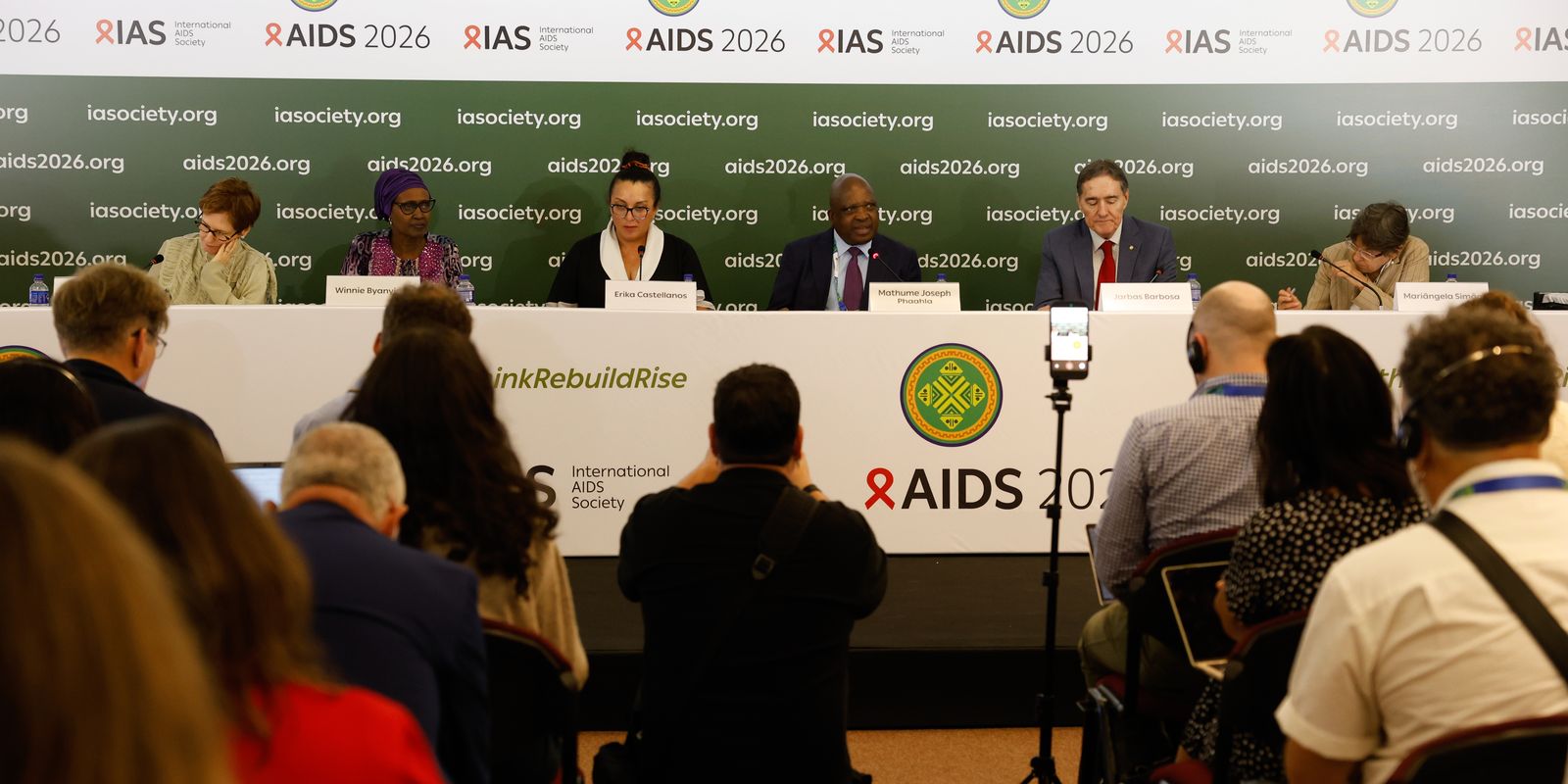
UNAIDS Executive Director and UN Under-Secretary-General Winnie Byanyima at the opening press conference of the 26th International AIDS Conference. Photo: Fernando Frazão/Agência Brasil
"This means affordable prices, competition through generics, regional manufacturing, technology transfer, and rapid introduction into national programs," Winnie noted.
"Science has done its job, now politics needs to do its job. The question is no longer whether we can end AIDS, but whether we will choose to end AIDS. If this is truly implemented, we can prevent 3.2 million new infections and 1.3 million AIDS-related deaths," added UNAIDS' chief director.
The first step toward this is replenishing global investment in HIV treatment and prevention, the UN program argues.
Resources from the main assistance program for low-income countries, the Overseas Development Assistance (ODA), fell 23% in 2025, heavily affecting HIV programs. Some African countries depend on these resources for more than 90% of their epidemic-related efforts.
This impacts the availability of new prevention technologies, but also the treatment of people already infected. In 2025, one in five people living with HIV worldwide was not in treatment, a proportion that rises to almost half among children.
Stigmatization
Another aspect highlighted by UNAIDS is the resurgence of discrimination against LGBTI+ people and vulnerable populations, such as sex workers and drug users. For the first time, criminalization of people in same-sex relationships increased in 2025 instead of decreasing, reaching 66 countries.
The organization also identified 14 countries that criminalize transgender people, 168 countries where different aspects of sex work are prohibited, and 152 that punish possession of small amounts of drugs.
"When people fear arrest, violence, discrimination, and stigma, they avoid health services. HIV spreads when rights are denied. Human rights are not separate from the HIV response—they are the HIV response," highlighted UNAIDS' executive director.