
Thirteen Alvar Aalto sites approved for UNESCO World Heritage List
Alvar Aalto's 13 architectural sites were approved for UNESCO's World Heritage List on Sunday. Visitor numbers to Paimio Sanatorium are expected to grow significantly.
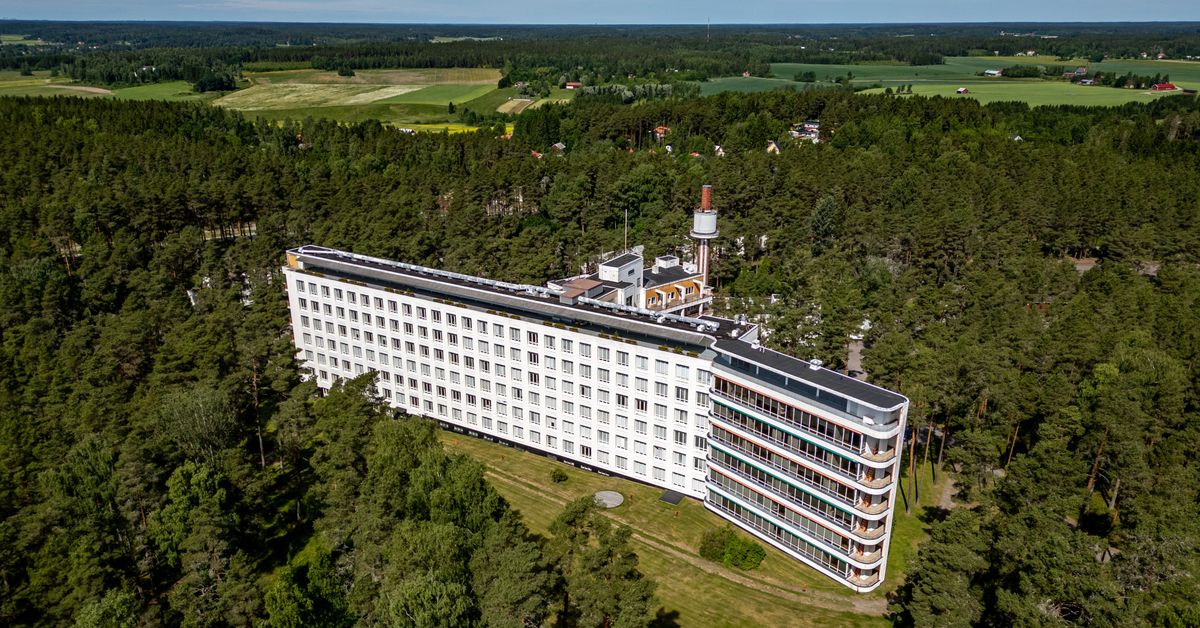
The building, completed in 1933, is Alvar Aalto's breakthrough work internationally.
26.7. 12:55
Paimio Sanatorium's 20-year wait came to an end on Sunday when UNESCO approved the architectural works of Alvar, Aino and Elissa Aalto for the World Heritage List. The decision was made at a meeting of the World Heritage Committee in Busan, South Korea.
Paimio Sanatorium is part of the Aalto Works series of thirteen sites. The building, completed in 1933, is Alvar Aalto's breakthrough work internationally.
Mirkku Kullberg, chairperson of the Paimio Sanatorium Foundation's board, reached in South Korea on Sunday, has reason to celebrate, as World Heritage listing has been hoped for a long time.
"This is absolutely incredible for Finland and modern architecture. Locally for Southwest Finland and our entire cultural heritage, it's a fantastic day and moment," Mirkku Kullberg says.
Mirkku Kullberg received the World Heritage announcement on site in South Korea. Archive photo from June at Paimio Sanatorium's courtyard. Photo: Markku Pitkänen / Yle
A delegation of ten Finns was present in Busan for the announcement.
"We had an enormously long line of well-wishers right after the decision," Kullberg says happily.
The path to World Heritage status took 20 years
Paimio Sanatorium's journey to World Heritage status has been long. The site could have made it onto UNESCO's list on its own as early as 2006.
Then-Culture Minister Tanja Karpela, however, withdrew the proposal in Vilnius. UNESCO's advisory expert body ICOMOS felt that Paimio Sanatorium's character as a "medical instrument" — as a tuberculosis treatment facility — was not weighty enough on its own.
ICOMOS recommended preparing a series proposal featuring multiple Aalto sites that would support each other.
"This preparation has been underway since then," Kullberg says.
Paimio Sanatorium, designed by Alvar and Aino Aalto, is considered one of modernism's masterpieces. Photo: Arash Matin / Yle
If the proposal had not gone through now, the next opportunity would not have come for several years, since proposals are determined several years in advance.
Visitor numbers expected to grow
Mirkku Kullberg believes that visitor numbers to Paimio Sanatorium will increase significantly. The sanatorium has not been open year-round, but focused on peak seasons.
"It is said that in the first years, visitor numbers grow by 15–40 percent. This is very difficult to predict, because there have been sites where they have grown many times over and very quickly," Kullberg says.
Tuberculosis patients were treated at the sanatorium until the 1960s. Photo: Arash Matin / Yle
Kullberg emphasizes the significance of the Aaltos' legacy for Finnish society. Finns live with Aalto's architecture in their daily lives from kindergartens to universities, but not everyone is aware of its international value and impact on Finland's reputation.
Getting onto UNESCO's World Heritage List is expected to increase interest in Paimio and Southwest Finland as a whole.
"I predict this will bring year-round interest to Paimio. This could very well create new dimensions, and tourism products will be created in which Paimio is part of the entire series," Kullberg says.
Already this summer and in the coming autumn, the World Heritage status is visible at Paimio Sanatorium.
"We'll certainly have a busy autumn. We've had very busy weeks and days this summer. International groups have already booked heavily for August and September," Kullberg says.