
16:00 | Lima, Jul. 25.
The warming trend shown by the Pacific Ocean, especially in the sector bordering the Peruvian coast, reveals a high probability of an El Niño event of extraordinary intensity. What parameters establish this extreme magnitude? What historical precedents exist for its manifestation in Peru? What impacts could it have again on the coast, highlands, jungle, and productive sectors?
The presence of these warm waters along Peruvian coasts is a recurring phenomenon that lasts several months. We now know that this coastal marine warming intensifies every few years, representing a manifestation of changes occurring in the superficial and subsuperficial layers of the ocean. This is linked to complex interactions with the atmosphere that occur in the equatorial Pacific Ocean, thousands of kilometres from the Peruvian coast.
Extraordinary Coastal El Niño
According to experts, an extraordinary coastal El Niño is an event in which the sea surface temperature exceeds 3.5°C for four consecutive months.
Various archaeological studies have documented evidence of the El Niño phenomenon since pre-Incan times, with devastating effects on existing cultures, as evidenced by archaeological sites such as Caral and Chan Chan, for example.
Historical Background
Peru recorded two extraordinary El Niño phenomena since 1980. One occurred between 1982 and 1983, lasting 17 months; and later in 1997 and 1998 there was another event of the same category with the same duration, according to Enfen data.
According to Senamhi historical analyses, while the extraordinary El Niños of 1982–1983 and 1997–1998 drove the largest thermal increases during autumn and winter (with daytime temperature anomalies of up to +5.0°C and nighttime anomalies of up to +5.5°C), twenty-first-century events maintained elevated peaks but with less spatial persistence.
The 2017 coastal El Niño reached increases of up to 3.3°C, and the 2023–2024 El Niño conditioned anomalies exceeding +3.0°C, becoming one of the most significant warm periods in recent years globally.
Negative Impacts of Extraordinary El Niño
The negative impacts of an extraordinary El Niño event are expressed in the following ways across the coast, highlands, and jungle regions:
Coast
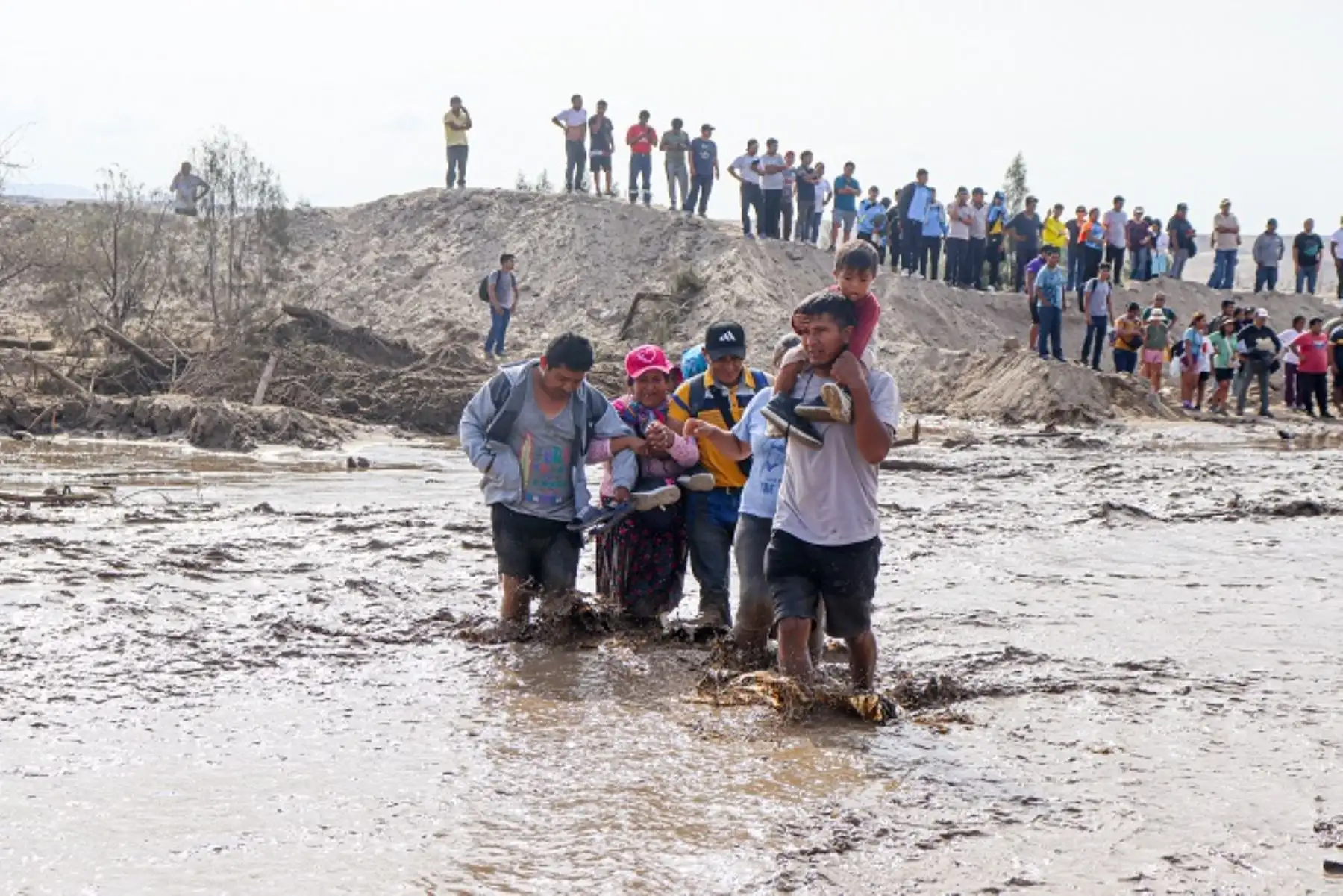
Extreme rains cause river overflows, activation of ravines and mudslides that destroy infrastructure (roads, bridges, homes). Northern coastal zones such as Piura, Tumbes, and Ica are the most vulnerable.
In agriculture, cultivated land is destroyed, though paradoxically, the rains temporarily regenerate dry forests and favour grass growth for livestock.
Highlands
In the high Andean zones, especially in the southern part of the country, El Niño causes severe droughts and scarce rainfall. This drastically reduces water reserves, affects planting, and decreases production of essential foods such as potatoes and pulses.
It also increases the risk of respiratory diseases due to sudden temperature fluctuations.
Jungle
The Peruvian Amazon suffers periods of extreme drought and water deficit that threaten river flows, affecting river transport and facilitating the spread of forest fires.
The negative impacts also manifest in the following areas:
Infrastructure Damage
Negative effects include catastrophic damage to vulnerable homes and forced displacement of populations affected by flooding. It also generates water scarcity due to infrastructure destruction.
Agriculture
Air temperatures so high during autumn and winter break the biological cycles of key export crops (such as blueberries, mangoes, and avocados), which need cold hours to bloom. This causes a massive drop in agricultural export production and loss of seasonal employment in coastal valleys.
Food Insecurity
Increases food insecurity due to reduced agricultural production and harvest deficits, as well as increased prices for basic products.
Public Health
Increase in the incidence of infectious diseases such as dengue and malaria, as warm seasons facilitate greater mosquito reproduction.
Fishing Activity
Displacement of anchovy schools with consequent lower fishing activity, reduced poultry production due to dehydration, and destruction of infrastructure that hinders inter-regional trade and transport of inputs.
Environmental
Alteration of climate and precipitation patterns, an increase in sea surface temperature, migration or death of some animal and plant species, and a greater probability of forest fires in certain regions.
Electric Generation
Reduction in river flows that feed the country's main hydroelectric plants (located on the eastern and central watershed). Forces the State to rely on thermal energy (gas or diesel).
Economy
Severe impacts from an El Niño event occur not only at the environmental level but also at the economic and social level: damage to vulnerable homes and infrastructure, loss of agricultural land, increased infectious diseases such as dengue, and a fall in Gross Domestic Product (GDP) growth, as demonstrated by the historical records of 1983, 1998, 2017, and 2023.
Economically, the El Niño phenomenon has historically had negative consequences for Peru. According to the Ministry of Economy and Finance, during the 1982–1983 event, the economy experienced a 10% drop in GDP. Later, in 2017, El Niño adversely affected key sectors such as fishing, agriculture, construction, trade, and infrastructure, resulting in GDP growth of only 2.5%, lower than in previous years (for example, 4% in 2016).
In 2023, the Peruvian economy went through a technical recession, with GDP declining by -0.6%. In addition, the macroeconomic premises of the Central Reserve Bank of Peru from June 2026 prudently incorporate the impact of a strong coastal El Niño phenomenon that would extend until the summer of 2027, according to monitoring by the Enfen Multisectoral Committee.
Peruvian Localities at Risk
In this regard, the National Centre for Disaster Risk Estimation, Prevention and Reduction (Cenepred) presented the Study of risk scenarios for flooding and mass movements due to intense rainfall associated with the El Niño Phenomenon.
The technical document was prepared with the objective of identifying the zones of the national territory most prone to these hydrometeorological hazards, and thus guiding decision-making by authorities at all three levels of government within the framework of Disaster Risk Management.
The study takes as reference the precipitation recorded during El Niño events in 1983, 1998, 2017 and 2023, considering both El Niños of extraordinary category of global impact and Coastal El Niños, which generated the greatest effects and impacts on the northern and central coast of the country.
Its preparation incorporated climate information from the National Meteorology and Hydrology Service (Senamhi), as well as georeferenced data from the Ministry of Health (Minsa), Ministry of Education (Minedu), Ministry of Agricultural Development and Irrigation (Midagri), the Ministry of Transport and Communications (MTC), and other relevant agencies.