
A Sparkling Gem in the Heart of the City
A natural rapids has been restored to the Touru River in Jyväskylä. It is becoming a major attraction.
25.7. 17:50 Updated 25.7. 18:34
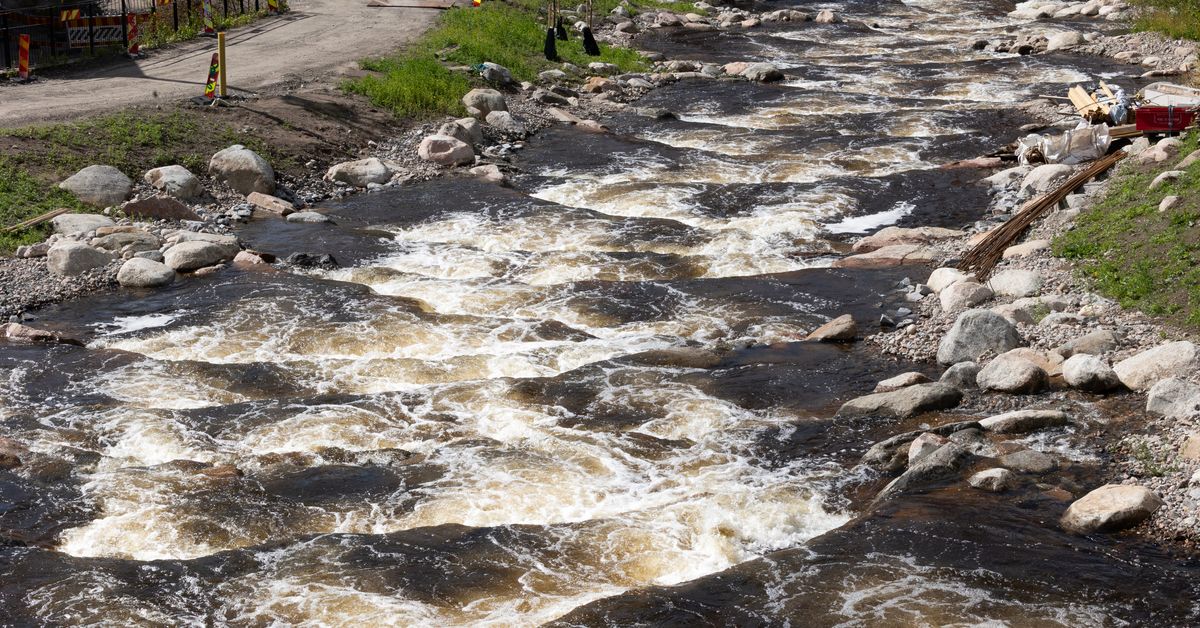
The Touru River in Jyväskylä now churns as rapids, just as it did a hundred years ago.
Curious people have gathered to watch the rapids in the middle of the river, even though surface work is still ongoing and construction fencing surrounds the site.
The nearly three-kilometre-long river, which flows from Lake Palokka to Lake Jyväsjärvi, has been restored for a distance of one kilometre over just over two years.
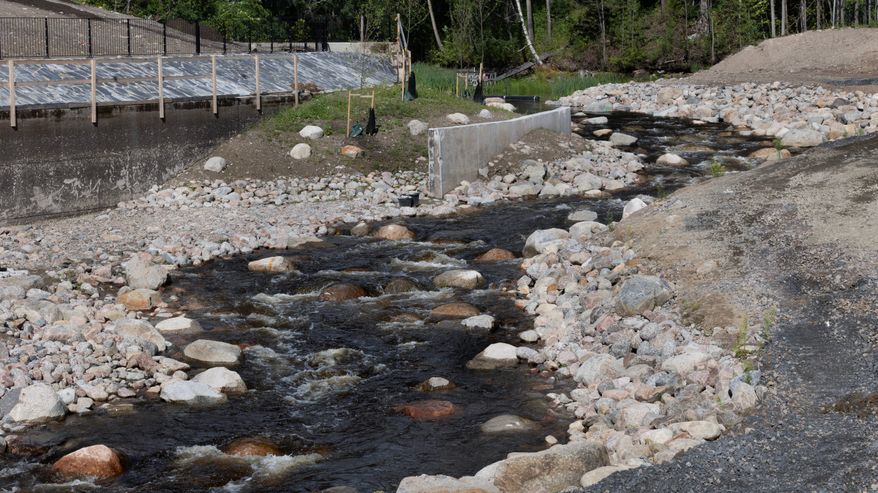
The city has constructed a new riverbed over 300 metres long. It winds naturally. Photo: Jaana Polamo / Yle
In a project costing over eight million euros, the river has been freed from an old dam and restored to a condition as close to natural as possible.
The restoration of Touru River is a unique project. Nowhere else in Finland has a dammed river been converted into rapids with a new riverbed constructed so close to the city centre.
The river has been restored in the upstream and middle sections. The city has been collecting stones for years from its construction sites.
The work has required considerable precision and specialized expertise.
The goal of the restoration is to allow migratory fish to return to the river.
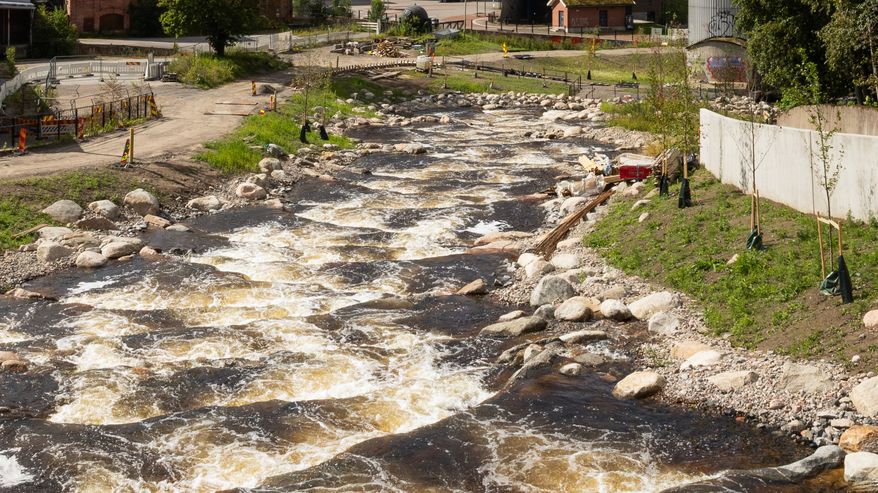
The steep section of the riverbed consists of stone thresholds and rest pools that allow migratory fish to move upstream. Photo: Jaana Polamo / Yle
Jyväskylä city's landscape engineer Jarmo Toikkanen explains that in the most demanding sections, specialized expertise has ensured the work's success.
– A fish management expert has been on site directing the excavator stone by stone, so that the restoration is carried out in the best possible way for migratory fish.
The Old Dam Gave Way to the Current
In the Kankaa area, in the middle section of the river, there is a dam, canal, and power plant that were built in the 1940s.
They were constructed for the needs of the Kankaa paper mill, which began operating in the late 1800s.
The power plant has not been used for nearly ten years.

A switching station completed in the 1920s is protected.
During restoration, old dam and canal structures were demolished. The canal opening was widened from three metres to six metres.
Some structures are protected, so they could not be completely demolished.
At the location of the new riverbed, the ground was cut approximately seven metres deeper.
The steep terrain and silt-based soil—very fine sand and clay—made construction work difficult.
Additionally, supporting the old dam and canal structures required special measures.

During flood times, when water volume can increase tenfold, water is directed into the old flood canal.
The most difficult aspect of the restoration has been managing the flowing water away from construction work.
– Directing water between the old flood canal and the new riverbed has required very precise work, Toikkanen says.
Breeding Areas and Rest Pools for Fish
Breeding areas with appropriate flow velocity have been constructed in the river for migratory fish.
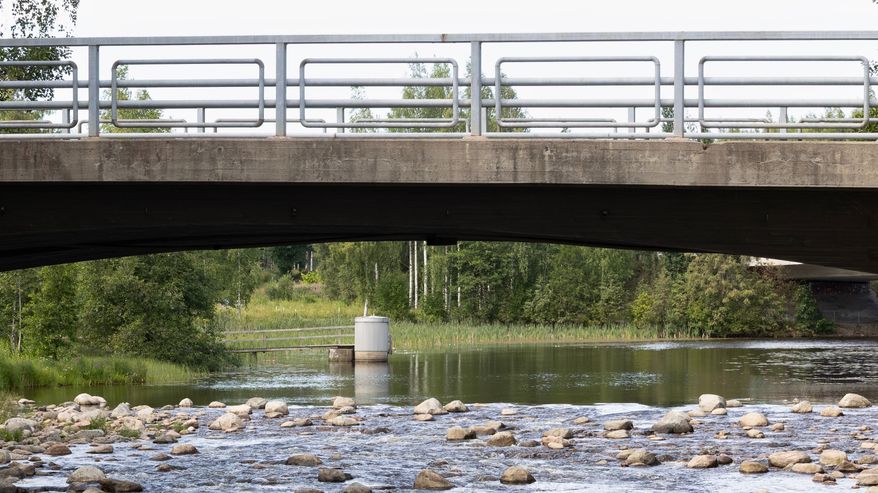
Lake Palokka's water level regulation is now natural instead of dammed. A rapids-like threshold dam has been created upstream. Photo: Jaana Polamo / Yle
Natural stone thresholds have been built into the new riverbed to level out height differences. Rest pools for migratory fish are created between them.
At each threshold, the water level rises 25 centimetres.
Migratory fish can move over the threshold and rest in the pool before continuing through the long rapids section.
Wildflower Meadows Attract Insects
The upper course of Touru River is already completely finished. There, plantings, edge stonework, and walking paths are in place.
Along the riverbanks, natural vegetation has been planned, particularly various types of flower meadows where insects thrive.

Flower meadows are an important part of the rapids restoration. They bring many insects to the area, some of which end up in the river as fish food.
During river restoration, soil material was retained so that the area's natural seed bank could be preserved.
– The growing medium already contains microbes, which speeds up nature's recovery, Toikkanen explains.
The trees and other plants to be planted are native species, which helps insects reproduce.
Insects bring food for migratory fish.
Otters and Ospreys Have Already Found the Rapids
Nature has already claimed the restored river as its own.
According to Toikkanen, from the splashing of small fish, one can infer that small fish have moved upstream into the rapids.
Last winter, an otter couple was seen sledding down the rapids slope. Work site staff have also observed moose tracks.
Ospreys and common redstarts thrive on the rapids sections.
On the Palokka Lake side, in the upper course of Touru River, people have already been able to enjoy the finished rapids landscape this summer:
Video: Jaana Polamo / Yle
Small fish are already moving upstream in the river now, but the return of trout will take longer.
– There has been discussion about whether to wait for a natural population or start stocking, Toikkanen says.
Next summer, monitoring according to the surveillance program will begin. Cameras will be installed in the river to monitor how fish move upstream and reproduce.
The Area Already Draws People
According to Toikkanen, people have discovered the restored river.
On the upper course, which is now accessible, people sit and admire the landscape.
Groups have visited to see the restored rapids.
Touru River is becoming a significant recreation area.
I believe this area will be heavily used.
Jarmo Toikkanen
Restoration work still remains on the middle section of the river, including final stages of a walking bridge, concrete work, lighting, and landscaping.
Restoration of Touru River will be completed in November.