
Progress was largely due to developments in Asia and especially India, according to a UN report.
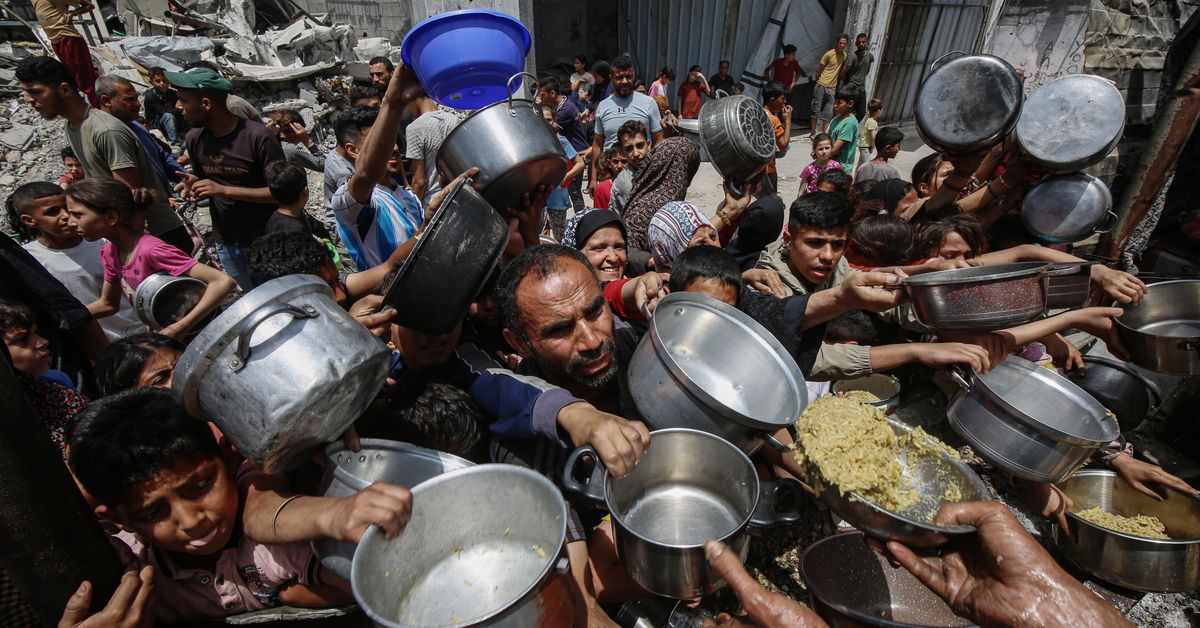
Conflicts create famine. Gaza residents queue for food aid in May 2025. Photo: Omar Ashtawy / AOP
21 July, 14:40
Hunger declined for the third consecutive year, and improvement was recorded on every continent, according to a new UN report.
Approximately 645 million people, or 7.8 percent of the world's population, suffered from hunger in 2025, compared with 8.1 percent in 2024 and 8.6 percent in 2022.
The figures come from a food and nutrition security report released this week by the UN.
Progress was largely due to developments in Asia, particularly India, as well as Latin America and the Caribbean.
Africa had the world's largest malnourished population in 2025: 309 million people, or one in five Africans.
According to UN experts, hunger is predicted to continue declining.
"The biggest difference from previous years is that this year hunger has decreased on all continents, including Africa, although very, very slightly," Máximo Torero, chief economist at the UN Food and Agriculture Organization, told Reuters.
Conflicts and environmental challenges pose risks
Torero warned that geopolitical tensions and weather disruptions represent significant threats to global food systems.
The most pressing problem right now is disruption to maritime traffic through the Strait of Hormuz.
These disruptions raise the prices of fuel, fertilizers, and transportation, increasing food production costs worldwide.
Torero said that the Gaza war has not substantially changed global hunger figures because the report tracks chronic malnutrition, not acute food insecurity caused by conflicts or disasters.
Food deliveries to Gaza have also increased recently, which has helped stabilize conditions. Torero noted, however, that rebuilding the region's devastated agricultural sector will take years.
Beyond conflicts, climate change is a key factor affecting food security, as extreme weather events become more frequent.
A potentially strong El Niño weather phenomenon could disrupt agricultural production in vulnerable areas.
"We hope the trend does not change, but several risks are facing us right now," Torero said.