
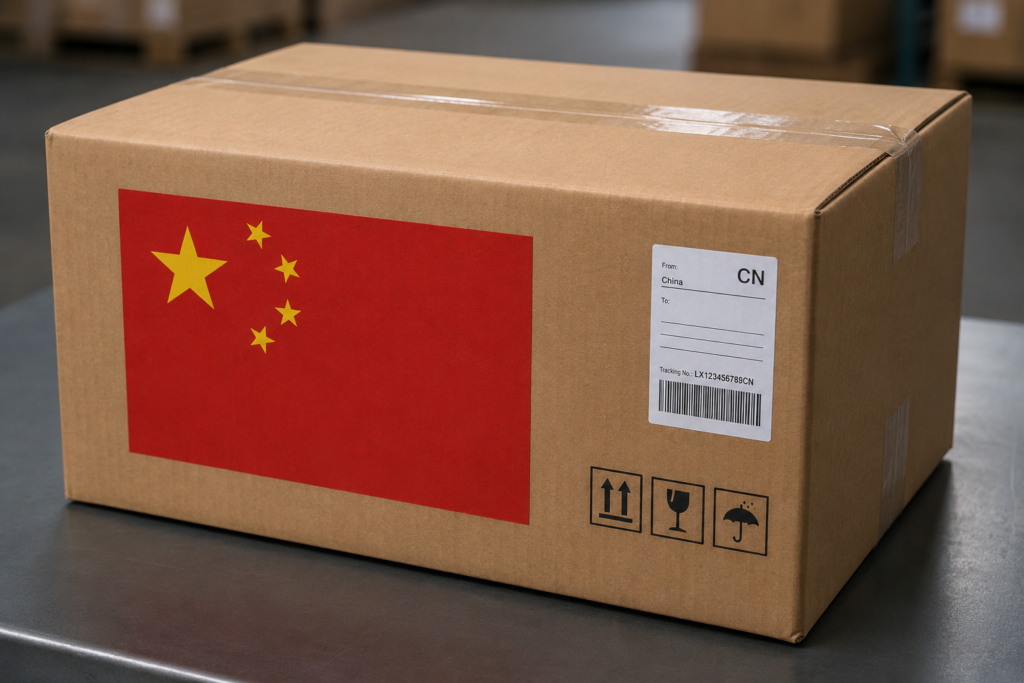
After targeting Temu and Shein platforms and eliminating customs exemptions on small parcels, Brussels now accuses the Chinese e-commerce giant. Accused of failing to do enough to combat the commercialisation of illegal products
20/07/2026
After tariffs, now a fine. Since July 1st, the reform to stem the flood of small packages purchased online has entered everyday European shopping, inserting itself into a rather delicate moment of confrontation between Brussels and Beijing over trade imbalances. Now Europe launches another attack against China. Context: For three weeks, the EU has closed the customs exemption for packages under 150 euros from third countries, triggering a temporary flat-rate tariff of 3 euros on purchases shipped directly to consumers, particularly on major Chinese platforms like Shein and Temu.
Now there is a more precise target. The European Commission announced today in Brussels that it has fined AliExpress, the e-commerce channel of Alibaba, 550 million euros for violation of EU financial services regulations (the Digital Services Act, DSA), and in particular for failing to comply with obligations regarding the assessment and mitigation of risks related to the sale of illegal, dangerous or counterfeit products on its platform. This is the third fine imposed by the Commission since the DSA came into force, and it is the highest. In the two previous cases, X had been fined 120 million euros and Temu 200 million.
According to a Commission statement, "AliExpress did not properly assess whether it had sufficient staff to review potentially illegal products. The company overestimated the effectiveness of its illegal product detection and removal system." In short, "it did not realistically account for the disproportion between the number of human moderators and their workload." AliExpress also "did not adequately assess how its recommendation and advertising systems contributed to the spread of illegal products. Tests conducted by the Commission services demonstrated that many illegal products were recommended or advertised to consumers before actually being removed."
Also according to the Commission, AliExpress did not use sufficient quantitative parameters in its assessment. "It relied on a single quantitative indicator, which however did not adequately measure the effectiveness of its moderation system in preventing the appearance or reappearance of illegal products in similar forms. This finding is also supported by tests conducted by the Commission services, which demonstrated how a high volume of illegal products continued to circulate despite AliExpress's moderation efforts."
The Commission also accuses AliExpress of failing to adopt effective measures to reduce the risk of illegal product dissemination. "Many illegal products, from counterfeit goods to dangerous toys and harmful cosmetics, circulated on the platform and, even when identified, remained online for several weeks." This is also because the platform "did not correctly enforce its disciplinary policy against sellers of illegal products. The disciplinary policy was not implemented adequately and shops selling illegal products could remain active on AliExpress despite sanctions."
In particular, "AliExpress's product compliance checks could be easily circumvented through misclassification," also due to insufficient staff. "Dishonest sellers therefore intentionally placed products in the wrong category to benefit from more flexible requirements, allowing non-compliant products to circulate freely on the platform." According to the Commission, "this represents a significant risk for AliExpress. Beyond potential consequences for consumer rights, sellers of such products harm legitimate businesses that invest in design, safety testing and innovation, forcing them to compete with products that instead circumvent these investments."