
Burkina Faso and Togo Launch Joint Seasonal Malaria Chemoprevention Campaign
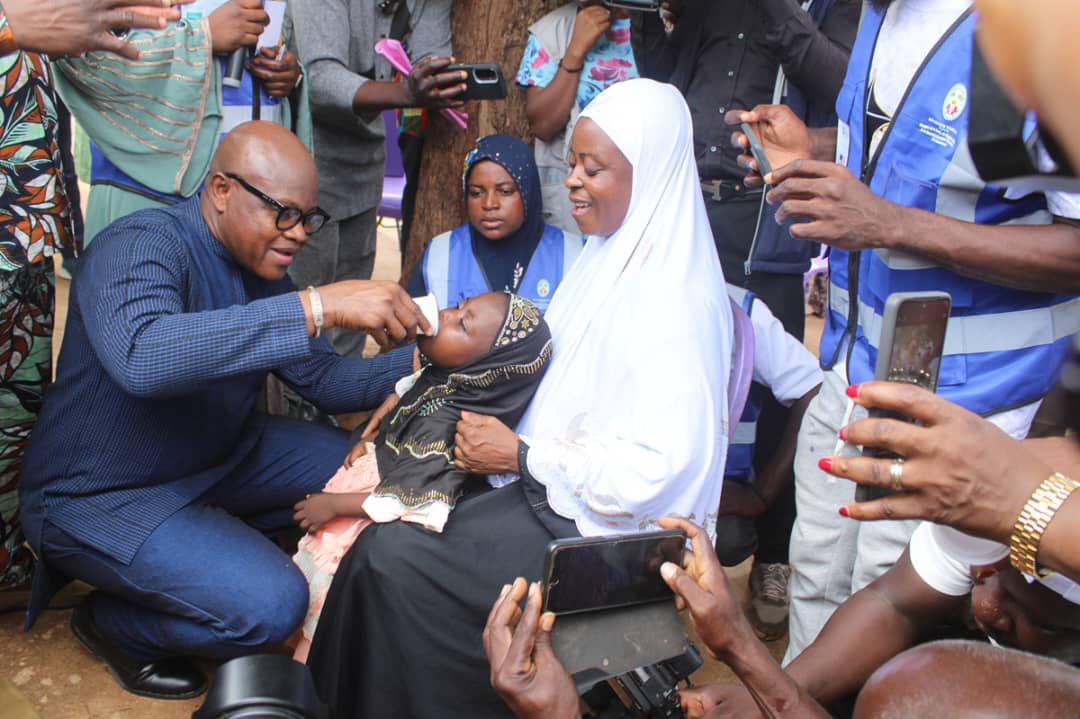
Burkina Faso and Togo are joining forces against malaria. On Monday, 20 July 2026, in Cinkansé, a border town, Burkina Faso's Health Minister Robert Lucien Jean Claude Kargougou and his Togolese counterpart Jean-Marie Koffi Ewonoule Tessi jointly launched a seasonal malaria chemoprevention campaign. They administered the medication, one after the other, to children in a Togolese family.
The first phase of the campaign runs from 23 to 26 July 2026 and targets children aged 3 to 59 months. According to Burkina Faso's Health Minister Robert Lucien Jean Claude Kargougou, this ceremony reflects the shared commitment to make the health of populations in both states a genuine lever for integration and development. He noted that the health sector is one of the strongest pillars of cooperation between Togo and Burkina Faso. He recalled that this initiative aligns with the vision of the leaders of both countries to place cooperation between African states at the heart of public action.
"This vision invites us to build African solutions to African challenges rooted in solidarity, shared responsibility, and regional integration. Our borders are not barriers to disease. They are spaces of life, mobility, exchange, and solidarity," he said.
No Passport for a Mosquito
Minister Kargougou emphasised that in the face of malaria, Burkina Faso and Togo share the same adversary, if not the same enemy. "Neither the mosquito vector nor the parasite responsible for the disease distinguishes a Burkinabè child from a Togolese child. Therefore, our response can only be a joint one," he stressed. The Minister of Health, Public Hygiene, Universal Health Coverage and Insurance, Jean-Marie Koffi Ewonoule Tessi, also indicated that borders, far from being walls, are bridges.
"Disease does not demand a passport, the mosquito knows neither border marker nor checkpoint nor administrative boundary," he observed. For Minister Tessi, responses must also be as mobile as populations. According to him, the border has become a space of protection, and cooperation an instrument of public health. This is why he specified that Togo and Burkina Faso have chosen to act together to save more lives. He stressed that malaria remains one of the most persistent, most costly, and most unjust challenges in the subregion.
Because, the Togolese Health Minister continued, it weakens families, disrupts children's schooling, reduces community productivity, and too often takes lives. Yet, he said, malaria is not inevitable because there are effective tools, strategies from health professionals and committed partners. What is needed, in his view, is more coordination, anticipation, and integration of responses—because when populations live, move, and build their daily lives on both sides of the same border, health policies cannot be developed in isolation.
Anselme KAMBIRE