
Architect Matti Suuronen's Futuristic Buildings from the 1960s Are Gaining Attention Again
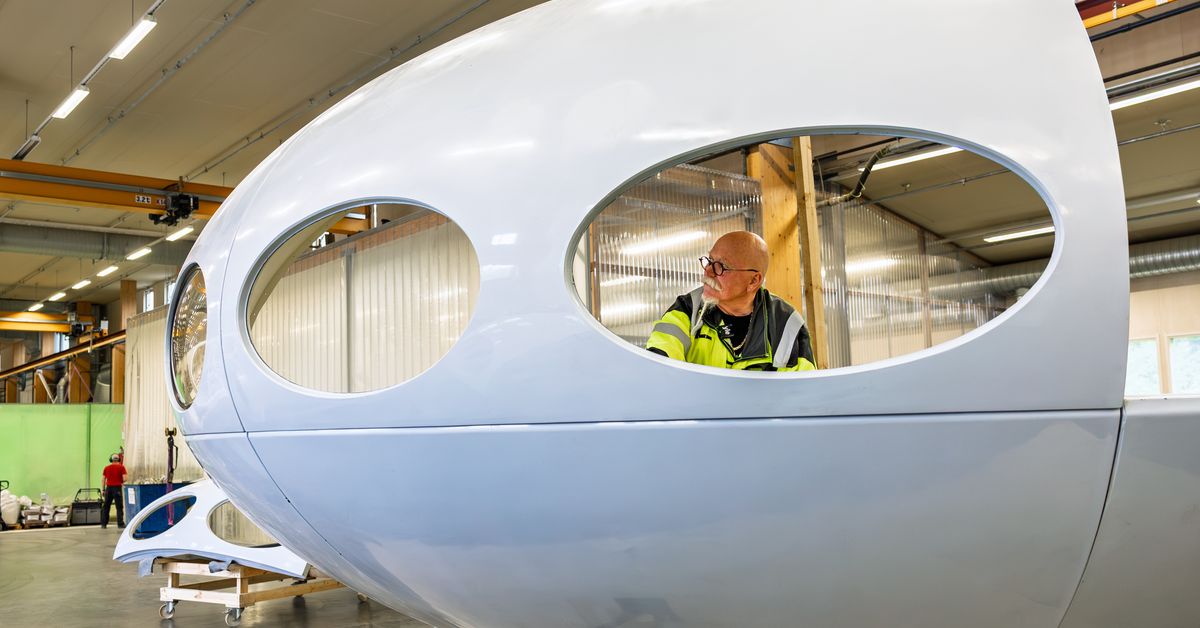
Virtasalmi is completing the first Futuro house in decades. It will be featured in August as a highlight of Helsinki Design Week. Video: Simo Pitkänen / Yle
By Terhi Pirilä-Porvali
19.7. 16:01
The UFO-like Futuro house is a jewel of Finnish architecture that strongly embodies the spirit of the 1960s.
Now a new era for Futuros may be beginning, as a new Futuro is being manufactured at Ekin Muovi company in Virtasalmi, Pieksämäki.
The late architect Matti Suuronen designed the Futuro house in the late 1960s, but the energy crisis of the 1970s halted their production. At the time, 20 Futuro houses were built in Finland and several dozen more under license in other parts of the world. Altogether, an estimated 80–100 Futuros have been constructed.
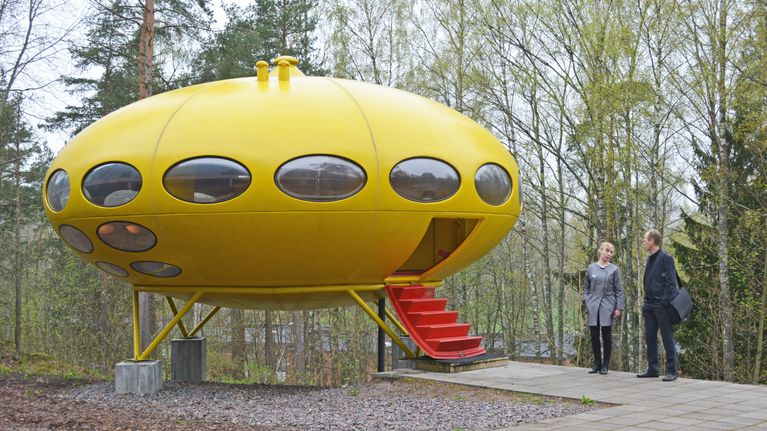
The public can visit the Futuro house in summer at the courtyard of WeeGee museum center in Espoo. This Futuro has also been restored by Erkki Lappi from Virtasalmi. Photo: Yle/Helena von Alfthan
A few fiberglass-reinforced plastic houses have survived in various parts of the world, but no new ones have been built since the 1970s.
Behind the revival of the Futuro is American-Dutch designer Jan van Dijs, who has commissioned a Futuro from Ekin Muovi. Van Dijs's company has focused on renovating historic buildings around the world.
When the new Futuro house is completed in late summer, it will travel to an exhibition at Kaisaniemi to become a highlight of Helsinki Design Week. Inside, new Marimekko patterns will be showcased.
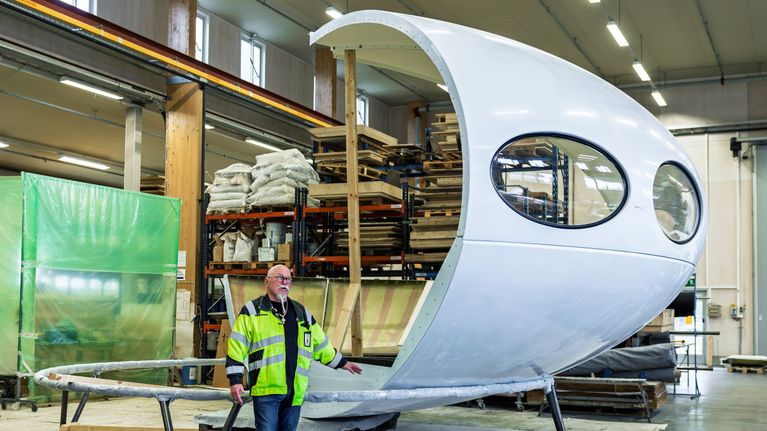
The new Futuro is well advanced at Erkki Lappi's factory in Virtasalmi. The Futuro's diameter is eight meters. Photo: Simo Pitkänen / Yle
Erki Lappi, the plastics entrepreneur responsible for the restoration, believes that this demanding project is about preserving Finnish design heritage.
Matti Suuronen designed fixed seating and a small kitchenette into the Futuro house interior. Video: Petri Lappi, Simo Pitkänen / Yle
Lappi from Virtasalmi has already restored three Futuro houses: one in Vienna, one in Turkey, and one in the courtyard of the WeeGee museum center in Espoo. Restoring fiberglass-reinforced plastic buildings requires specialized expertise that long-time plastics entrepreneur Erkki Lappi has accumulated.
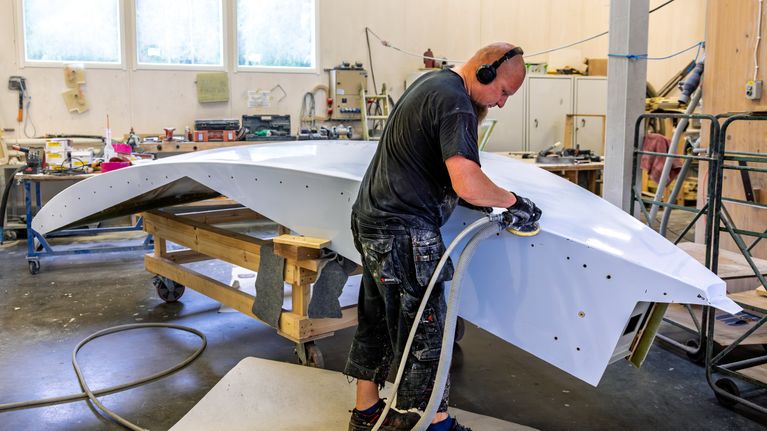
Ekin Muovi employs about twenty workers who have gotten to know the secrets of the Futuro house. Photo: Simo Pitkänen / Yle
"Many have said that there are makers of new things, but fewer are those who can preserve old architecture," Lappi says.
In manufacturing the Futuro house, old original molds can be used, but according to Lappi, everything else must be solved independently. There are no drawings or instructions for building a Futuro house.
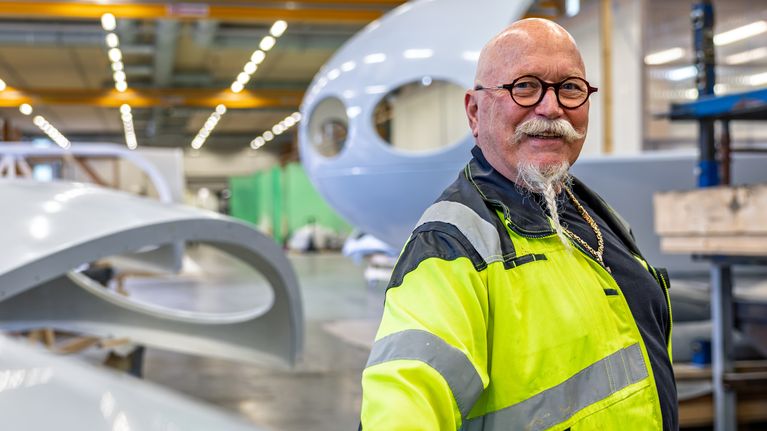
Erkki Lappi from Virtasalmi once collaborated with architect Matti Suuronen. Lappi has extensive experience in restoring buildings designed by Suuronen. Photo: Simo Pitkänen / Yle
Ekin Muovi also has experience restoring another fiberglass-reinforced plastic building designed by Matti Suuronen—the Venturo. The futuristic Venturo is a rectangular building with rounded corners. A total of 20 were manufactured, and most of them served as kiosks, gas stations, and shops.
The Venturo that stood in Kankaanpää for decades and had begun to deteriorate has been restored like new. It was purchased by Laitila Soft Drink Factory, which had Ekin Muovi renovate it. In the future, the Venturo will function as a sales area in the soft drink factory's courtyard in Laitila.
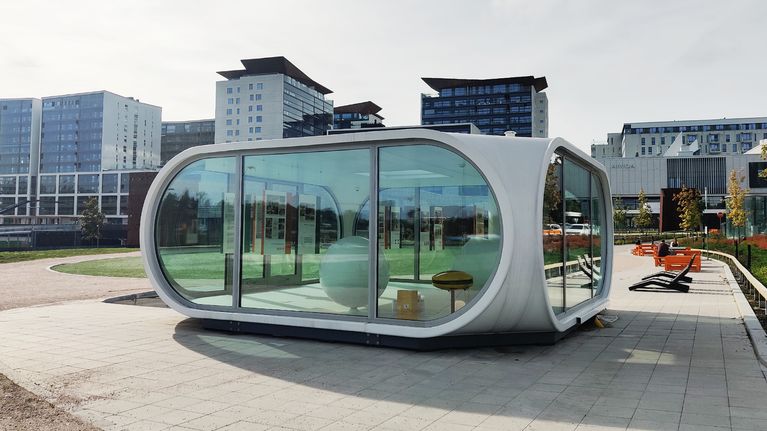
The Venturo house restored by Erkki Lappi stands in front of shopping center Ainoa in Espoo. Photo from autumn 2024. Photo: Aurora Ferm / Yle