
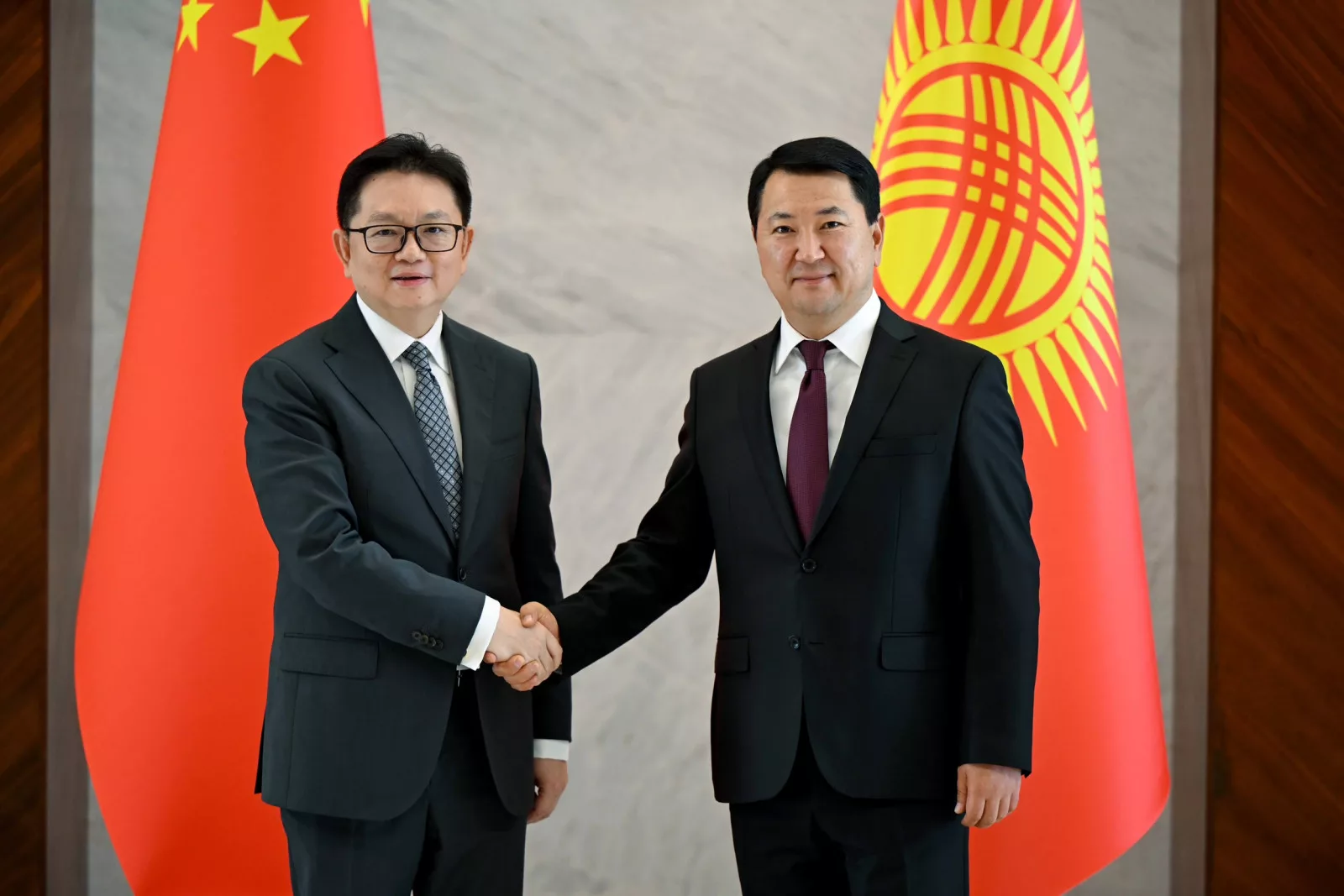
Kyrgyzstan-China Inter-Governmental Commission Meets in Bishkek
The 17th session of the Kyrgyz-Chinese inter-governmental commission on trade and economic cooperation took place under the chairmanship of Erlyst Akunbekov, deputy chairman of the cabinet of ministers of Kyrgyzstan and minister of water resources, agriculture and processing industry, and Lin Ji, deputy minister of commerce of China and deputy representative of the People's Republic of China in international trade negotiations.
Addressing the session, Akunbekov highlighted the particular significance of holding the commission in Bishkek on the eve of the Shanghai Cooperation Organization summit and a state visit by China's leadership to Kyrgyzstan. He said today's meeting serves as a key mechanism for aligning positions, coordinating further joint action, and promptly addressing current issues on the agenda of upcoming events.
"Thanks to the political will and personal support of the heads of our states, we have begun implementing large-scale projects such as the construction of the 'Kyrgyzstan-China-Uzbekistan' railway. The third 'Bedel' border crossing point has been opened, and construction of the 'Barskoon-Bedel-Uchturpan-Aksu' highway has begun. Trade and economic cooperation between our countries is developing dynamically. I am confident that today's meeting will give new impetus to the implementation of joint projects and further deepening of trade and economic cooperation," Akunbekov emphasized.
For his part, Lin Ji, deputy minister of commerce of the People's Republic of China, stated that the Chinese side is interested in further deepening mutually beneficial cooperation in various sectors. He expressed confidence that the issues discussed during this session and the agreements reached will give new impetus to further development of comprehensive strategic partnership between the two countries.
The session agenda included questions on further strengthening trade and economic relations, developing transport and logistics links, and cooperation in the fields of energy, industry, agriculture, finance and other key sectors. Representatives of relevant government bodies and agencies of both countries presented reports on these areas. Following the session, both sides signed a corresponding protocol.