
Russian Espionage Within the European Security Framework
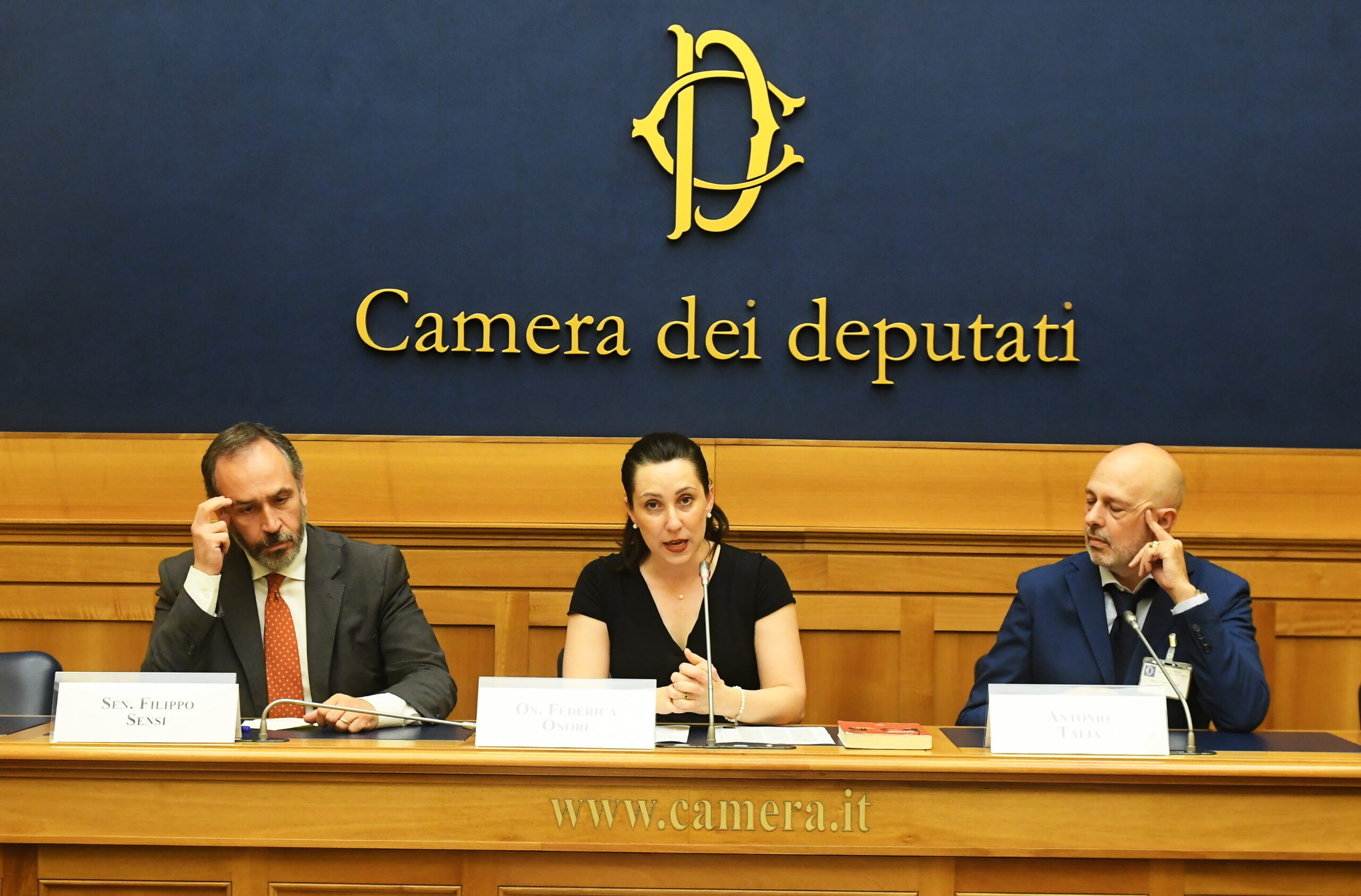
"The subject of Russian espionage within the European framework is the title we chose for this event. Why?" With this rhetorical question, Action party deputy Federica Onori opened a conference she organized held Friday, July 17 in the press room of the Chamber of Deputies, dedicated to the threat of espionage against Italy and Europe. The question is followed by an answer, structured around two main reasons: the first is that "national security is a theme that must increasingly be addressed as European security" and that "collaboration first and foremost between European countries, technically also between NATO countries, is a front that must advance further"; the other concerns the fact that recent cases that have emerged both in Italy and abroad demonstrate that Russian hybrid penetration affects the entire continent.
What is certain is that Moscow does not lack attention toward our country. The reconstruction made by Sole 24 Ore journalist Antonio Talia clearly shows how "Russian espionage infiltrations and in general the threats that Russia poses to Italian territory are systemic and continuous." The journalist and security and intelligence expert recalls that the episode of two former AISI agents arrested in recent days is only the latest in a long series of events that include sabotage, intelligence activities, and acquisition of sensitive technologies—from the sabotage of energy pipelines in Tolmezzo to the passage of the Russian ship Sparta 4 off the coast of Sardinia, through the various espionage cases that have emerged in recent years, from Portuguese official Federico Carvalhão Gil to captain Walter Biot to the case of Aleksander Koršunov. All phenomena that, Talia asserts, fit naturally into the hybrid warfare strategy conducted by the Kremlin toward Western countries since even before the invasion of Ukraine in February 2022.
A connection also taken up in the remarks of Action party senator Marco Lombardo, who reiterated how politics should address the issue with greater determination. "According to intelligence data, in 2022 there were about 87 Russian spies in Italy, but we know that probably today even just the 200 employees in various capacities at the Russian embassy probably carry out espionage activities in Italy," he stated, adding then that "it is unacceptable that on our Italian territory there are people who can in fact shelter behind immunities to carry out activities hostile to our country," and that the issue should not be confined only to the activities of Copasir or the judiciary, but rather must become a subject of public debate, because "the protection and stability of liberal democracy" also pass through the ability to understand "the pervasiveness of espionage in Italy and of hybrid warfare and cognitive warfare."
In the same vein, Democratic Party senator Filippo Sensi, who argued that Russian espionage and disinformation activities are part of a broader strategy. "These are acts of war," he said, referring to influence operations, adding that "this stuff is here" and does not concern a distant theater. For the Democratic Party senator, defining Russian activity as simply a threat is no longer sufficient: "A threat is something that can happen, this is happening, this occurs every day." From this came the call to "document, illuminate, give voice, follow leads" to strengthen public awareness.
Onori closed the conference, calling attention to financial transactions flagged by the Financial Intelligence Unit between 2022 and the Russian embassy in Italy, recalling that she had submitted parliamentary questions without obtaining clarifications from the government. "This is a circumstance that should trouble our consciences," she stated, arguing that "everything we have said so far confirms that Russia is a threat. And this is our responsibility: first and foremost to know it, and then to do something in all necessary venues."