
International Missions Plan Confirms Mediterranean as Italy's Strategic Priority, But Key Questions Remain Unresolved
The new plan on international missions confirms the broader Mediterranean as Italy's primary strategic area and signals the growth of bilateral operations alongside NATO, EU, and UN missions. Fabrizio Coticchia highlights several unresolved issues, from parliamentary delays to controversial missions in Libya, Tunisia, and the Sahel, to the future of Italian presence in Lebanon, Iraq, and the Strait of Hormuz.
17/07/2026
The annual report on international missions confirms the centrality of the broader Mediterranean in Italian foreign and defence policy, alongside the growth of bilateral operations. However, political, operational, and procedural questions remain open, from the situation in Libya and the Sahel to the future of Italian presence in the Middle East. Airpress discussed this with Fabrizio Coticchia, Professor of Political Science at the University of Genoa.
What is the overall picture of Italian international missions provided by the new plan?
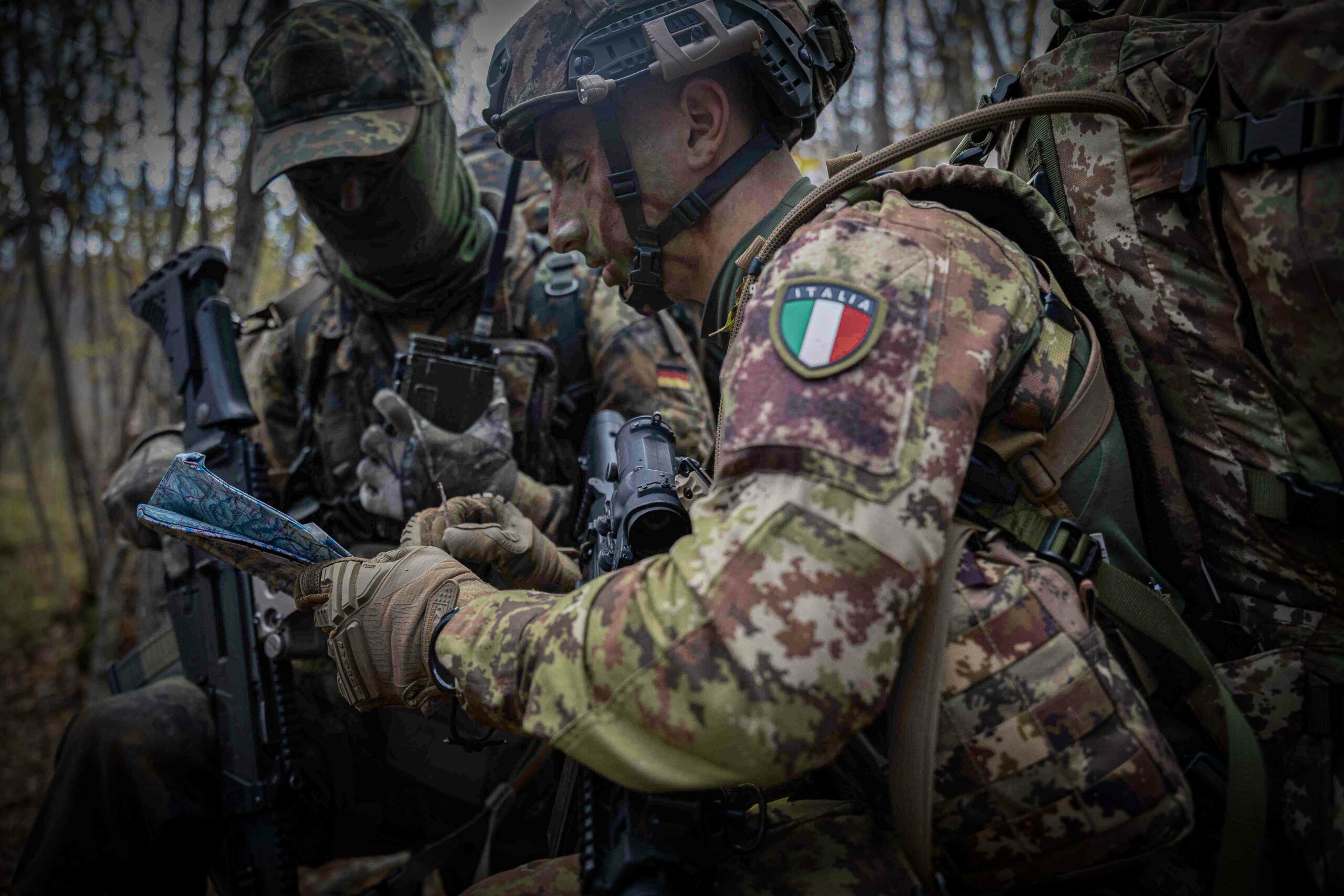
The government presented two documents in May, one dedicated to new missions and one concerning the renewal of those already underway. There are three new developments: two bilateral military missions, one in Iraq and one in Somalia, and a Financial Police mission in Tunisia. Overall, this brings the total to approximately forty missions, twenty-six of which are multilateral. Thirteen take place within the European Union, nine under NATO, and four under the United Nations. To these are added approximately fourteen bilateral missions.
The most significant finding is precisely the growth in bilateral operations compared to the tradition of Italian military missions. It is a substantial number that signals an evolution in the tool employed by Italy abroad. On average, approximately 7,500 units are deployed, with a maximum authorized strength exceeding 11,000.
However, the problem of parliamentary timelines remains. Discussion and approval continue to occur in July, when missions have been operational since the beginning of the year. This is a critical issue acknowledged by all political forces and by the Defence Minister himself. The government claims it is ready by December, but technical and administrative procedures cause delays. This is a problem that has persisted for years and has not been resolved even after the 2016 framework law and subsequent amendments.
How does the new missions approval system work and what consequences does it produce for parliamentary voting?
The most recent reform provided for the grouping of multiple missions in the same geographic area within a single item. This solution guarantees greater flexibility, as it allows for the movement of personnel and equipment between operations located in the same theatre. When a new operational need arises, for example in the Strait of Hormuz area, the government could return to Parliament and obtain rapid authorization to use assets already included in that geographic framework.
However, the grouping can also create political confusion. Within the same item, missions with different characteristics and objectives can be included, on which political parties might have different positions. The case of Libya is indicative. Political forces can support one mission and contest another, even if both are included in the same document.
In general, research on parliamentary behaviour shows that voting on missions follows primarily political placement. Government parties tend to support them, while opposition parties are generally more critical. There is also an ideological component. Forces further to the left express greater opposition, support grows closer to the centre, and may decrease again in some right-wing components. Despite these differences, most missions continue to receive broad parliamentary consensus.
Which operations concentrate the main differences among political parties?
The most controversial missions remain those linked to Libya, Tunisia, and the Sahel. Assistance to the Libyan Coast Guard continues to be criticized due to human rights violations and events that have emerged in recent years. The new Financial Police mission in Tunisia has also encountered opposition from part of the centre-left. The criticism concerns the democratic crisis the country is experiencing and the risk of replicating a model similar to the Libyan one, supporting local forces without adequately addressing political and institutional conditions.
The Democratic Party does not authorize the mission concerning the Libyan Coast Guard and the one in Tunisia. The Five Star Movement takes a more critical stance and adds further reservations, for example regarding training in Ukraine.
In the Sahel, the most significant case is Niger. Italy remained the only Western actor present in the country, despite the coup and the non-recognition of the government. A problematic situation also concerns Burkina Faso, where a mission has been authorized for several years without actually being launched, because the necessary operational conditions do not exist.
Opposition raises concerns about democracy, political legitimacy, and human rights protection. The government acknowledges these critical issues but argues that completely abandoning these areas would reduce Italy's capacity to exert influence and would leave greater space for actors like Russia and China. The debate thus concerns the relationship between values, strategic interests, and the concrete possibility of maintaining a presence.
Which geographic areas are considered priorities and which issues remain open in the Middle East?
The broader Mediterranean confirms itself as the main strategic area for Italy. This is a definition that encompasses not only the Mediterranean in the strict sense, but also the Middle East, the Horn of Africa, and part of the Sahel. The Balkans follow, where Italy maintains missions that are numerically and politically important.
Several dossiers remain open in the Middle East. The first concerns Lebanon. The Unifil mission is due to end at the end of the year and Italy and France have already begun discussing their willingness to lead a possible new mission. Unifil has been one of the operations most strongly supported by the Italian Parliament in recent years, with consensus that has also involved forces traditionally more critical of military deployment abroad.
A second issue concerns Iraq. The new bilateral mission provides for approximately two hundred units and would be tasked mainly with training local forces. However, part of the centre-left has raised doubts about its advisability, considering that the missions already present in the country—the one against ISIS and the NATO one—are currently hampered by the regional conflict situation. The question raised in the debate is what additional function a third mission could perform in a context where existing operations already encounter significant difficulties.
As for the Strait of Hormuz, there is general political willingness to assess an Italian presence. However, the centre-left asks that the operation be placed within a multilateral framework. It could instead be a mission promoted by a coalition of countries and not directly by the European Union. In that case, it could be linked to the geographic item that already includes naval operations such as Aspides and Atalanta. It would still remain to clarify which assets to deploy and from which missions they would potentially be transferred.
What is the relationship between international commitments and the deployment of military personnel on national territory?
An element not to be overlooked is that Operation Strade Sicure continues to employ personnel and resources that must be accounted for in the broader balance of Italian military capacity.