
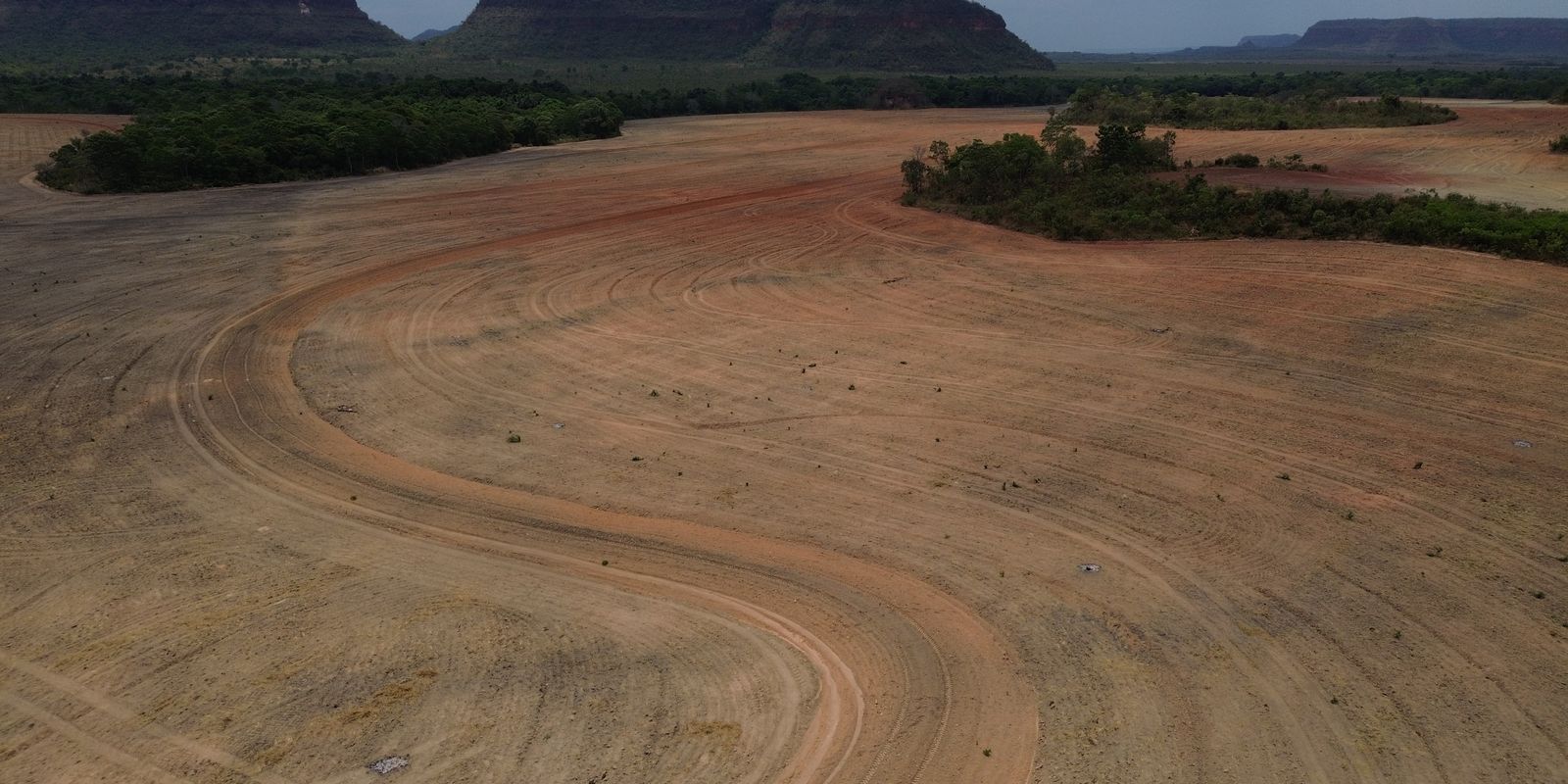
A Science article warns that the end of the Soy Moratorium could result in an additional 1.4 million hectares of deforestation in the Amazon over the next ten years. The figure is 14% higher than historical deforestation rates.
Forest loss would produce approximately 745 million tonnes of CO₂ equivalent. For comparison, the volume is similar to Canada's total annual emissions.
The Soy Moratorium is a voluntary agreement established between companies, civil society, and government that prevents the purchase of soy produced in deforested areas of the Amazon from 2008 onward.
The study involves researchers from WWF Brasil, Greenpeace Brasil, the Land Conservation Association, and university institutions from Wisconsin and Illinois in the United States.
The publication reinforces that the end of the agreement could also increase pressure on regions with potential for agricultural expansion and vulnerability to land speculation. The estimate is that up to 28.7 million hectares of public forests could be impacted, especially in areas with future potential for infrastructure expansion.
In the article, the authors also evaluate the effects already observed from the Moratorium. In the first ten years, the mechanism reduced deforestation by 35% in areas at risk for soy expansion. The avoided forest loss is estimated at 1.8 million hectares.
For researcher Tiago Reis of WWF-Brasil, the experience is successful and should be maintained.
"The Soy Moratorium demonstrated that it is possible to expand agricultural production while maintaining conservation criteria. The challenge now is to ensure that instruments capable of reducing deforestation continue to be part of Brazil's development strategy."
Economic impacts
The authors analyzed the argument that the agreement would have limited economic opportunities for producers. The data indicate restricted direct impacts: only approximately 739 thousand hectares of land suitable for soy were legally cleared after 2008, and the majority was not located on properties that produce soy.
The research also identifies approximately 1.7 million hectares of already-cleared land suitable for soy in the Amazon. This would allow production increases without impacting new forest areas.
Another criticism of the Soy Moratorium was countered: that the agreement would have caused market distortions or functioned as a cartel among buyers. Researchers compared prices paid to producers in municipalities covered by the Moratorium and in neighboring regions not subject to the agreement. They argue that the mechanism did not affect producer compensation nor caused market distortions.
Researcher Tiago Reis argues that the agreement helps build a more sustainable and competitive production chain. According to him, markets have expanded environmental and traceability requirements.
"By adopting commitments to control deforestation and traceability, the sector contributes to protecting the forest, preserving ecosystem services essential for agriculture itself, and responding to growing demands from national and international markets," says the WWF-Brasil analyst.
"Producing more and conserving the Amazon are objectives that can move forward together, provided there is transparency, shared responsibility, and mechanisms capable of guiding productive expansion toward already-cleared areas," he adds.
Recent history
On January 5, 2026, the Brazilian Association of Vegetable Oil Industries (Abiove), which represents companies such as Cargill, Bunge, and ADM, announced its official withdrawal from the Soy Moratorium.
Four lawsuits on the matter are before the Supreme Court (STF). A court-brokered mediation attempt was announced in March. The objective was to seek consensus among farmers, industry, the Public Ministry, and environmentalists. This did not happen.
In June 2026, negotiations officially ended. The four lawsuits challenging the legality of the pact were returned to the justices responsible at the STF for judgment.
The STF plenary is scheduled to begin analyzing the lawsuits on August 12.
One of the judgments concerns the preliminary injunction decision by Justice Flávio Dino, which suspended all lawsuits and administrative proceedings contesting or attempting to block the Soy Moratorium.
The Court will also analyze Direct Actions of Unconstitutionality, focusing on the validity of a Mato Grosso state law that removes tax incentives and donations of public land from companies that sign the Moratorium.