
Scientists at the Peruvian Amazon Research Institute (IIAP), a body under the Ministry of Environment, are developing a study that uses acoustic recordings to assess how human activities modify Amazonian biodiversity.
The research analyzes forest sounds with the support of artificial intelligence (AI) to identify species and measure the impact of human intervention across different ecosystems.
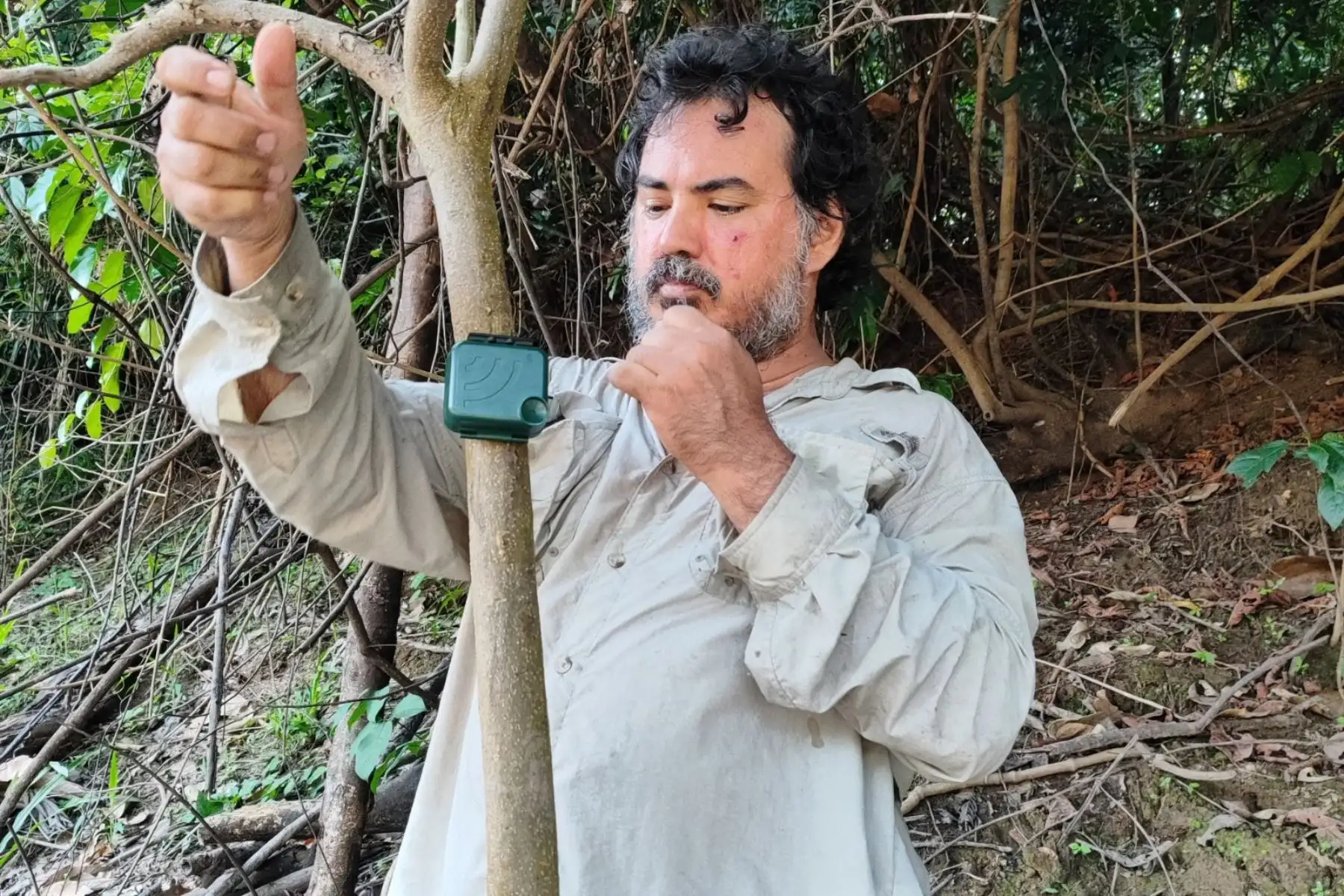
The project, led by Dr. Giussepe Gagliardi, a researcher specializing in amphibians and reptiles, installs recorders in zones with varying levels of intervention, such as along the Iquitos-Nauta, San Joaquín de Omaguas, and Jenaro Herrera roads. It also collects information from conserved areas such as the Allpahuayo Mishana National Reserve to compare both scenarios.
He stated that the study is part of the research group "Anthropogenic impact on biodiversity of Amazonian ecosystems using passive acoustic monitoring."
More than 800,000 minutes of recordings
The goal is to identify which species tolerate human presence and which abandon these environments when external pressure on the forest increases, and to formulate recommendations for mitigating impacts and conserving Amazonian ecosystems.
So far, the team has collected more than 800,000 minutes of recordings. Researchers will analyze this material using artificial intelligence to recognize species and detect changes in soundscapes.
To achieve this, specialists are building a reference database that classifies each recording according to its source. This way, the system learns to distinguish sounds produced by biodiversity from those generated by human activities. Subsequently, it will be able to automatically process thousands of files and identify the presence of species and the degree of intervention at each site.
Acoustic library
This work has the support of the IIAP's Artificial Intelligence Laboratory, equipped with the Manatí supercomputer and high-performance systems to process large volumes of acoustic information.
As part of the results, scientists are also developing an acoustic library of Amazonian species. According to Gagliardi, the platform will allow users to listen to sounds recorded during the investigation and will be available to the public by the end of this year.