
Published: July 16, 2026, 06:58
Chen Yu-ning is a Taipei native who studied political science and some anthropology, has worked as an editor, conducted qualitative research, and done some curatorial work on public issues. She enjoys public affairs, values careful listening in interviews, and loves wrestling with words late into the night. She currently works as an independent freelancer.
In 2026, she participated in端傳媒's fourth cohort of the Growth Program's News Engagement group. Through attempts to facilitate conversation between interview subjects, she hopes to discover a new form of commonality in news reporting and find the power of collective dialogue.
Whether caring for aging parents, partners, or other family members, how do we care for each other as we grow old?
As a caregiver, is the hardest part the physical toll? Or is it the constant worry about whether you've chosen the right healthcare solution? Perhaps it's the emotional exhaustion of mediating disagreements among relatives?
And these questions of "elder care" are not actually worries exclusive to caregivers. Many working-age adults also feel anxious: when the day comes that an aging family member becomes ill, what happens to their job? Do they have siblings to share the burden? Or should they have moved back to a city closer to home earlier?
Caring for aging family members whose condition deteriorates is not simple, yet media attention often focuses only on extreme cases of violence, and in seeking answers, arrives at the conclusion "family economic hardship / insufficient state systems."
But even in a utopia where resources are adequate and care work has someone to shoulder it, would the decision-making stress and emotional burden that elder care places on a family really disappear?
Through the News Engagement group in端傳媒's Growth Program, we are planning a news engagement experiment centered on the theme of "elder care."
This time, we don't just want to find exceptional individual cases in events, but rather to get closer to a kind of collective shared state of mind—including the decision-making pressure, emotional entanglement, and personal stress that happen in the gaps of daily life, as well as reimagining the second half of one's life.
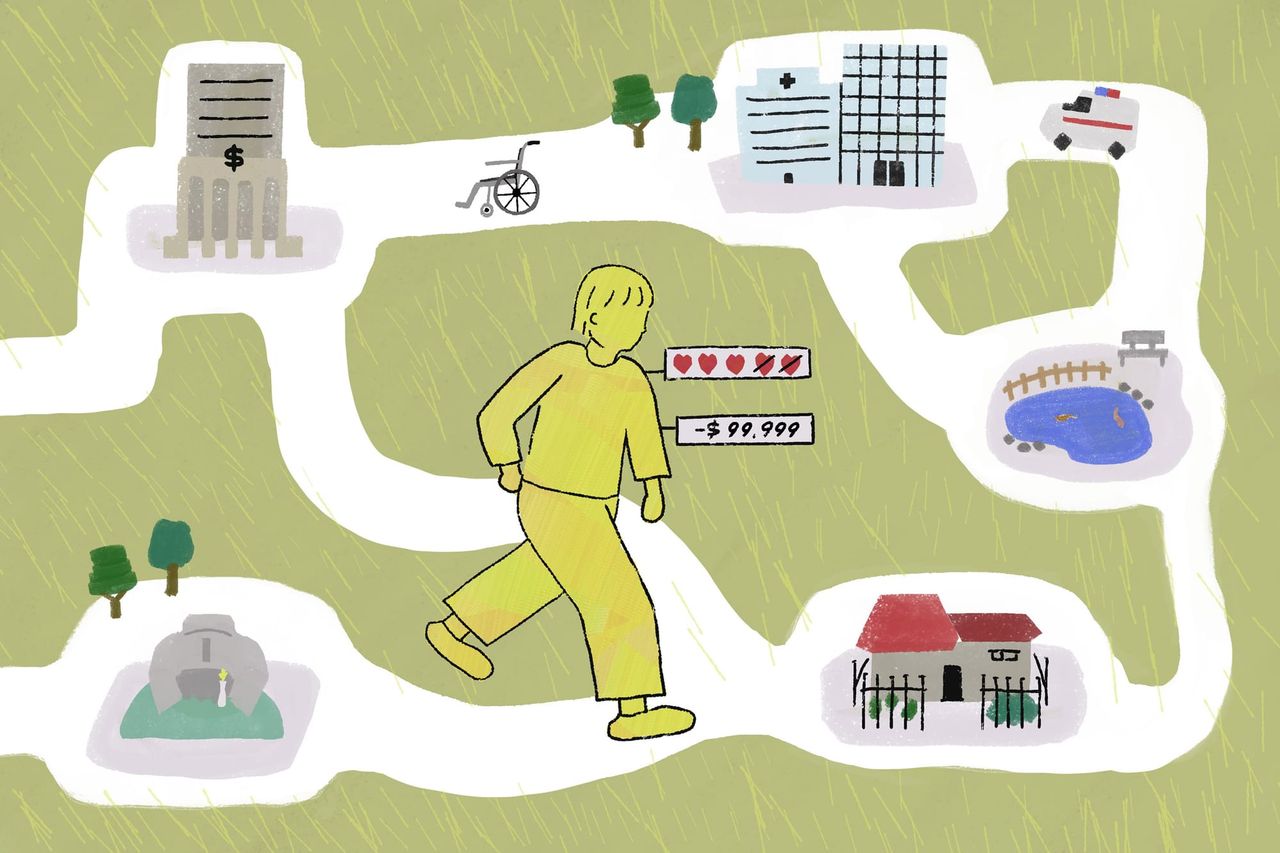
We are temporarily calling this state "invisible impasse." It may appear in the everyday lives of those caring for aging family members, or it may appear at a crossroads in life planning. This feeling of being "stuck" is often invisible and voiceless in public. For this reason, we need strong participation from readers.
Ways to Participate:
To more fully understand these experiences that are difficult to articulate, we will simultaneously conduct a "state-of-mind questionnaire" and "small group dialogues."
- In the "state-of-mind questionnaire" (approximately 10–15 minutes to complete), whether you have already experienced, are currently experiencing caregiving tasks and decisions, or are still planning and imagining what the second half of your life might look like, all manner of thoughts—bright and dark alike—will serve as the starting point for this interactive experiment.
- In "small group dialogues," we will further invite willing questionnaire respondents to participate in an in-person dialogue in Taipei (approximately 90–120 minutes). Groups of 6–8 caregivers in similar circumstances will work together to find the most appropriate way to describe what this long-standing state of being "stuck" in elder care looks like. These discussions will then be transformed into a comprehensive report on Duanmedia.
If you are:
- A "current caregiver" actively caring for aging family members, such as arranging medical appointments, hiring caregivers, or mediating family opinions
- A "graduated caregiver" who has recently set down the burden, perhaps discovering that life doesn't easily return to its former rhythm
- A "long-term care planner" watching family members age, with waves of concern about the future, beginning to consider choices about housing, finances, career, family planning, or arrangements for the second half of your own life
You are welcome to fill out this state-of-mind questionnaire.
Whether heavy or warm, let each other's experiences become the factual basis for reporting on elder care. News does not always have to begin with the story of a particular subject; it can also begin with the shared experience of a group of people, with feelings that haven't yet been organized, with moments that are difficult to articulate in the moment yet repeatedly appear in daily life.
This content is copyrighted by the editorial department of Duanmedia or related units. Without authorization from the Duanmedia editorial department, please do not reprint or reproduce, otherwise it constitutes infringement.