
German radars, Leonardo and Weibel illuminators, and a Kongsberg command centre built around an interceptor developed in Ukraine. For the anti-missile shield, a model of Euro-Ukrainian cooperation is taking shape that could serve as a foundation for future common defence initiatives.
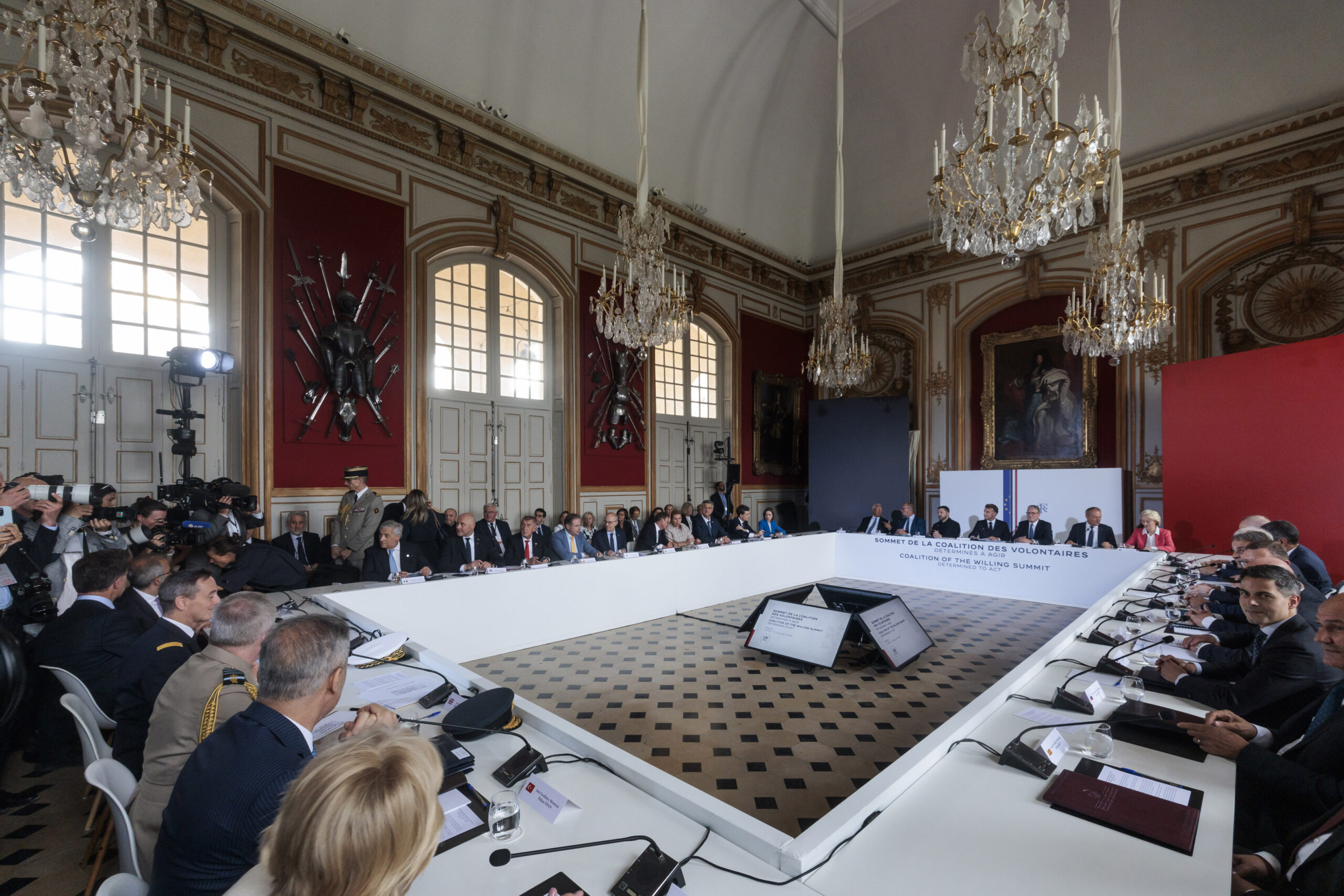
Europe is attempting to build the first building block of a genuine shared anti-missile defence architecture. In Paris, on the eve of 14 July celebrations, nine European countries (France, Germany, Italy, Spain, the United Kingdom, the Netherlands, Denmark, Norway and Sweden) announced the creation of the Integrated Anti-Ballistic Defense Coalition, a joint initiative developed together with Ukraine and designed to develop integrated European capabilities against the ballistic missile threat as quickly as possible. The joint declaration describes a "Flagship Project" that must accelerate the development of a shared anti-missile capability, through shared operational requirements, technical working groups, dedicated governance and close industrial and scientific cooperation. The objective is to create an integrated defence architecture, open to future membership by other countries that share its principles, leveraging the experience Ukraine has gained defending against Russian missile attacks.
Although the document signed at the Élysée does not specify any particular system, several signals point to a candidate already identified. This would be the Freyja project, an anti-missile defence system with the Ukrainian FP-7.X interceptor as its central element, developed by the company Fire Point. The missile, derived from the FP-7 tested from February onwards, completed its first fully guided and manoeuvred flight in early June, representing the starting point for a future anti-ballistic interceptor. According to the developers, the project adopts the aerodynamic configuration of the Soviet 48N6 missile used in S-400 systems, but integrates electronics, software and guidance systems entirely developed in Ukraine.
It is important to note that within the new framework, the Freyja system would also be built as a truly European programme. The Ukrainian interceptor would be integrated with German long-range search radars, with Weibel or Leonardo's Kronos Land illumination radars and with a command centre based on the Fire Distribution Center developed by Norwegian firm Kongsberg. Companies destined to participate include Thales, Safran, Diehl Defence, Hensoldt, Saab, Sener and Leonardo itself, outlining an industrial supply chain distributed across numerous European countries and aiming for an open and interoperable architecture, capable of integrating sensors and command systems from different industries, in line with the approach indicated by the political declaration signed in Paris.
The choice also reflects a specific division of tasks and valorisation of competencies. On one hand, Ukraine brings to the table unique operational experience, gained from intercepting Russian ballistic missiles such as Iskanders in real combat conditions; on the other, Europe offers what Kyiv does not yet possess, such as industrial capacity, funding and research. If the programme were to materialise, Europe's future anti-missile shield would thus be born from the combination of Ukrainian combat experience and the technological and manufacturing base of European defence industry. Providing the actors involved with a blueprint easily adaptable to future initiatives as well.
French leader Emmanuel Macron described the launch of the anti-missile coalition as a new step towards building a Europe of defence, emphasising that the project is purely defensive in nature. Italian Foreign Minister Antonio Tajani spoke of a "very positive" day, highlighting how for the first time a concrete step has been taken towards European defence involving the United Kingdom and Ukraine. Ukrainian president Volodymyr Zelensky reiterated that the immediate priority remains strengthening the country's air defence, while the Kremlin dismissed the coalition of the Willing as an initiative that "incites war".
The new coalition is part of a broader package of initiatives in support of Ukraine announced during the Paris summits. Macron confirmed a roadmap for the transfer of 16 Rafale fighter jets to Kyiv, with first deliveries expected between 2028 and 2029, as well as an initial batch of new-generation Samp/T batteries. The French president also announced that the future multinational force of the coalition of the Willing will conduct exercises in the coming months in countries bordering Ukraine, so as to prepare for a possible deployment after a ceasefire. In the meantime, European Commission president Ursula von der Leyen also announced the United Kingdom's participation in the 90 billion euro European loan aimed at supporting Ukraine.