
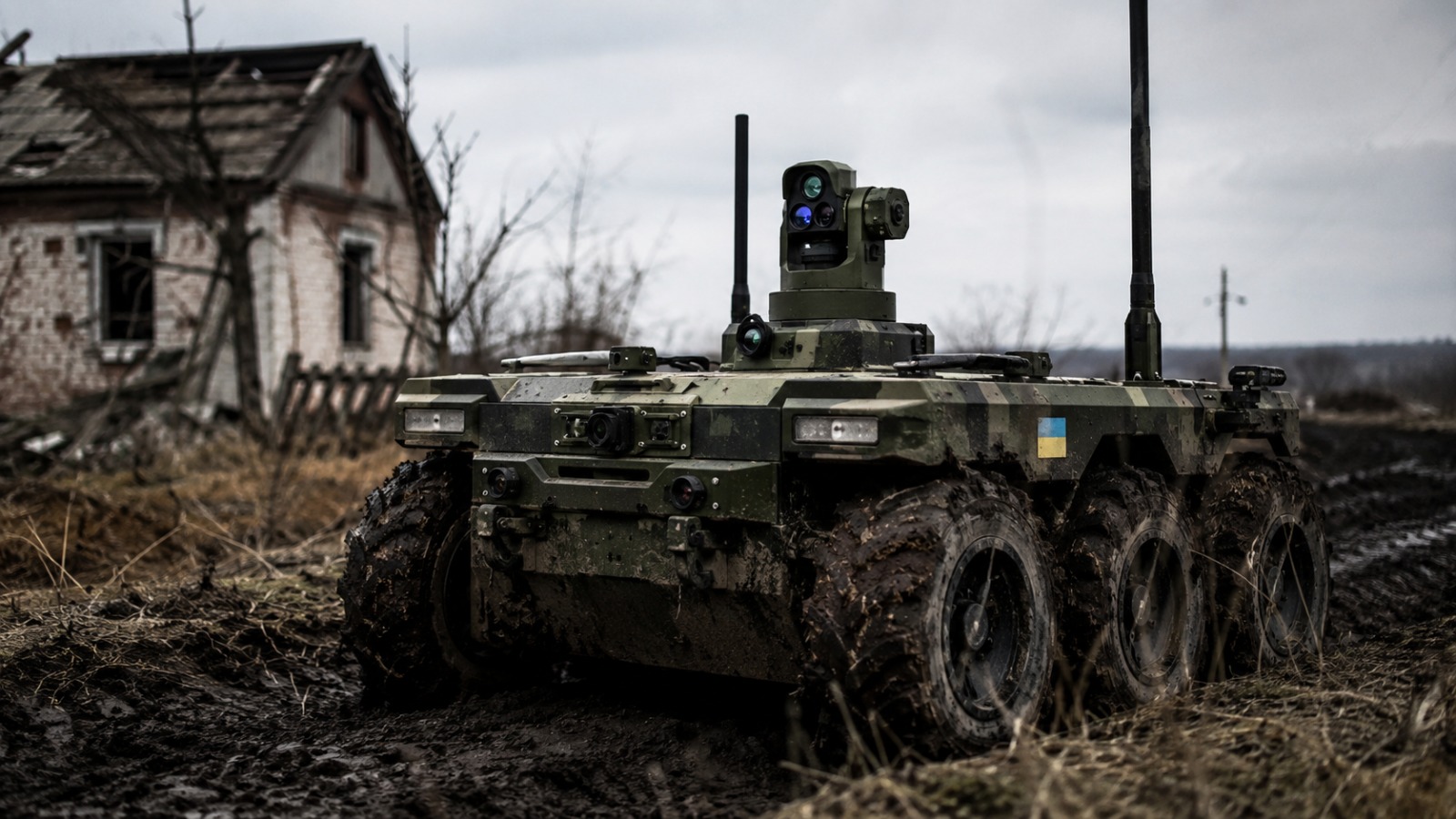
Ukraine's battlefield robotization accelerates as Trinity Robotics plans to double production
The robotization of the Ukrainian battlefield does not appear to be a process destined to stop. Trinity Robotics, one of Ukraine's leading companies specializing in the development of Unmanned Ground Vehicles (UGVs), aims to double production in 2026, increasing from an initial 1,100 units to approximately 2,200 units. This growth is driven by increased demand from Kyiv's armed forces, which increasingly view autonomous systems as a necessary response to personnel shortages and high casualty rates at the front.
"Our most important objective is the robotization of the battlefield, because only this will allow our country to win the war." With these words, released to Defense News, Trinity Robotics cofounder Oleksii Konik summarized the company's strategy. According to Konik, Trinity Robotics is working in coordination with both the Ukrainian Military Procurement Agency and directly with over twenty units of the armed forces. The surge in orders has prompted the company to rapidly expand production capacity at its facilities in Ukraine. The expansion reflects a broader shift in how the war is being conducted. While aerial drones have already revolutionized reconnaissance and attack, the role of autonomous ground systems is also growing, used to reduce soldier exposure in the riskiest missions.
The company's flagship product is Konyk One, an unmanned ground vehicle designed primarily for logistics and medical evacuation missions. In its standard configuration, the vehicle weighs approximately 460 kilograms and can carry up to 300 kilograms of cargo. Its use allows forward units to be resupplied and wounded soldiers to be recovered without further exposing personnel to enemy fire. But Trinity Robotics is already developing a more advanced version. The new model will be equipped with an armed turret, transforming the vehicle from a simple logistics platform into a system capable of performing combat missions and direct troop support.
Parallel to expanding domestic production, the company is looking beyond Ukraine's borders. Kyiv's current ban on weapons exports prevents local companies from directly selling their systems abroad. To circumvent this limitation and increase production capacity, Trinity Robotics is therefore pursuing the creation of joint ventures with European partners. "We are looking for European manufacturers, companies that produce trucks, vehicles, and military components. We have the opportunity to create a joint venture in Europe to produce our UGVs," Konik explained. According to reports, negotiations are already underway with a French manufacturer, whose name has not been made public, to launch shared production on European soil. The company is also seeking additional industrial partners in other European countries.
The initiative is part of the government's Build with Ukraine program, through which Kyiv aims to internationalize part of its defense industry. The model involves creating joint production lines in allied countries. Production should first meet the needs of Ukrainian armed forces, but any surplus volumes could be exported to other international customers. For Trinity Robotics, this also represents a response to wartime limitations, allowing it to expand production capacity without relying solely on facilities located on Ukrainian territory. The expansion is also supported by foreign capital. Recent investors include Swedish fund Front Ventures and Hede Capital Partners, who are financing the company's growth as Ukraine's defense sector continues to attract interest from European investors.