
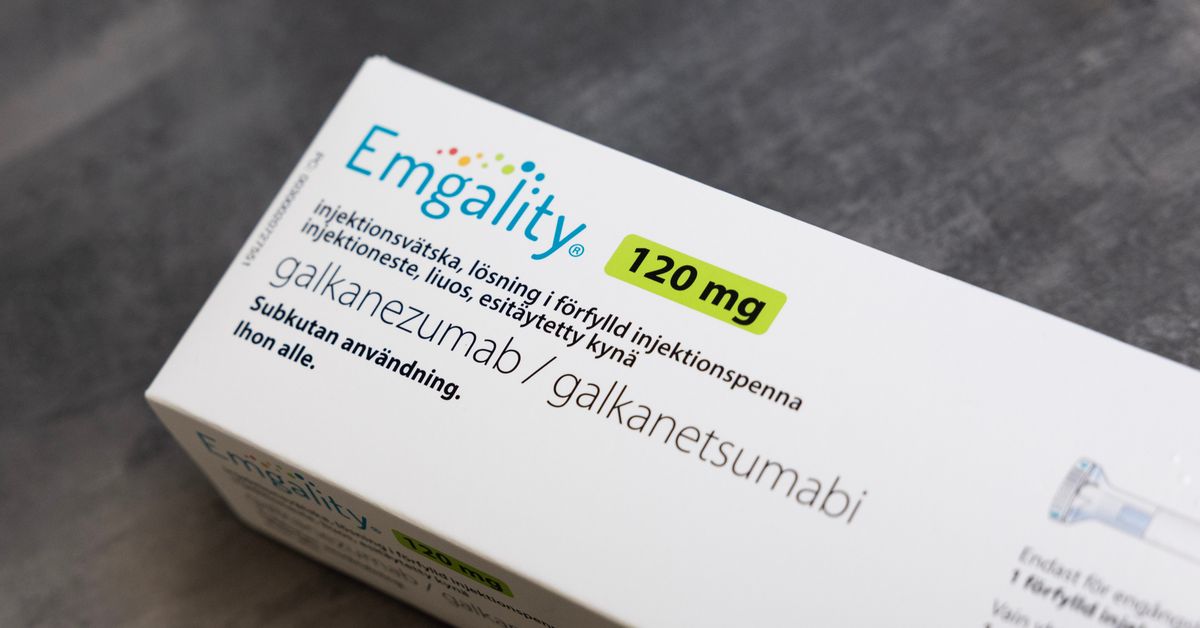
Regional health authorities question Kela's decision on cancer drug reimbursement
Kela announced in early July that it would stop reimbursing certain expensive medications if they are dispensed in public healthcare. At the same time, Kela shifted these costs to regional health authorities (hyvinvointialueet). The decision affects, for example, cancer drugs.
According to the Ministry of Social Affairs and Health, a regional health authority must pay for a medication if it is given to a patient at a healthcare outpatient clinic.
This has not been the case until now. For example, in the South Karelia regional health authority, a person has collected medications from a pharmacy that a nurse has dispensed.
– This has been the standard interpretation of the law. If a nurse was needed to dispense the medication, it was possible to use the Kela reimbursement route, explains Tuula Karhula, administrative chief medical officer at the South Karelia regional health authority.
The South Karelia regional health authority does not believe it has violated guidelines or law by directing its customers to collect medications from a pharmacy. Instead, medications dispensed by a doctor, such as cortisone injections, have been funded by the regional health authority.
– This has been a decades-long practice. This is how things have been done across Finland, Karhula states.
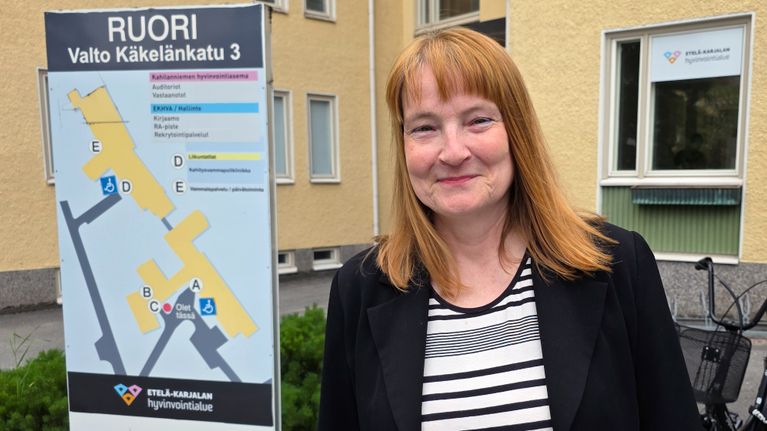
Administrative chief medical officer Tuula Karhula at South Karelia regional health authority says the new policy on medication reimbursement has caused friction in the region. "This was a surprise. Why was this done in the middle of the year, when this year's drug budgets and other budgets were made last autumn?" Image: Kare Lehtonen / Yle
Ministry says regional health authorities have shifted costs to Kela
According to the Ministry of Social Affairs and Health, some regional health authorities have used this practice as a cost-saving measure and directed costs to Kela for medications that customers should have received free from the regional health authority.
Administrative chief medical officer Tuula Karhula at South Karelia regional health authority denies that this is a cost-saving measure.
According to Karhula, the new policy will cost the South Karelia regional health authority over one million euros.
– Now it would be fair if Kela transferred money equivalent to the medications to the regional health authorities, she states.
Also Marianne Riekki, chief medical officer at North Ostrobothnia's Pohde regional health authority, emphasises that this has not been a cost-saving measure.
– We do not recognise that we have deliberately shifted costs to Kela. Now that such guidance has come, we hope that the financial impact will also be assessed. This remains quite a matter of interpretation.
Riekki comments that Pohde has acted according to previous Ministry of Social Affairs and Health guidance and legislation. She says that legislation lags behind the current situation in healthcare.
According to Riekki, it is difficult to make changes on a fast schedule – especially when the information arrived during summer.
– There are still many unclear points. For example, how this is interpreted for medications dispensed in home healthcare.
New guidelines already having an impact
Jouni Kurola, service area director at Kuopio University Hospital, says that legislation has been interpreted to mean that a customer obtains a Kela-reimbursed medication from a pharmacy and seeks healthcare to receive help related to medication dispensing from someone other than a doctor or dentist.
– For certain medications there has been an established practice of acting this way, and this has not been a special cost-saving measure. The goal has certainly been for all regions to act in the same way.
Kurola says that the new guidelines have already had an impact on the hospital's operations.
– In specialised healthcare, particularly in cancer treatment, there are several medications for which we must change our practices in accordance with the given guidelines while safeguarding patient care. Implementation of the change is underway in accordance with the guidelines.
Department director notes guidance has been unclear
Susanna Wilén, department director of health and hospital services at North Karelia regional health authority, says that the previously used guideline was unclear in its interpretation.
– Certainly nobody has put medications on Kela's reimbursement out of malice, but rather this has been about this unclear guidance, she assesses.
According to Wilén, two problematic messages have appeared in public discussion.
– First, one could have gotten the impression from reading between the lines that regional health authorities had approved medications in some reckless way. This is not the case; regional health authorities act responsibly.
Second, Wilén raises a claim that it would not be safe for patients to collect such medications themselves from a pharmacy.
– What about private sector patients, whose situation is not changing now? I think this statement was degrading to public healthcare patients.
Wilén does not believe that the changed situation will be visible to customers.
– Everyone will certainly receive the medications and care they need, Wilén promises.