
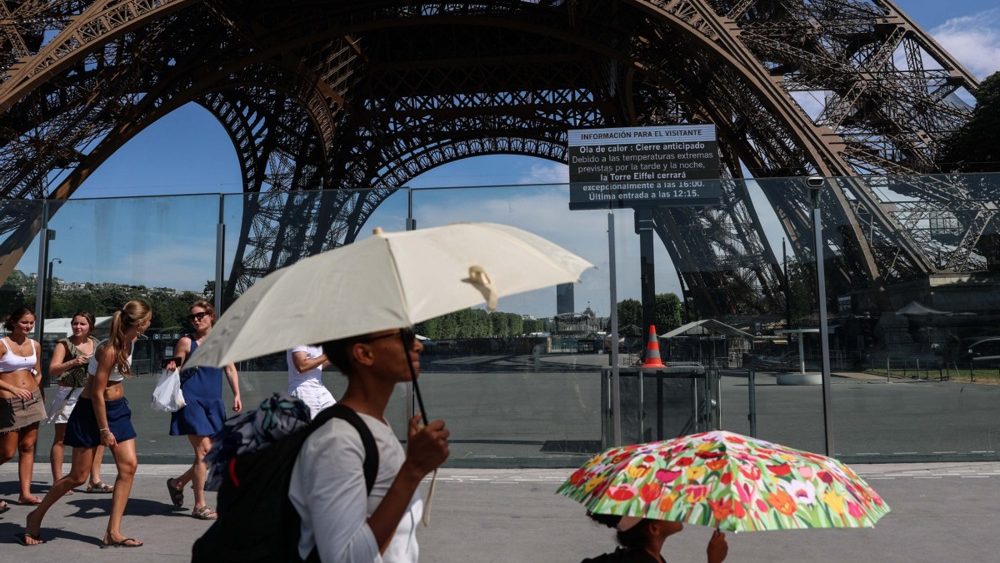
French climatologist warns France entering unknown climate phase
French climatologist François Gemenne has said that France is entering a climate phase it does not know because it is adapted to a climate that no longer exists, and this is a "terrifying challenge", reported the Paris newspaper Le Monde on its website.
"We are completely unprepared. The country is adapted to a climate that no longer exists. It is quite terrifying," Gemenne said, adding that France is facing its second heat wave of the year.
According to him, the idea that adaptation is a form of surrender must be overcome.
"We used to think that saying such a thing was defeatism, but the reality is that we will have to adapt while simultaneously reducing greenhouse gas emissions," the expert argues.
Gemenne emphasizes that exceeding 50 degrees Celsius in France is entirely possible within the next 20 years, especially since the High Council for Climate discovered in a study that there will be five times more heat waves by 2050.
"Yes, we must take into account that much of the summer could be spent in a heat wave and therefore we must think about everything we can do: adapt buildings, working hours, and so on," said the researcher.
According to him, repeated heat waves will impact the landscape: rivers, mountains, and vegetation.
"We are entering a phase that we do not yet know. We must not view this as inevitable, but as a terrifying challenge," Gemenne said.
According to him, the priority is exclusively on buildings, and Paris is the European city "where the most people die from heat waves," because the city is very densely populated, heavily built up, and has very little air conditioning.
"We will have no choice regarding air conditioning, despite its environmental impact. We must acknowledge the benefits of air conditioning in terms of public health," Gemenne said, repeating that adaptation is primarily aimed at saving lives.
The expert said he is quite pessimistic about genuine collective awakening.
"I do not think heat waves will change the situation. In 2022, with a particularly dry summer, we thought this was a major turning point. We did absolutely nothing. There are stories, but the main challenge for us researchers is to stop only giving warnings and start working, finding and promoting solutions," said the climatologist.