
Care Crisis Resurfacing in Finland's Elderly Homes and Home Care Services
Caregiving assistant Tarja Parkatti raised alarm about a crisis in care homes nearly a decade ago. Now, she says, the situation has deteriorated again — both in residential facilities and home care services.
Parkatti speaks from personal experience. Moreover, her phone rings and buzzes more frequently than ever. Family members, caregivers, and doctors from across Finland contact her about problems in elderly care.
"I've been receiving inquiries all along, but now they're coming at an accelerating pace — sometimes daily," she says.
Parkatti says relatives are seeking advice on how to act.
"Family members feel they are not being heard and that problems are not being addressed. Care staff, meanwhile, are afraid to raise issues of neglect because they fear for their jobs."
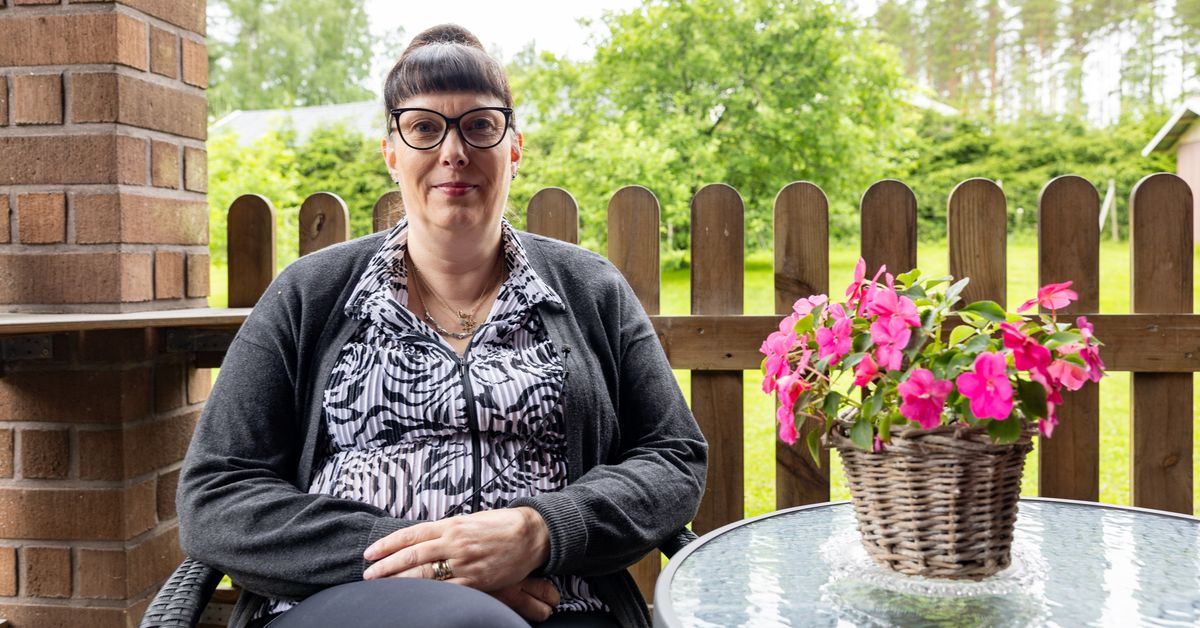
Tarja Parkatti, a caregiver and end-of-life care worker from Karijoki, received considerable praise and recognition when she exposed problems at her then-workplace in December 2018.
Parkatti's own employment disputes were litigated through different court levels, from the Court of Appeal to labour court.
"I was in hot water back then, but my conscience is clear, and I would do everything the same way again for the elderly."
Too Few Caregivers
Based on the inquiries she has received, Parkatti estimates that elderly care has returned to the level it was during the previous crisis — or perhaps even worse.
When problems in care homes surfaced loudly before, Parliament increased caregiver staffing ratios. A law required that at least seven caregivers care for every ten residents.
Since then, the ratio has been reduced again. It shows, Parkatti says:
"The workload hasn't decreased, so caregivers don't have enough time for residents. There are no recreational activities, and the elderly aren't taken out for walks. The elderly are put to bed as early as 5 or 6 p.m."
In home care, too, according to Parkatti, a caregiver must now visit far more elderly people, and may not even manage to take a meal break.
Newly elected chief physician Päivi Hietanen also took a stance in June on re-emerging reports of neglect and even mistreatment of the elderly.
Criminal Report Over Mother's Care
Tarja Parkatti's mother, who has dementia, has been in institutional care for about three years. Parkatti is pleased that the family can visit her mother often.
"Father visits daily, feeds mother lunch, and spends time with her at the daytime café. They have been married for nearly 60 years, and their love has not disappeared."
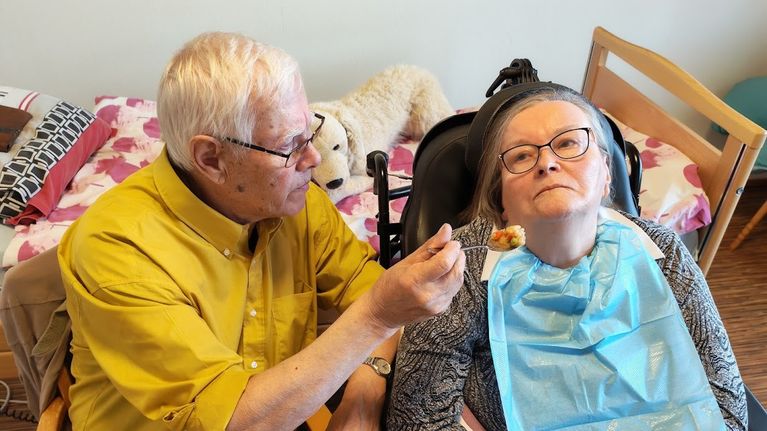
Tarja Parkatti's father visits daily to see and care for his wife at the care home. Photo: Tarja Parkatti
But the daughter is not satisfied with her mother's care.
"There's constant rush there. There's too little staff."
Parkatti is particularly troubled by the fact that her mother's mobility has declined during her years in the care home.
"Mother was moving around too much there, and they started restraining her with a bathrobe sash in the wheelchair. At first just during meals, but then it became more continuous."
My mother apparently had false teeth forcibly inserted into her mouth.
Tarja Parkatti
Parkatti acknowledges that the illness has surely contributed to her mother's loss of mobility. But now her mother is completely immobile.
"Her functional capacity was run down."
According to Parkatti, there has been "minor friction" all along. But bruises on her mother's cheeks were too much.
Tarja Parkatti filed a criminal complaint with police for assault and made a complaint to the regional welfare authority.
Parkatti suspects that someone tried to forcibly insert false teeth into her nonverbal mother's mouth.
"My mother, who cannot speak, was caused pain and suffering. That felt truly terrible."
South Ostrobothnia Has Extensive Elderly Services
Social director Tanja Penninkangas of the South Ostrobothnia regional welfare authority reminds us that a client has the right to file a complaint or report a problem if they or their relatives believe that care shows, for example, signs of neglect.
"We go through them carefully with the staff members and units involved. If neglect has occurred, we aim to correct the process so that a similar situation does not happen again in the future."
According to Penninkangas, good, respectful care is achieved above all with trained staff.
"How a direct supervisor leads their unit is crucial."
The region's age structure is reflected in service demand. The welfare authority has 3,000 home care clients and just under 2,000 residential service clients.
South Ostrobothnia's regional welfare authority has been in state-led assessment procedures due to years of budget deficits. Elderly care is likely not to escape cuts.
"We have more elderly people in residential service units and as home care clients than the national average," Tanja Penninkangas notes.
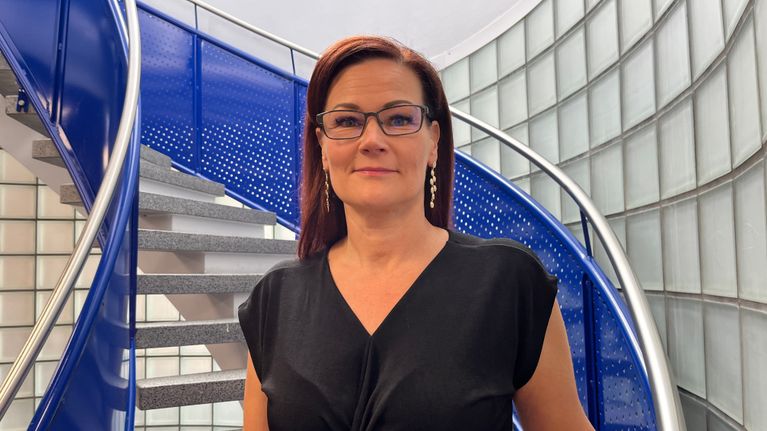
Social director Tanja Penninkangas emphasises that the welfare authority investigates reported potential problems, and if issues are found, action is taken. Photo: Päivi Rautanen / Yle