
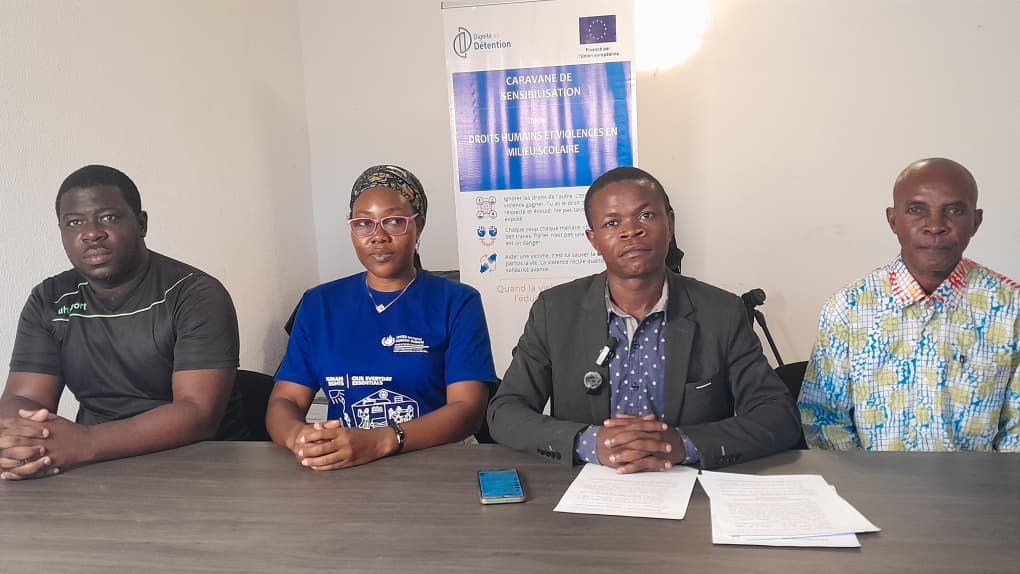
A coalition of several Gabonese civil society organisations announced on Saturday in Libreville that it had seized multiple courts to protest a surge in cyberattacks, characterised notably by the hacking of WhatsApp and Facebook accounts.
The coalition said it had received about fifty complaints from Gabonese citizens from all social categories.
According to the coalition, analysis of the causes of these cyberattacks shows that the massive use of virtual private networks (VPNs), intended to bypass the suspension of social networks in force in the country since 17 February, would be at the origin of these attacks.
"The numbers behind these attacks generally begin with +500 or +600. These are foreign country codes. Everything therefore suggests that the hackers are not necessarily in Gabon," explained Patrice Thérence Mezui, president of the National Human Rights League and spokesperson for the coalition.
The coalition believes that this phenomenon, marginal in the past, has spread since the decision by the High Authority for Communication (HAC) to suspend the official use of social networks on 17 February 2026.
"This is a violation of the Constitution, in the chapter devoted to fundamental freedoms," Mr Mezui insisted.
"The Court declared itself incompetent because the challenged act is administrative," he added.
The court of first instance also declared itself incompetent. The coalition ultimately filed a final complaint with the State Council. "We are awaiting the State Council's decision," he concluded, without specifying when the complaint was filed.
Immediate lifting of social network suspension
The coalition believes that the suspension of social networks exposes Gabonese citizens to cyberattacks. It demands the immediate lifting of this suspension, which has become temporary in name but nearly permanent in practice. It also calls on the president of the Republic to promulgate the law on the use of social networks recently adopted by Parliament. It finally suggests opening negotiations on the question of social networks in order to reach a national consensus.
The HAC had justified this measure by the need to combat information disorder, cyberstalking, and hateful content. Civil society, for its part, believes it is disproportionate and contrary to the principles of the rule of law.