
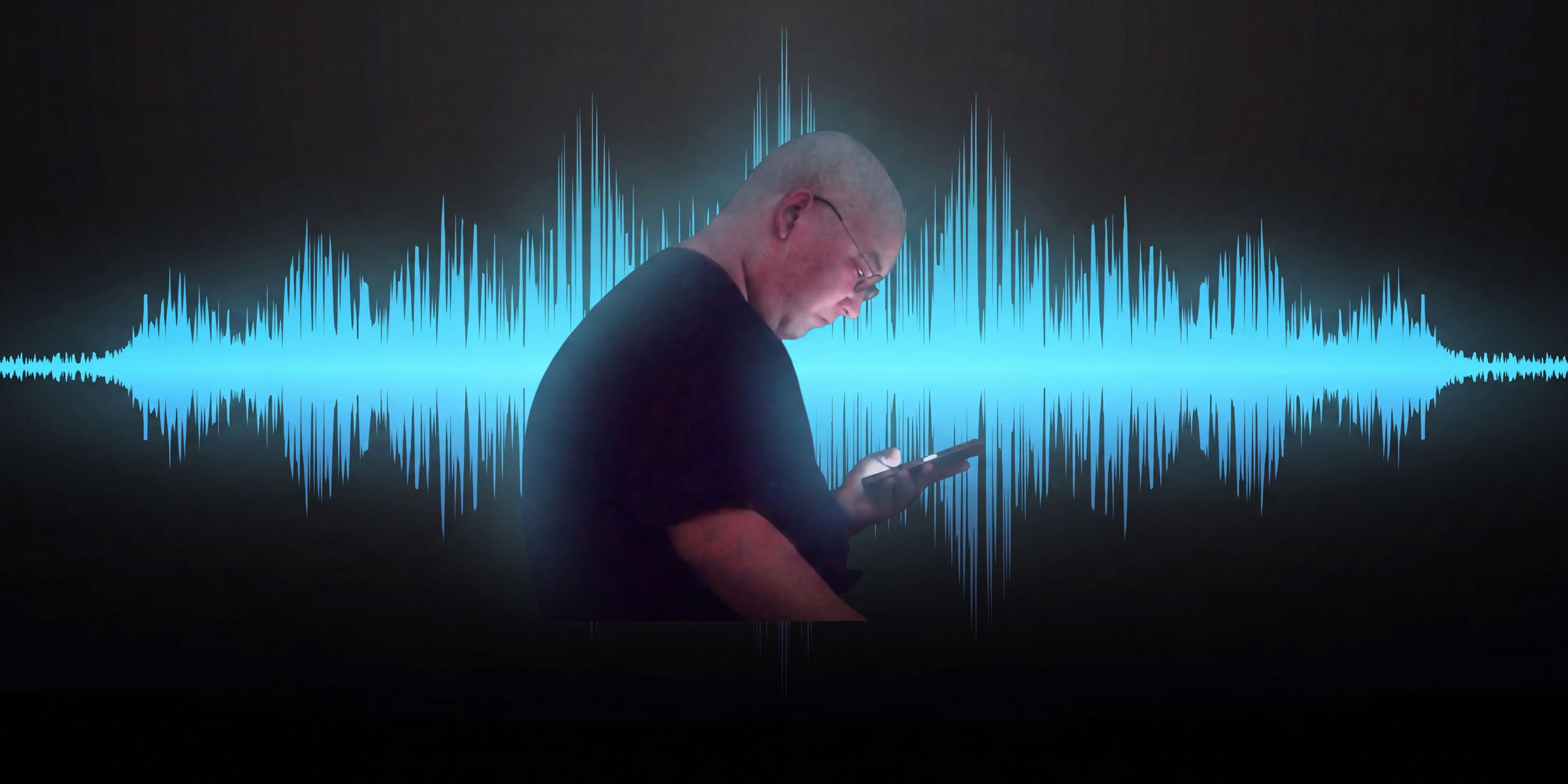
JIANGSU, East China — Voice Actors Battle AI Clones Stealing Their Livelihoods
"Hello, sir or madam. I'm not AI — I'm a real voice actor. Now let me show you a tongue twister …"
Pausing for breath, Shen Anyu continues in a deep, resonant voice: "Ba bai biao bing ben bei po ..." He finishes and lets out a rueful smile. "How ridiculous this is."
For the fifth time in the past year, Shen was recording a video to prove he was human.
Since 2025, AI copies of Shen's voice have spread so widely online that platforms have begun flagging his real recordings as synthetic. For his clients, a mistaken label can mean fewer recommendations, fewer views, and less income.
The 31-year-old hears what sounds like his voice narrating movie explainers he never recorded, reading sports news, promoting products, peddling conspiracy theories, and even swearing in short videos circulating online.
Friends and relatives send him the clips, congratulating him — and sometimes asking to borrow money — assuming the flood of new work has made him rich.
It hasn't.
Instead, Shen and his wife, Wei Yiyuan, now spend much of their time documenting the copies. They collect videos and screenshots, upload records, contact uploaders, file platform complaints, consult lawyers, and prepare for legal action. "There are simply too many of them," Wei says.
As AI voice-cloning tools spread online, performers in China's ultrashort-drama, audiobook, and short-video industries are encountering the same problem in different forms.
Some say they've found their voices in projects they never worked on. Others allege their voices have been sold as AI packages, built into editing apps, or used by clients to generate recordings without hiring them again.
Stopping the copies is harder still: Their creators are difficult to trace, platform complaints rarely succeed, and legal action can cost more than he is likely to recover. Worse, the more widely Shen's cloned voice circulates, the more often he has to prove that his own recordings are real.
But long before he became trapped in this Kafkaesque spiral, Shen had spent years turning his voice into a career.
Muscle memory
Growing up in Xuzhou, in the eastern Jiangsu province, frequent illness kept Shen in bed for long stretches, and he spent countless hours playing video games and watching anime. But he was always drawn to the voices behind the characters, which gave each one a distinct personality.
By the time he was 20, Shen had moved between several jobs, including e-commerce customer service, where he endured angry customers and strict rules that even limited his bathroom breaks. With meager and unstable income, he relied on his parents' savings to get by for several years.
"When I was younger, people would often compliment me on my voice," Shen says. But it was not until six years ago, when a cousin asked him to narrate a science explainer video, that he began to see voice work as a career. More gigs quickly followed.
Since then, Shen has been the main narrator for a film-focused channel on Douyin, China's version of TikTok, that has more than 5 million followers. Some of the videos he voiced have attracted millions of views.
He trained hard, listening back to his recordings and working on diction, emotion, and dramatic tension. Facial paralysis made plosive consonants — sounds such as "b" and "p," which also dominate the well-known tongue twister above — especially difficult.
"I would exaggerate the facial effort, almost to the point of making intentionally intense or contorted expressions," Shen says. "It was about training control over the facial muscles on the affected side, especially the parts that felt frozen or less responsive."
With practice, the movements became muscle memory.
As a freelancer, Shen stayed on call around the clock, recording late at night, through fevers, and even while sick with COVID-19. Once, when he and Wei, then his girlfriend, were on their way to a romantic dinner, a job came in, and they turned around immediately.
When Sixth Tone visited his apartment in Xuzhou in June, Shen had just woken after finishing an urgent recording at 3 a.m. Soon after, the client messaged again, asking for a take with stronger emotion. Shen returned to his seat, adjusted his hoarse morning voice, and began recording.
Shen's monthly income eventually reached around 10,000 yuan ($1,500), rising to 30,000 yuan in busy months. Last year, he married Wei, and the couple moved into a newly renovated home.
"All of this was only possible because of my voiceover job," Shen says.
The first warning came in 2023, when a friend sent him a four-minute video introducing a Chinese actress in a voice that sounded like his. Shen was furious, but not yet alarmed: The AI version was still crude, with awkward pauses and unnatural pronunciation. Some fellow voice actors thought he was overreacting.
But the copies improved quickly. Shen began finding AI versions of his voice that sounded more natural — close enough that even his parents and friends struggled to tell the difference. Some AI voice models could generate close imitations from only seconds of recorded speech, reproducing elements of a speaker's tone, rhythm, and emotion.
Then the bookings began to fall.
By 2024, former collaborators stopped hiring him and turned to AI-generated voices instead. Others offered to use an AI version of his voice at a much lower rate.
In one livestream, a presenter demonstrated an app that could generate voiceovers from text in a few clicks. Using a demo voice that sounded strikingly similar to his, the presenter turned a script into a movie explainer narration and told viewers, "For the price of a bottle of mineral water, you can generate voiceovers for several movie explainers."
For Shen, recording the same amount of material would have taken more than two days.
What troubled him most was how easily the product of that labor could be separated from the person who created it. "We used to believe that meaningful results required learning and effort," he says. "But now everything can be achieved in an instant."
As the jobs declined, the life Shen and Wei had built around his voice began to feel less secure. Their income no longer covered their living costs, and Shen expected it to keep shrinking.
"All the experience and practice can simply be copied and reused at will," Shen says. "To me, that erases the person behind all that work."
Copy machine
Before his voice was cloned, Shen had found himself increasingly confined to a single, repeatable style.
After a series of videos Shen voiced went viral, clients began asking him to reproduce the same delivery and emotional tone, a standardized style that recommendation algorithms had already rewarded.
"I could offer different emotions or interpret the lines in other ways, but that wasn't what they were looking for," he says. "If I changed my delivery, they would immediately tell me it wasn't the style they wanted."
To keep working, Shen repeated that performance until it became his "standard" voice online. "Many people simply extracted the audio from that viral video and used it to train an AI voice clone."
Shen still does not know who first cloned him. But he has found sellers offering what sounds like his voice in downloadable packages, as well as editing apps that allow users to select it and generate new recordings.
For Ciya Liu, 28, suspicions that her voice had been copied began with a routine rerecording request.
Days after she submitted her recordings for the female lead in a recent ultrashort drama, the production company sent back several clips and asked her to rerecord them for better quality. The voice sounded like hers, down to small flaws in her pronunciation. But the pauses and stresses were not choices she recognized.
"Could this be my voice?" she recalls thinking. A friend listened and agreed that it sounded unmistakably like her.
Liu believes the company generated the clips from her recordings without her knowledge.