
Guangxi Floods: Dams from the 1950s in the Age of Extreme Climate
In parts of Nanning, Guangxi, 24-hour rainfall reached 745 millimetres, exceeding the record set by the 2021 Zhengzhou rainstorm. An aging reservoir cracked open across a span of tens of metres, and floodwaters inundated the land.

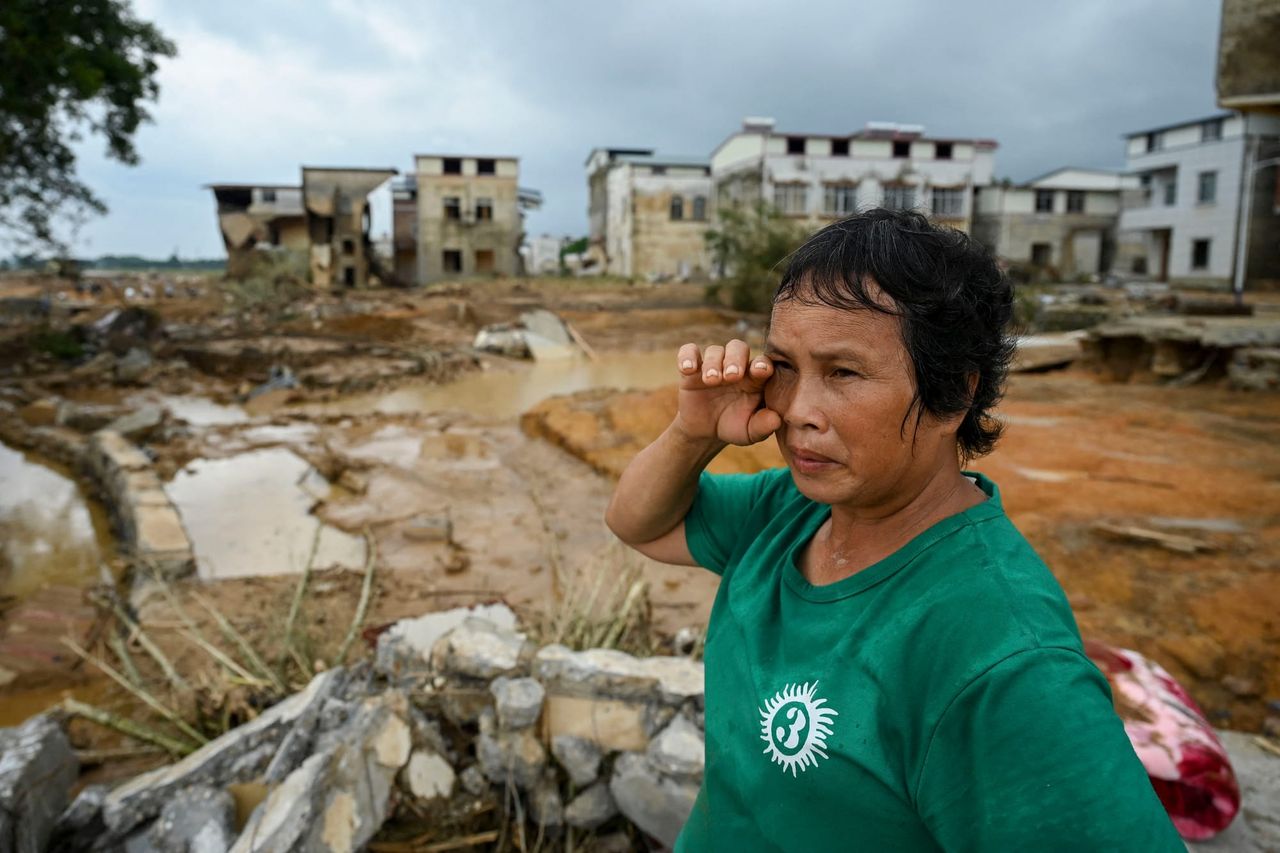
On 8 July 2026, in Hengzhou, Nanning, Guangxi, China, multiple reservoirs in Nanning and Guigang experienced emergencies as a result of sustained torrential rain triggered by Typhoon Maysak and its remnant circulation. Several townships and urban areas experienced severe waterlogging, tens of thousands of people were evacuated, and a woman in Lulan village checks on damage and gathers belongings. Photo: Greg Baker / AFP via Getty Images
Meridian Editorial Board
Published: 11 July 2026 07:00
Floodwaters poured down and completely submerged the first floor of Li Shan's home within minutes.
Li Shan's family lived in a village in Yunbiao Town, Hengzhou City, Guangxi. The village was lined with fields along the street, and every household grew jasmine flowers—many people depended on this for their livelihood. Every summer, the scent of jasmine permeated the air. She enjoyed helping her family pick flowers in the afternoon, watching the distant sunset as evening fell, bathing, and then heading to the street snack stalls in the evening to eat rice noodles and drink milk tea.
The source of water supplying the jasmine fields and the village's domestic water needs was the Lulan Reservoir, located more than ten kilometres from the village. In Li Shan's memory, the surface of Lulan Reservoir was always wide and calm. Until 7 July, when the Lulan Reservoir cracked open across a span of tens of metres, and murky yellow water crashed down from above, sweeping toward the flower fields and streets.