
Strategic Minerals: China Dominates Extraction, But US and Japan Own the Patents
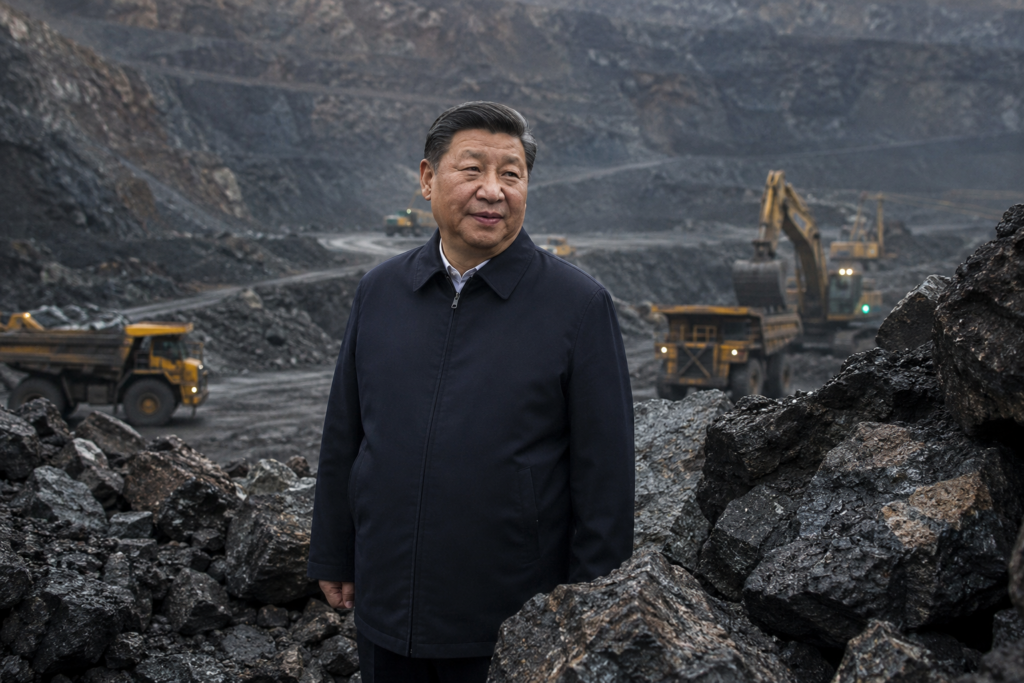
It is undeniable that China still holds a near-monopoly on rare earth refining and extraction. Between processing and mining, the Dragon controls a share of global strategic raw materials markets that ranges between 70 and 90%. Of course, the wind is changing. The United States is slowly decoupling from Chinese supply chains, and Europe, though somewhat more awkwardly, is doing the same. And Brazil, the world's second-largest rare earth deposit holder, is emerging as the new frontier. But China remains the global wholesale supplier. There is, however, a major blind spot in China's enormous industry: patents.
The issue has been raised by researchers at the Chinese Academy of Sciences, whose official journal reports that China "is not in a leadership position in mastering key technologies in specific sectors, as the key patents underlying advanced functional materials based on rare earths remain largely controlled by Japan and the United States." In essence, the argument goes, most patents in the rare earth market—especially those tied to high-quality minerals—are not Chinese, but belong to countries with which the Dragon has no great affinity.
"In the permanent magnet sector, Japan has maintained an overall technological advantage in most key patents. China proved superior to competitors only in various alloy technologies, while remaining behind Tokyo and the United States in permanent magnet materials, metallic powder processing, cobalt-based alloys, sintering methods, and rotor core technologies," the study reads. "The gap was even more pronounced in the catalytic materials sector, where the United States led in virtually all identified key technologies, while China shows no clear advantage over other major competitors."
In short, "China supplies over 70% of rare earth-based products globally, but its international patent system remains insufficient and the share of high-value patents is relatively low." This suggests that dominance in raw materials does not automatically translate into leadership in the technologies that create the most valuable products. Put simply, several countries today hold a clear edge over Beijing in the ability to process certain minerals and develop their potential in ways that the Dragon can only imagine. And this applies, above all, to China itself.