
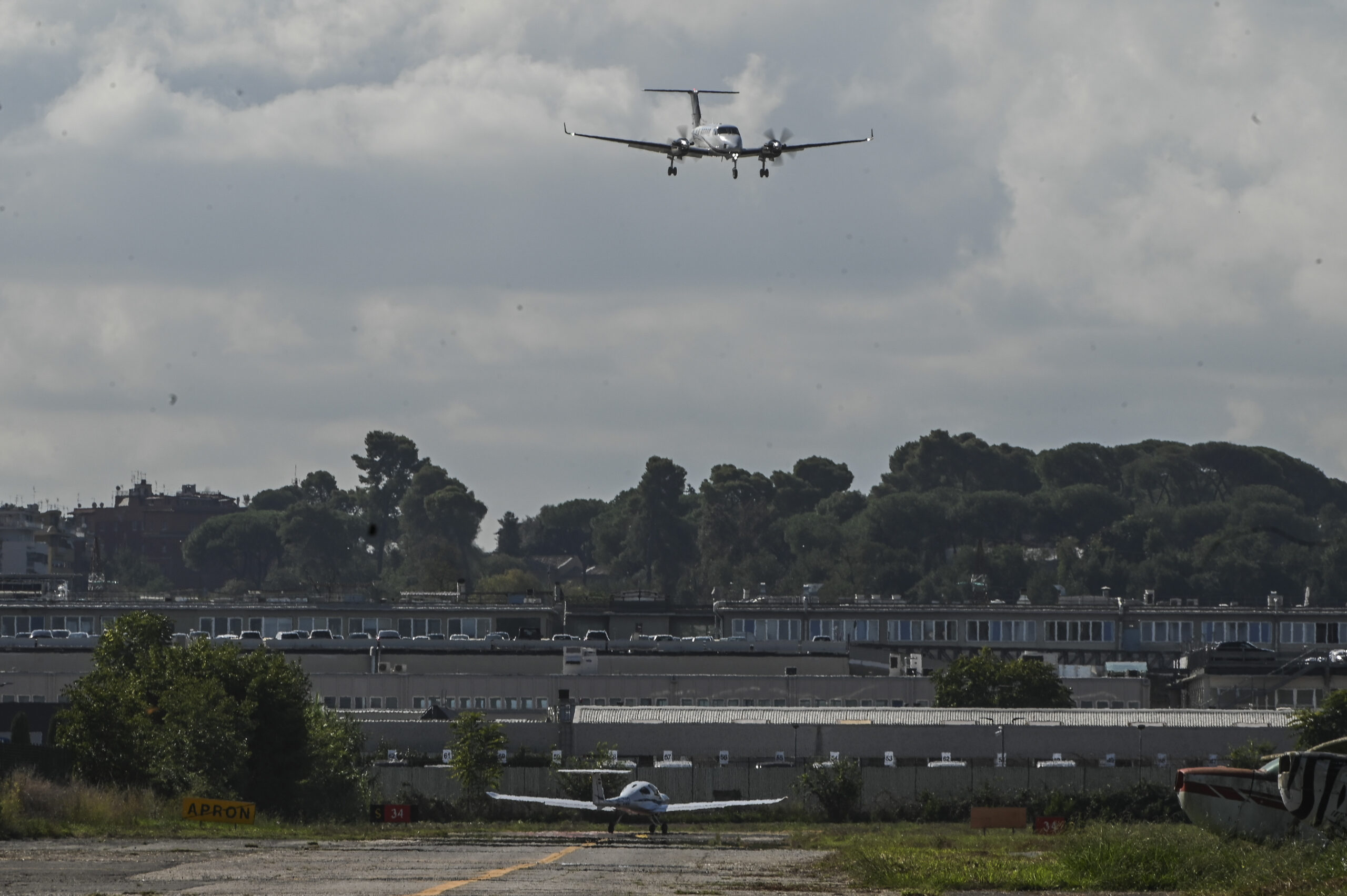
Rome Urbe Terminal Opening Marks Launch of Italy's Regional Air Mobility Programme
Not merely the recovery of a historic Roman airport. Today's opening of the Rome Urbe terminal marks the operational launch of Regional Air Mobility (RAM), the project through which Enac aims to build a network of regional air links capable of enhancing territorial airports, integrating air transport with other mobility modes, and preparing the Italian system for future developments in aviation. A strategy focused on short-haul routes, services for inland areas, and the development of national industry, with the Roman airport serving as the first test case for this model.
A network for territories
For Infrastructure and Transport Minister Matteo Salvini, the project fits within the broader strategy for developing national infrastructure and the National Airports Plan. The objective is to strengthen connections that can link productive districts and territories currently less accessible. This also underpins the conviction that the airport system can grow further: "If we want to reach 300 million passengers transported in Italy by 2035, we cannot say no to investments. If we say no, those passengers will go to Istanbul or Munich." A vision that, according to Salvini, concerns not only air transport but the overall competitiveness of the country. "Air transport is business, tourism, work and economic activity. Italy can accelerate over the next ten years."
From post-Covid recovery to a new paradigm
In the view of Enac president Pierluigi Di Palma, Regional Air Mobility represents the evolution of the path begun by the agency after the pandemic and reflected in the new National Airports Plan. A system that does not pit rail against air, but integrates different transport modes. "With RAM we are showing that air-to-air integration is the future of air transport," he explained, emphasizing how the project also prepares the country for emerging technologies. "With traditional means we are equipping our country to be ready for this near future, which will also include connections with drones."
According to Di Palma, the project will produce effects extending beyond mobility. "What we are doing values state assets, creates employment and supports the Italian industry that manufactures aircraft."
The new Rome Urbe terminal was presented as the first example of a model meant to be replicated at other airports. Marco Trombetti, sole administrator of Enac Services, described the airport as "a point of reference for the territory, a hub of integrated services, a laboratory for innovation." The objective, he explained, is not to reproduce traditional commercial transport, but to build "a capillary, flexible and sustainable network" capable of supporting medical transport, urgent logistics, civil protection, defence, and connection of inland areas.
The aerospace industrial chain looks to RAM
Regional Air Mobility also involves operators tasked with developing new connections and companies in the aeronautical supply chain. Alessandro Giulivi of AvioItaliana called the opening "the moment when a shared vision between institutions and operators finally becomes operational reality." From here will depart the helicopter link with Fiumicino, the first step in a network that, in the company's intentions, should extend to other airports and destinations. "We are not simply connecting two airports, we are building a network capable of uniting people, territories and opportunities."
On the same wavelength is Josef Gostner, chief executive officer of SkyAlps, who defined RAM as "a new model of regional air transport that makes the country more accessible and interconnected," stressing how the project can "link large and small airports, reduce travel times and create new opportunities for citizens, businesses and tourism." For Paolo Pascale, CEO of Tecnam, the project also represents an opportunity to capitalize on Italian production capacity. "We have the airport network, the infrastructure, the expertise, the aircraft and a shared vision. Now we must work together to develop this air mobility," he stated.
The project was also viewed as an opportunity for territorial development. For Lazio Regional President Francesco Rocca, the new regional network fits within the path of strengthening regional infrastructure and connections with productive areas.
"Today we open a serious phase of regional mobility," he observed, explaining that the new network will concern not only links within Lazio, but also those with neighbouring regions and with major economic hubs. A path that, he added, must proceed together with "environmental sustainability," identified as one of the central elements in the sector's development.