
Life Sciences as Strategic Asset: Bridging Innovation, Sustainability, and Industry
At a time when life sciences are becoming a strategic asset at the centre of global competition, lawmakers are called upon to overcome the apparent divide between innovation, sustainability, and industry. The challenge, explains Girelli, a member of parliament and component of the Social Affairs Commission, concerns the ability to transform health into value for the nation.
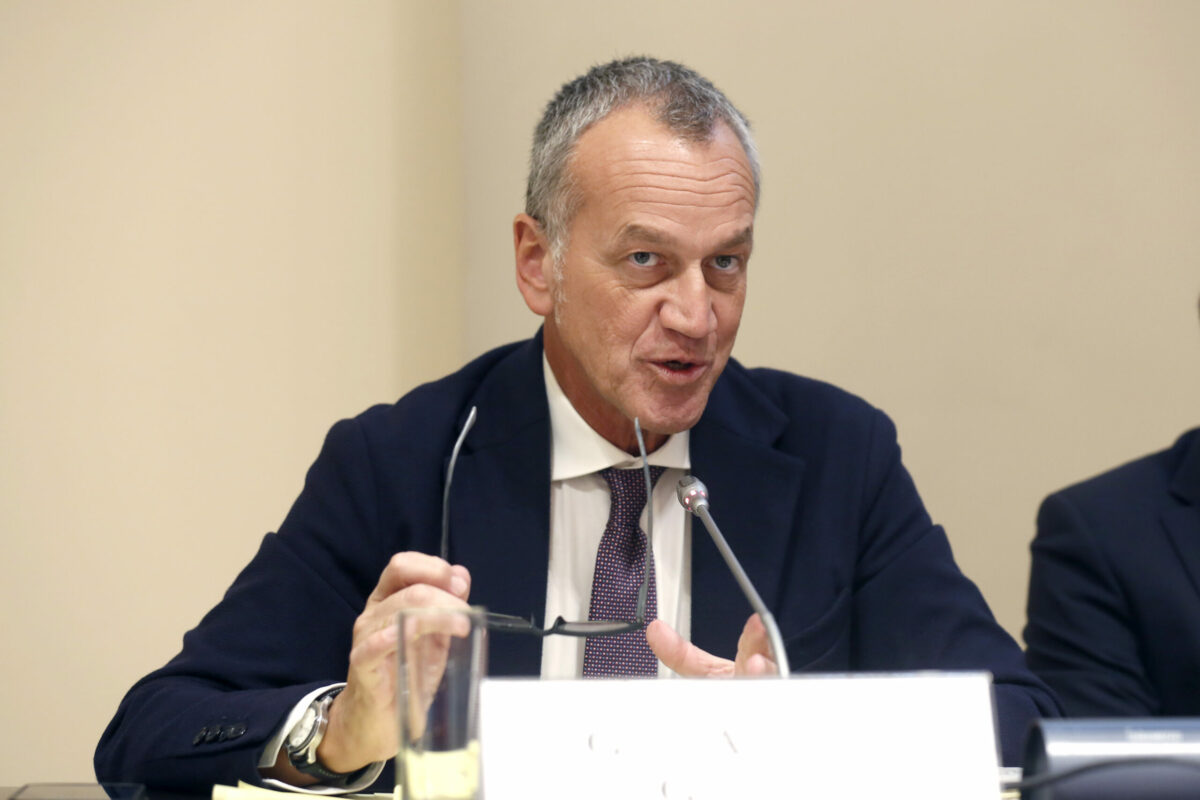
During the meeting "The life sciences system in the new global scenario," promoted by Healthcare Policy and Formiche, dialogue among institutions, industry, clinical professionals, and academia placed at the centre the strategic role of life sciences for the country in the face of the changed geopolitical context of pharmaceuticals. Among the themes that emerged: the need to move beyond a purely accounting-based reading of healthcare and to build governance capable of holding together access to care, sustainability of the National Health Service, and industrial competitiveness. On these points focuses the reflection of Gian Antonio Girelli, member of parliament and component of the Social Affairs Commission, who contributes to the debate with an interview at the margins of the meeting.
The comparison promoted by Healthcare Policy and Formiche emphasised the relationship between innovation, sustainability, and industrial development in the face of the new challenges of pharmaceuticals. Where should we start?
I believe the main issue is precisely to overcome the apparent contradiction between these three objectives. For too long we have reasoned as if they were alternatives: either you invest in innovation, or you protect the sustainability of spending; or you support industry, or you defend the National Health Service. It is a false alternative.
The task of the legislator is to build rules that allow us to pursue at the same time therapeutic innovation, system sustainability, and industrial development. New therapies, innovative drugs, personalised medicine, digital technologies represent a great opportunity. But innovation has value only if it truly reaches people, without territorial differences and without new inequalities in access.
The first step, then, concerns the governance of access?
Yes. We must make faster, more transparent, and more predictable the path that leads from authorisation to the actual availability of innovations throughout the national territory. The speed of decisions is now an element of a country's competitiveness, but it is also an essential component of the right to health.
We cannot accept that place of residence continues to determine different timescales and opportunities for access to care. The fragmentation of pathways risks transforming innovation into an unfulfilled promise. For this reason, clear rules, certain timelines, and administrative capacity up to the speed at which research is now evolving are needed.
How do you hold all this together with the major theme of sustainability of healthcare spending?
Even on sustainability, a change of perspective is needed. We cannot interpret it only as control of spending in the current year. We must learn to measure the value of healthcare investments over the medium and long term.
An effective therapy that prevents hospitalisations, complications, disability, or loss of autonomy is not simply a cost. It is an investment for the National Health Service, for the quality of life of people, and, ultimately, for the country's economic growth. If we continue to look only at the immediate budget line, we risk not seeing the overall value produced by innovation.
In the debate, the industrial dimension of life sciences also emerged. What role can Italy play?
Italy has scientific expertise, universities, research centres, professionals, and enterprises that represent an extraordinary heritage. But this heritage must be placed in conditions to express all its potential.
The legislator must create a stable context, with clear rules, certain timelines, and efficient procedures, capable of attracting investment, supporting clinical research, and favouring collaboration between public and private sectors, always with respect for the general interest. In a rapidly changing international scenario, strengthening life sciences also means strengthening our country's capacity to be a protagonist in innovation, creating skilled employment, and contributing to European strategic autonomy in an essential area like health.
Healthcare and industrial policy, then, can no longer be considered separate areas?
Exactly. Health policy and industrial policy can no longer proceed on separate tracks. If a choice improves the health of citizens, favours research, makes the productive system more competitive, and strengthens the National Health Service, then that choice produces value for the entire community.
Investing in innovation means investing in people. When innovation is accompanied by the right rules, by effective governance, and by a long-term vision, it becomes the meeting point between the right to health, sustainability of the National Health Service, and the country's growth.
What is, in this framework, the main responsibility of the legislator?
Assuming a long-term vision. Healthcare is not only a chapter of the public budget: it is one of the country's main economic and social infrastructures. Every euro well invested in health produces well-being, work, research, and competitiveness.
The responsibility of politics is to build the conditions so that this value emerges and is recognised. It is not a matter of choosing between patients, sustainability, and industry. It is a matter of building a system in which these elements strengthen each other reciprocally.