
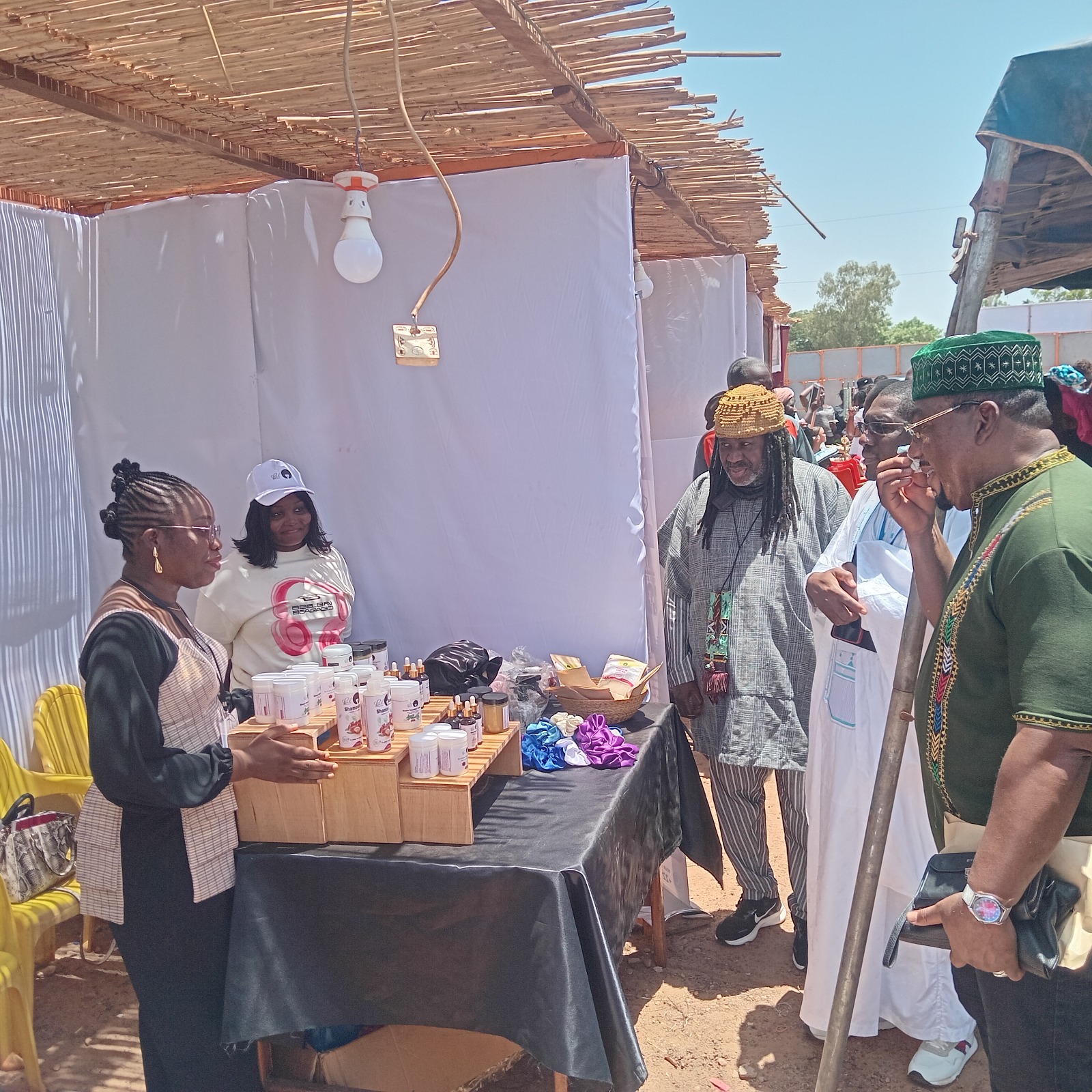
The first edition of the Afro renai-science festival was held July 4–5, 2026, in Ouagadougou, on the theme "Roots and Renaissance: Science in Service of African Identity."
In Burkina Faso, traditional hairstyles — such as braids, ancestral plaits, and contemporary locks — have always been a language, a marker of identity, and a heritage passed down from generation to generation. Yet a large portion of this knowledge, symbolism, and practice remains poorly documented and insufficiently valued. Facing this reality, the Afro renai-science festival set itself the ambition of preserving and promoting African hair heritage, with particular emphasis on the cultural realities of Burkina.
The first edition of this festival was held July 4–5, 2026, on the theme "Roots and Renaissance: Science in Service of African Identity." According to Tiphaine Malika Soubeiga, President of the event's organising committee, the festival aims to value the natural African hair as an element of cultural and identity heritage and to foster dialogue between traditional knowledge and scientific knowledge around African hair. "The Afro Renai-science festival also intends to raise public awareness of good practices in hair care and health and to strengthen self-esteem and cultural pride," she continued.
The festival was marked by scientific and cultural panels, exhibitions of natural products and hair care accessories, and a fashion show combining traditional dress and African hairstyles.
Hair as Biological Memory
For Dramane Konaté, representative of the Minister of Communication, Culture, Arts and Tourism, the question of African hair is of interest to the ministry in more than one respect. "We know that there is significant symbolism surrounding African hair. A text was even passed to suspend Miss beauty pageants. We believe that the criteria that honour the African woman naturally include African hair.
Having kinky hair does not make us subhuman," he declared. He went on to mention that African Amazons wore long hair because it embodied strength, but also the fury of victory. The festival's patron, writer Bernadette Dao, added that hair is a mystical universe, in reference to the Rastafari movement, or to accounts such as that of Samson in the Bible, whose carefully maintained long hair constituted the source of his extraordinary power. "There was discussion, over these two days, of natural hair, its care, the use made of it in our traditional and even occult practices," she emphasised.
As for the festival's godfather, Hadj Ismaël Bolhlaly, also a researcher in spiritual sciences, he explained that hair represents the first antenna of a life. "This is why the African was able to draw a comparison between animal tails and hair. Tails are simply the rosaries for communicating with ancestors; because when the animal dies, all its energy is found in the tail," he revealed. And he invited children to love their natural hair, because in his view they are lightning rods, antennae, satellites. The festival's ambassador, Professor Jacques Mbambaï Houroupou, is a dietician nutritionist and psychotherapist.
He made known that hair is a biological memory of what the body experiences in depth. "They speak of our nutrition, our sleep, our stress, our health. They sometimes even speak of our emotions," he clarified. For him, kinky hair never needed to be corrected, it only needed to be understood. "True science does not destroy identity, it explains it, it protects it, it values it. May this first edition be the starting point for an Africa that fully assumes its identity, produces its own science, and offers the world solutions inspired by its genius," he wished.
Adama SAWADOGO
Aude Frédérique ROUAMBA (Trainee)