
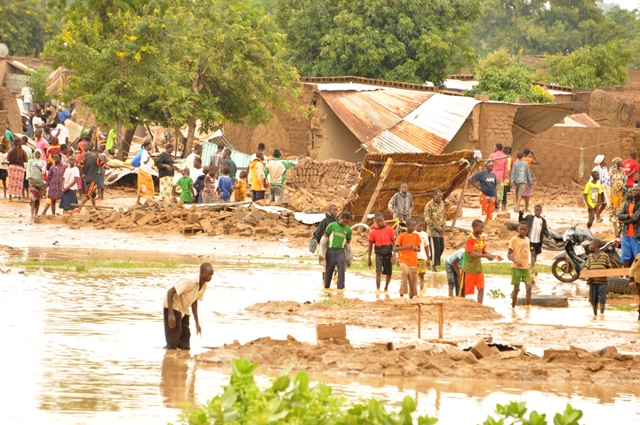
Tuesday, June 23, 2026: A Tragedy That Must Reshape How We Respond to Climate Disasters
Tuesday, June 23, 2026, will remain etched in the memory of residents of Houndé in the Guiriko region. Heavy rains struck the city, triggering deadly floods that claimed eleven lives and left several families bereaved. Images of this disaster remind us that the effects of climate change must prompt us to rethink our habits if we are to avoid, or at least significantly reduce, such tragedies.
Spectacular flood images observed in several coastal countries of the sub-region are chilling: roads swallowed by water, homes swept away, populations displaced. Burkina Faso is not spared. Each rainy season brings its share of material damage and sometimes loss of human life. The eleven lives lost on Tuesday, June 23, 2026, in Houndé in the Guiriko region as a result of floods are an important reminder of our vulnerability to climate disasters.
Behind the Houndé flooding lies an essential question: could we have prevented such a tragedy? The answer is certainly yes, at least in part. We cannot prevent rain from falling, but we can reduce risks and limit damage through responsible behaviour and better city organization. Admittedly, the state has undertaken several actions aimed at limiting flood risks. In Ouagadougou and other localities, work is underway to clear gutters and dams to facilitate the flow of rainwater. These initiatives deserve to be commended, as they contribute to flood prevention and population protection.
Lives Exposed Every Rainy Season
But it must be acknowledged that infrastructure alone will not be enough if behaviour does not change. Combating floods must be a collective responsibility. Too often, human behaviour worsens the consequences of heavy rain.
Gutters transformed into garbage dumps prevent water from circulating normally. Chaotic construction in flood-prone areas unnecessarily exposes entire families to danger. Often out of necessity or lack of means, families settle in dangerous spaces, exposing their lives to danger every rainy season. To this must be added sometimes the lack of maintenance of sanitation facilities in certain neighbourhoods.
It is therefore urgent to bring about a genuine change of mentality. Everyone must understand that throwing waste into gutters, obstructing water drainage pathways, or occupying risky spaces can have dramatic consequences. Regular gutter clearing, respect for urban planning rules, population awareness-raising, and community vigilance must become civic reflexes, because punitive measures from authorities alone are not enough. Local authorities, associations, and community leaders must also strengthen population awareness-raising.
The fight against floods begins first with collective awareness. It is no longer enough to wait for rescue after disasters; we must act before they occur. Flood-related tragedies are not always inevitable. Many can be reduced, even prevented, if the right decisions are made in time and if every citizen accepts playing their part. The suffering experienced in Houndé must serve as a national wake-up call. Because behind every rainy season lies an essential question: are we truly ready to protect human lives? The climate challenge is immense, but it also begins with small daily gestures. Saving lives sometimes passes simply through a clean gutter and an awakened civic conscience.
Paténéma Oumar OUEDRAOGO