
Finland can be developed into a global pioneer in recycled fertilizer technology, says research director Kimmo Rasa from the Natural Resources Institute (Luke).
New solutions for fertilizers are increasingly urgent, as continued global tension affects supply security and food production.
Self-sufficiency in fertilizers important to agriculture is taking on an ever more critical role.
Without nitrogen, there are no harvests.
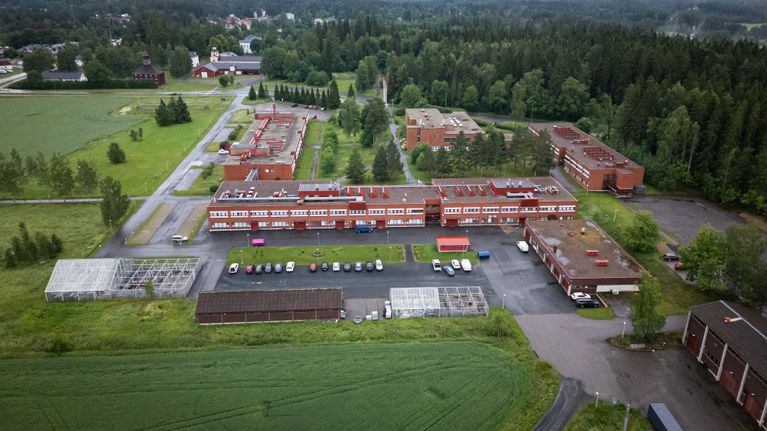
The Natural Resources Institute's research station studies the production of recycled fertilizers using various technologies. Animal manure, sludge, and other biomass are processed and new recipes are developed. Photo: Dani Branthin / Yle
The latest blow to Finnish agriculture came this week when Russia decided to raise tariffs. It effectively ends fertilizer imports from Russia.
– When imports from Russia end, we'll have to make up for nitrogen supply from other sources worldwide. The next growing season could be difficult, says Kimmo Rasa, research director at the Natural Resources Institute.
According to Rasa, this will have an impact on the current situation. If no clear solutions are found, next spring there will be questions about what to grow and where to get nitrogen.
According to Yara, Russia's railway tariffs do not currently affect Yara Finland's operations. Factories are operating normally, fertilizer sales are open, and fertilizers are being delivered from factories to farms continuously.
Industrial side streams into use
Nutrient recycling must be intensified. We need to look further into the future and toward new technologies.
Easily available industrial side streams are already well utilized, according to research director Kimmo Rasa.
– We must develop the processing of recycled fertilizers and new processing technologies. Ensure that we get investments in them.
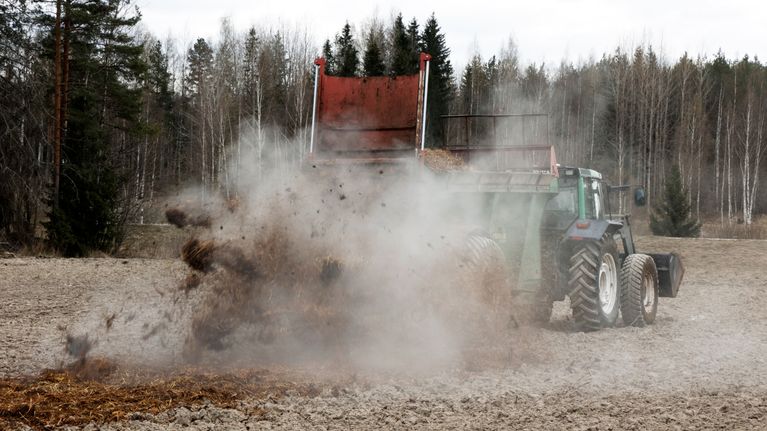
Animal manure holds great potential in nutrient recycling. By processing manure into recycled fertilizers, the efficient use of these nutrient streams can be significantly improved. Photographed in Orimattila in May 2026. Photo: Juha-Petri Koponen / Yle
Recycled fertilizers are already obtained, especially from biogas plants.
Processing facilities built alongside them can separate nitrogen and phosphorus, allowing them to be used more efficiently. Nutrients can be further processed into pellets and concentrated liquids.
Now nitrogen is blown into the sky and not used.
Kimmo Rasa
Forest and food industry side streams already produce some soil improvement materials and fertilizer preparations containing nitrogen. According to Rasa, there are still many unused opportunities in industry itself.
There is potential in wastewater treatment and utilization, according to Rasa.
– Through microbiological processes, nitrogen is now blown into the sky and not used. We need to rethink all of this so that nitrogen management becomes more self-sufficient, he states.
"Fertilizer Silicon Valley"
Start-up companies are in a key position as Finland is developed into a globally significant player in recycled fertilizer production. These are the companies that develop entirely new technologies.
The Natural Resources Institute works closely with Finnish start-ups in research. Together, there is an opportunity to develop and export expertise worldwide.
– I would especially like to see new nutrient recycling technologies that are capable of facilitating nitrogen capture and use in biomass.
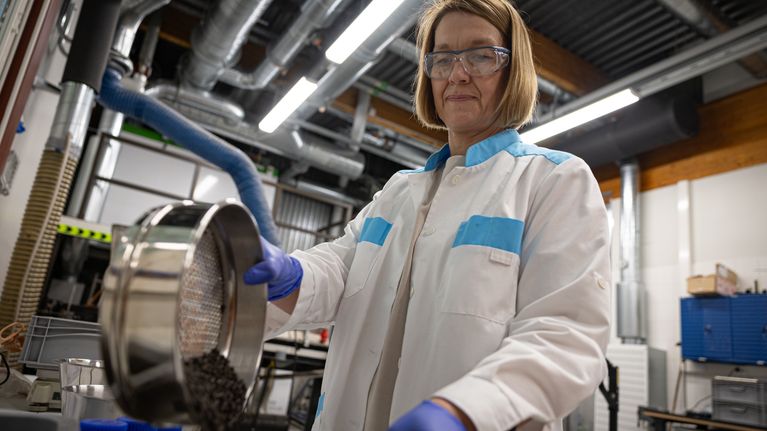
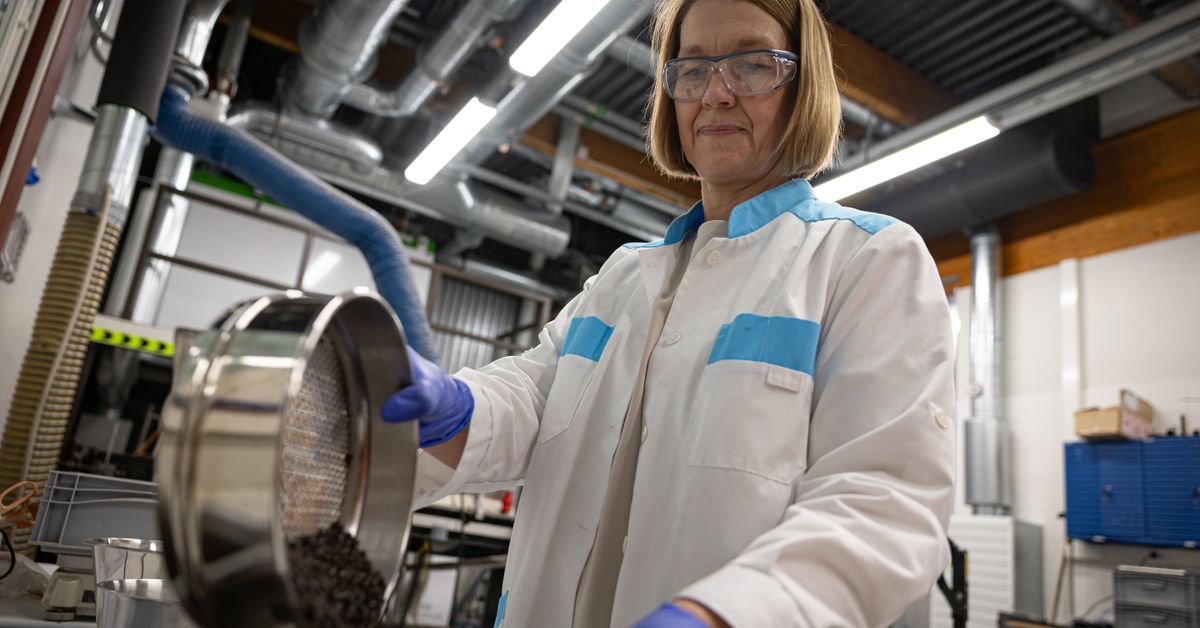
The Natural Resources Institute has good facilities for research at its Jokioinen research station. Companies can bring their own equipment or products there. In the picture, specialist researcher Riikka Keskinen. Photo: Dani Branthin / Yle
At the Natural Resources Institute's Jokioinen research station, products or technologies at different stages are being studied with companies, Kimmo Rasa explains.
The idea of a kind of fertilizer Silicon Valley is not just a dream — it's already being built in Jokioinen.
Large market in Central Europe
Start-up company NPHarvest sells technology as a service that allows nutrients to be separated from wastewater. The company is further developing captured nutrients together with the Natural Resources Institute.
CEO Juho Uzkurt Kaljunen wrote his doctoral thesis at Aalto University in 2023 on methods for capturing nitrogen and phosphorus in wastewater. Now his company is commercializing the technology developed in his dissertation.
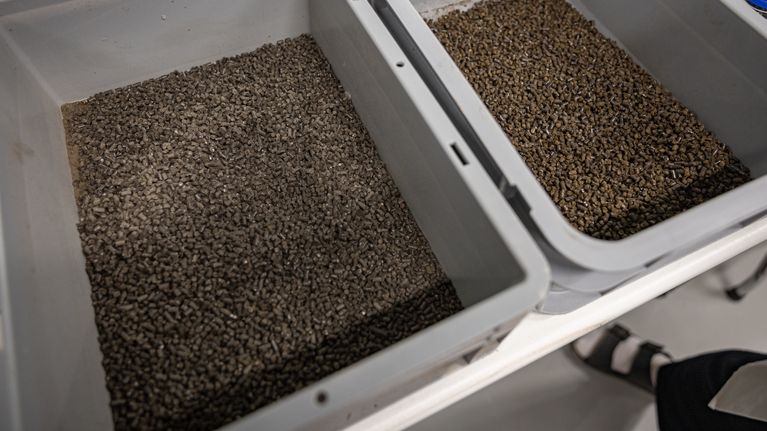
In Jokioinen, nutrients can be further processed, for example into pellets. Photo: Dani Branthin / Yle
In the company's technology, nutrients are now captured cost-effectively from concentrated wastewater coming from biogas plants.
– They are the low-hanging fruit that we can already reach. Utilizing more dilute wastewater is more challenging. Those are the higher-hanging apples that we can only access with time, says Uzkurt Kaljunen.
For its own food production, it is important for Finland to develop expertise in recycled fertilizers, but the largest market is elsewhere, reminds Uzkurt Kaljunen.
– The critical need for solutions is not in Finland, but in Central Europe. And that is an export opportunity for us.
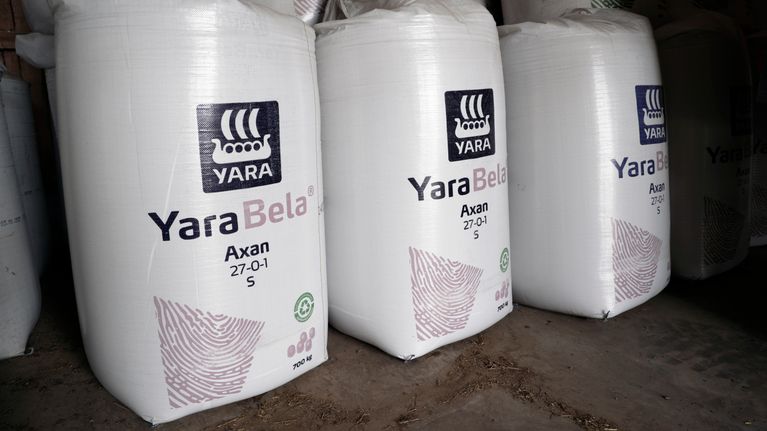
Recycled fertilizers cannot completely replace mineral nitrogen products. They can be one significant part in reducing their need. Photographed in Orimattila in May 2026. Photo: Juha-Petri Koponen / Yle
Recycled fertilizers alone are not enough
Recycled fertilizers can cover about 80 percent of phosphorus needs in Finland, because Finland's soil naturally has better phosphorus and potassium content.
There is little nitrogen in the soil.
– Nitrogen is a particularly important fertilizer in cultivation. It is needed in the field every year if you want a harvest. Harvest levels collapse if nitrogen cannot be obtained, Rasa explains.
Farms must be strictly disciplined about nitrogen use. Not a single unit of nitrogen can be wasted, emphasizes Luke's Kimmo Rasa.
– Certainly farms are thinking about this carefully now, and all lessons are being put to use. It is hoped that new solutions will remain permanent.