
Ngounié Province Emerges as Hub for Gabon's Agricultural Development Drive
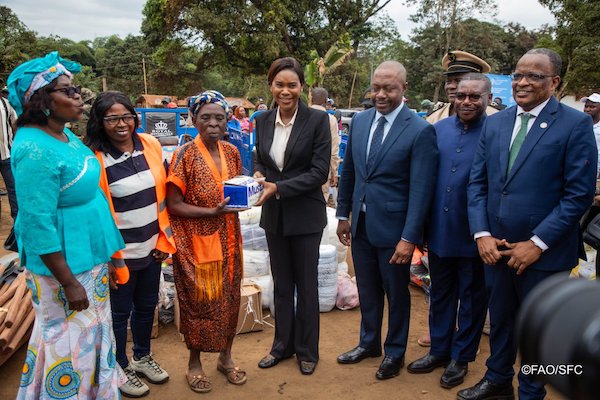
Ngounié Province is now positioning itself as the starting point for a new dynamic of agricultural development in Gabon. After two years of advocacy, Gabon's First Lady, Zita Oligui Nguema, has forged a partnership with the United Nations Food and Agriculture Organization (FAO) to revolutionize agriculture in southern Gabon, particularly in the Louetsi-Wano Department, where the First Lady oversaw the handover of equipment to agricultural producers.
The project reflects the First Lady's consistent commitment to meeting the aspirations of Louetsi-Wano's populations for genuine economic growth. It aligns with a vision of modernizing rural areas. According to the statement, the ambition is clear: to make Ngounié a national laboratory for agricultural development before gradually extending this experience to Gabon's nine provinces.
Presiding over the ceremony alongside local and government authorities, Ahman Mravili, Coordinator of the FAO's Sub-Regional Office for Central Africa and FAO Representative to Gabon and São Tomé and Príncipe, outlined the four pillars structuring the organization's strategic vision.
The first rests on better production, through the introduction of modern equipment and more effective agricultural practices designed to sustainably increase yields.
The second pillar aims at better nutrition, ensuring populations have lasting access to healthy, diverse, and quality food.
The third concerns a better environment, promoting agriculture that respects natural resources and is mindful of future generations.
Finally, the fourth pillar, the true backbone of this initiative, aims to offer improved living conditions for rural populations, particularly those in remote areas who have long suffered from isolation and lack of economic opportunity.
It is precisely this commitment to leaving no community behind in development that led the FAO to select Ngounié Province, and more specifically Louetsi-Wano Department, as the pilot territory for this far-reaching partnership. A decision that now confers on this locality the status of national model, intended to inspire future action across the entire country.
The vision becomes concrete through the FAO's technical and material support. The handover of agricultural equipment to producers marks a decisive step toward more efficient, more productive agriculture that generates greater wealth for local communities.
Using this platform, Ahman Mravili also addressed the Minister of Public Works, Edgard Moukoumbi, present at the ceremony. While acknowledging his presence as a native son of the locality and as a government member, he stressed the need for perfect synergy between his ministry and the Agriculture Ministry to ensure the success of this rural transformation.
Here too, the number four emerged as the guiding thread of this development strategy, through four essential levers: equipping producers with suitable equipment, structuring agricultural organizations to strengthen their effectiveness, training farmers in modern production techniques, and opening up agricultural basins through quality road infrastructure.
The complementarity of these actions should significantly improve farm productivity, reduce post-harvest losses, and above all facilitate the distribution of products to major consumption centers, notably Libreville, where producers will be better able to capitalize on their harvests.
Antoine Relaxe