

Urban Meadows Have Conquered Finnish Cities
Urban meadows have swept through Finnish cities in recent years. In place of traditionally mowed lawns, wild flower meadows have been allowed to grow to promote biodiversity. For example, in Berlin meadows are also being used to combat urban overheating.
In Lappeenranta, the urban environment currently has approximately 50 hectares of green areas maintained as meadows – already over one-sixth of all built-environment green spaces. Beneath the surface greenery, however, problems are brewing.
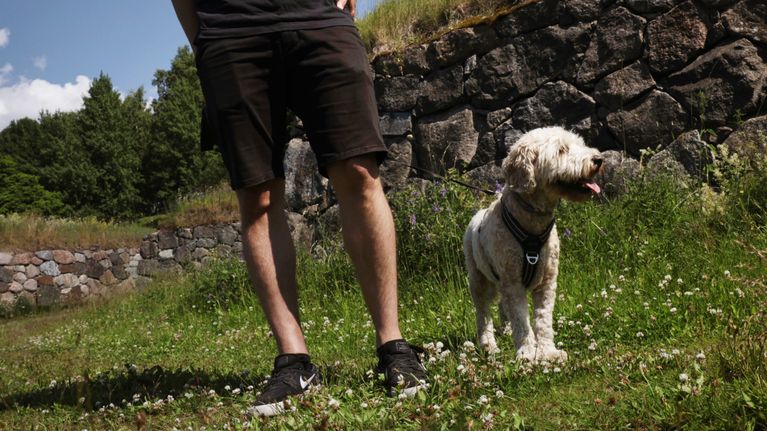
Lappeenranta resident Pessi Pöllänen has removed more ticks from his dog Nappi this summer than before, despite using a tick collar. Additionally, Pöllänen has suffered from hay-induced allergy symptoms this summer. Photo: Tiina Jutila / Yle
1. Ticks and Spanish Slugs Invade Meadows
One of the most serious problems with flower meadows is the proliferation of ticks and harmful invasive species. Meadows can create an ideal habitat for ticks, which can spread dangerous diseases. Lappeenranta is among Finland's worst tick-infested areas, where some residents receive free tick vaccination.
– We are aware of the drawbacks associated with meadows, such as harmful invasive species and ticks. In these areas, meadows are avoided and the edges of pathways are mowed, says Sanni Simonen, production manager for the City of Lappeenranta.
University lecturer Eva Kallio leads a research project aimed at understanding which factors enable the abundant presence of ticks in cities.
– In the vicinity of forests, meadows can attract more tick host species than meadows whose surroundings are built environments or where there is no protective woodland and shrubland, Kallio explains.
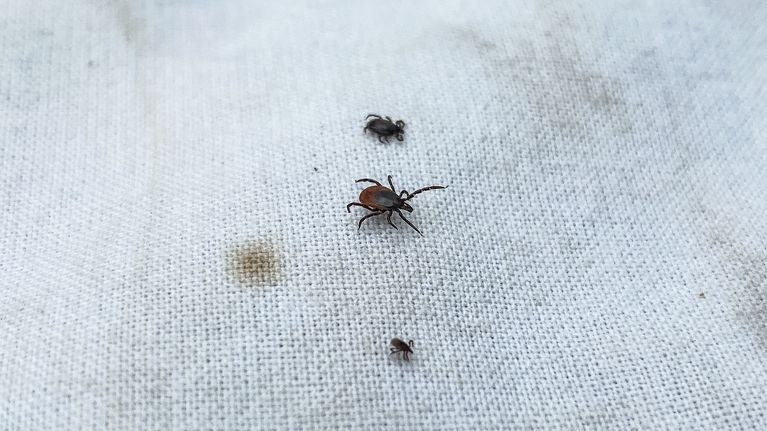
According to Eva Kallio, dry meadows are a more challenging environment for ticks than fertile meadows. Photo: Miikka Varila / Yle
Spanish slugs have also proliferated in meadow areas in Lappeenranta. The creature known as a killer slug can research suggests attack even bird chicks.
– Spanish slugs in the meadows have indeed increased, but this year we have used more control agents and the situation is being monitored continuously, Simonen reports.
2. Allergies and Pollen Cause Concern
The allergen burden caused by urban meadows has become a central concern. When traditional lawns are mowed regularly before flowering, meadows release massive amounts of pollen into the air throughout the growing season. Grass pollen in particular significantly complicates summer for allergy sufferers.
Ironically, the city justifies meadows partly on the grounds that people gain immune-supporting microbial exposure through skin and respiratory pathways. For allergic people, however, this "exposure" means in practice breathing difficulties throughout the summer.
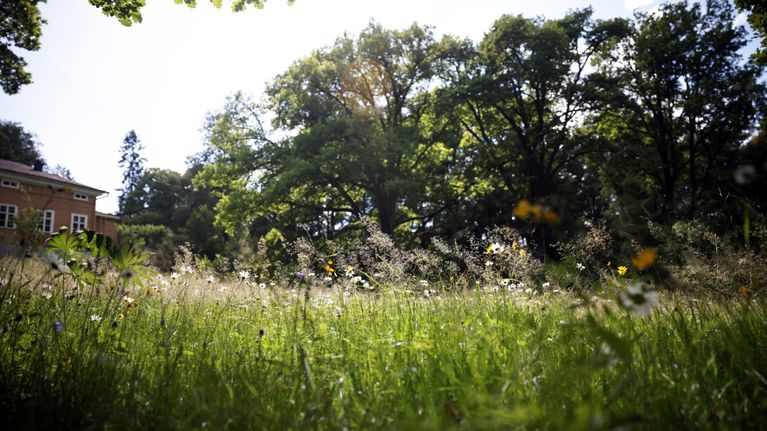
"The impoverishment of nature's diversity has been identified as a partial cause of numerous immune system disorders. Thanks to biodiversity, meadows also increase the pleasantness of the urban environment", Sanni Simonen says. Photo: Tiina Jutila / Yle
3. Traffic Safety and Visibility
Tall meadows can obstruct sightlines and increase accident risk, particularly at intersections and roundabouts.
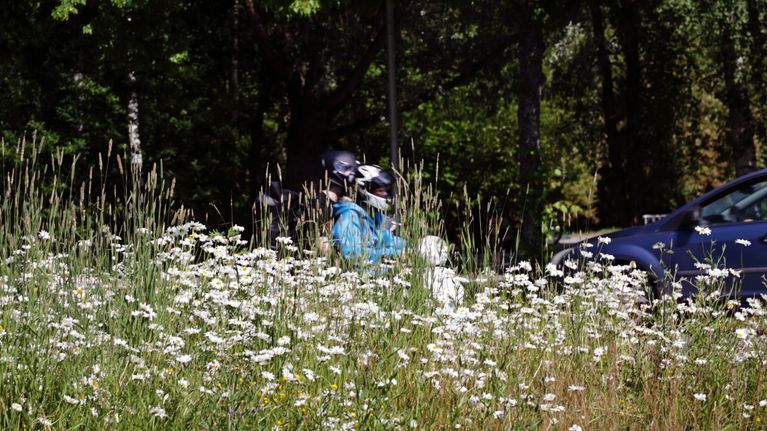
Traffic users can be difficult to spot behind tall vegetation. Photo: Tiina Jutila / Yle
Simonen emphasises that safety is taken seriously.
– In traffic environments, meadows are still mowed because for safety reasons, sightlines must be kept clear.
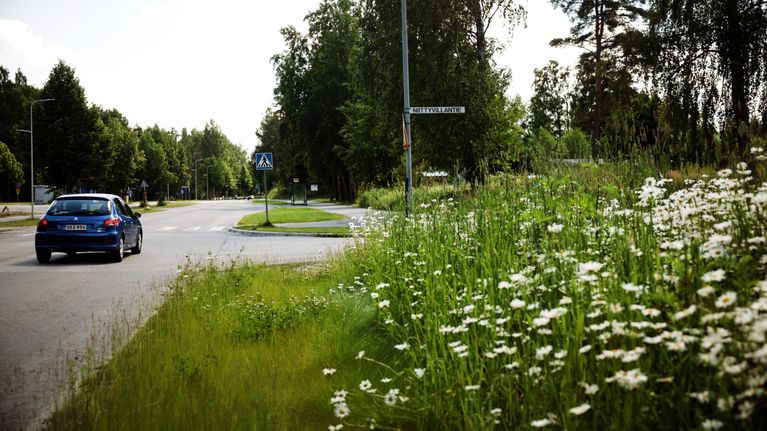
In Lappeenranta's Voisalmi, a city-planted tall flower meadow grows at an intersection. Photo: Tiina Jutila / Yle
The problem, however, is that vegetation grows rapidly, particularly in June, and visibility can deteriorate significantly between mowing sessions.
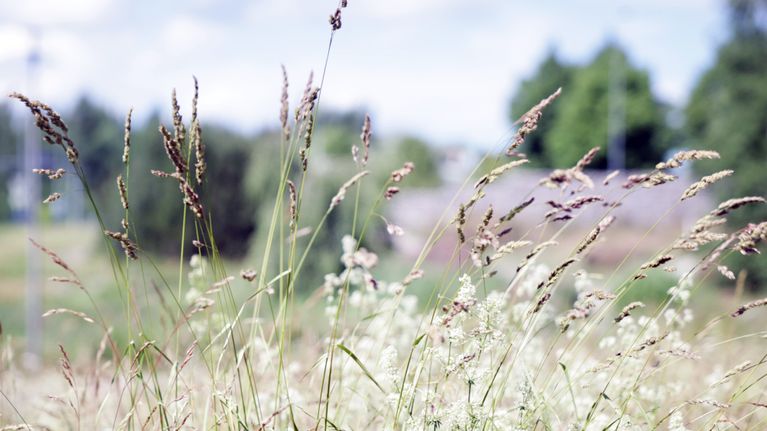
Most of Lappeenranta's meadows are previously lawn-maintained areas where management has been altered by reducing mowing frequency. Photo: Tiina Jutila / Yle
4. Appearance Divides Opinion
The appearance of meadows has sparked considerable debate in Lappeenranta.
– Feedback has been both for and against. Planted flower meadows have received only positive feedback, while grass meadows divide opinion fairly evenly, Simonen reports.
Vegetation development takes time, and appearance changes during the growing season.
– Often summer bloom pleases the eye more than autumn vegetation that becomes shabby-looking and dried out, Simonen acknowledges.
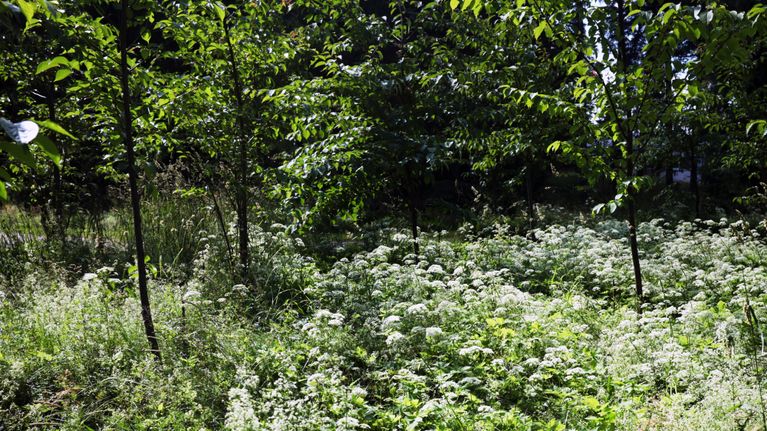
Meadow flowers have taken over Lappeenranta's cherry park. Photo: Tiina Jutila / Yle
5. Wild Meadows Can Derail Green Space Plans
Meadows can also undermine planned green spaces. Lappeenranta residents have questioned, for example, the cherry park located near the city centre, where 350 cherry trees planted by residents, businesses, and associations now stand surrounded by tall vegetation.
– The cherry park meadow is a field meadow and would need more frequent mowing. Because of the cherry trees, however, machine mowing is laborious, and the trees can easily be damaged. Now the area is mowed twice a year, Simonen reports.
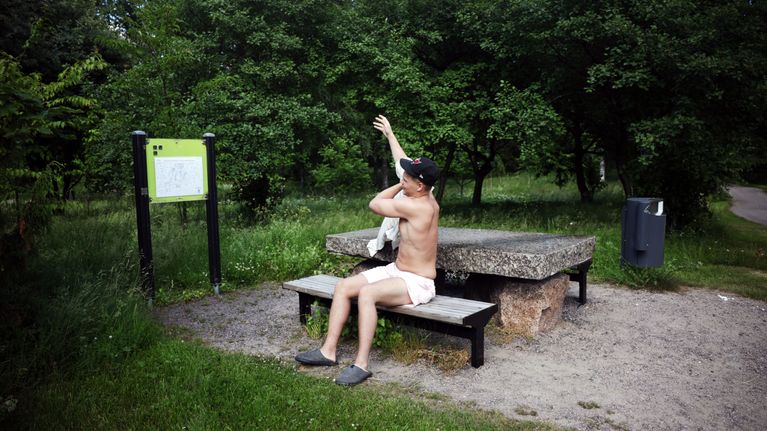
Aleksi Partanen sits almost daily in Lappeenranta's cherry park. He thinks urban meadows are beautiful. Photo: Tiina Jutila / Yle
One of the most central misconceptions is the idea that meadows are part of wild nature. Meadows are not maintenance-free; they require regular care and continuous monitoring.
– The timing of mowing matters, because it can be used to prevent harmful invasive species, such as showy fleabane and giant balsam, production manager Sanni Simonen emphasises.