
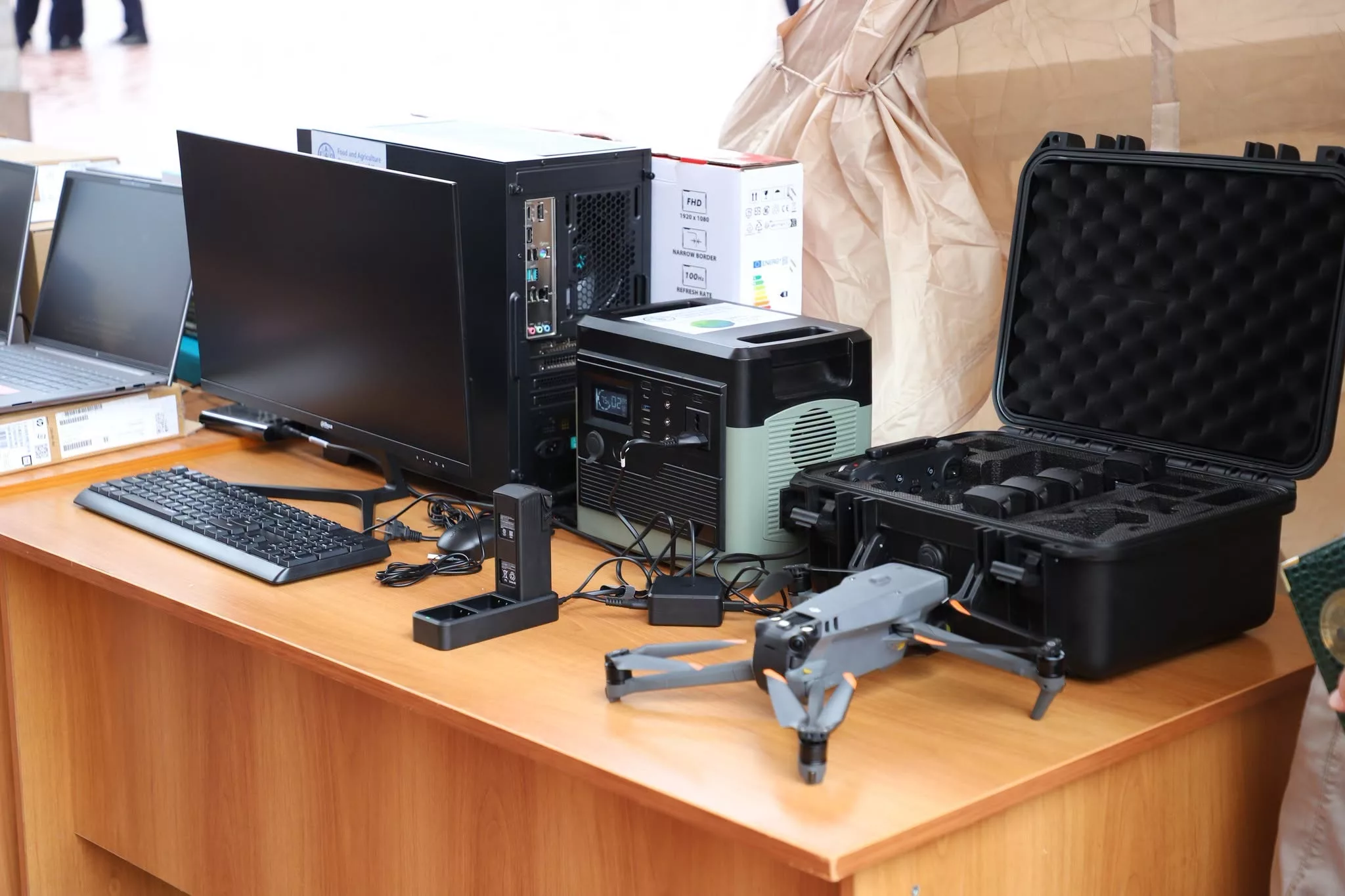
Pasture Monitoring Lab Delivered to Kyrgyzstan
The Food and Agriculture Organization of the United Nations (FAO), under the project "Carbon Sequestration through Climate Investment in Forests and Pastures in the Kyrgyz Republic (CSFOR)," funded by the Green Climate Fund (GCF), has handed over a modern mobile laboratory to the Veterinary Service, Livestock Development, Pastures and Fodder Department under the Ministry of Water Resources, Agriculture and Processing Industry of the Kyrgyz Republic. The equipment is valued at more than 6.6 million soms.
This technical assistance is aimed at developing a modern digital system for pasture monitoring and assessment in Kyrgyzstan and strengthening capacity for pasture resource management.
The Importance of Pastures and Modern Challenges
Pastures form the foundation of agriculture, providing income sources for thousands of families. However, pasture degradation reduces the forage base, lowers livestock productivity, worsens soil conditions, and reduces rural incomes.
The United Nations General Assembly declared 2026 the International Year of Rangelands and Rangeland Pastoralists. This decision by the global community underscores the critical role of pastures in ensuring food security, conserving biodiversity, adapting to climate change, and absorbing greenhouse gases and storing carbon in soils.
In handing over the equipment, Oleg Guchgeldieff, FAO Representative in the Kyrgyz Republic, emphasised that this initiative creates a foundation for evidence-based decision-making and strengthens the system of science-based pasture management.
"FAO plays a leading role in conducting the International Year of Rangelands and Rangeland Pastoralists in cooperation with other relevant stakeholders," said Oleg Guchgeldieff, FAO Representative in the Kyrgyz Republic. "This global initiative is designed to draw attention to the vital role of rangelands and the populations engaged in rangeland pastoralism in sustainable food production, rational use of ecosystems, mitigation and adaptation to climate change."
The mobile laboratory includes a high-clearance service vehicle, a multispectral drone, laptops and computers, solar panels, a generator, a portable energy storage system, and field equipment: tent, backpacks, table and chairs, and much more.
This equipment will allow specialists to conduct rapid and accurate pasture monitoring, promptly identify degraded areas, collect and analyse spatial data using drones and GIS technologies, develop a digital pasture assessment system, efficiently conduct field research in hard-to-reach mountain regions, and make evidence-based management decisions.
Digital System Development and Cooperation
During the ceremony to hand over the mobile laboratory, an agreement on cooperation was signed between FAO and the Veterinary Service, Livestock Development, Pastures and Fodder Department.
Under the agreement, an automated system for pasture monitoring and assessment will be created in Kyrgyzstan. Previously developed digital tools—a Pasture Monitoring and Assessment Database, a mobile application, and the "Electronic Jaiyyt Committee" platform—will be merged into a single integrated digital system.
Cooperation envisages three main directions: equipping the mobile laboratory with modern equipment, improving the mobile application, integrating all digital tools and training specialists at national and regional levels, preparing service specialists to conduct field monitoring, use multispectral drones, analyse satellite imagery, and apply FAO digital platforms such as SEPAL, Earth Map and Collect Earth.
"Pastures are a strategic natural wealth of Kyrgyzstan and the foundation for livestock development. This is why science-based monitoring, effective management, and protection of pastures from degradation are among the state's priority areas of work," emphasised Ilich Marsbek uulu, First Deputy Minister of Water Resources, Agriculture and Processing Industry of the Kyrgyz Republic.
Additionally, under the FAO project, 27 community landscape management groups (CLMG) were established in pilot districts, which provide support to local government bodies in monitoring, assessment, planning, and sustainable management of pasture resources.