
Finland's Climate Panel Lists Seven Recommendations to Reduce Agricultural Emissions
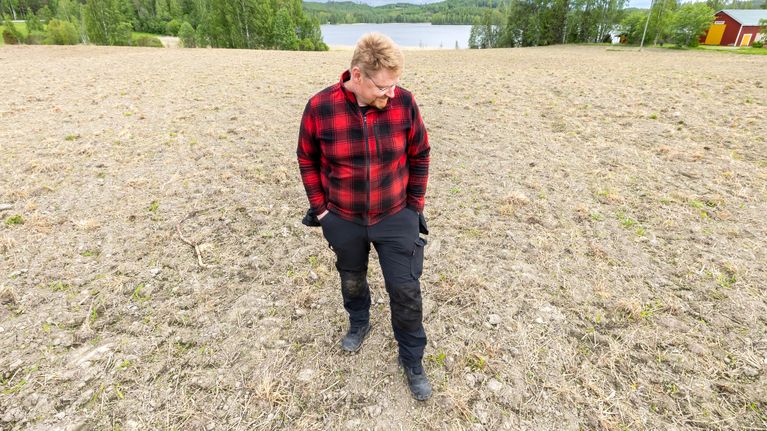
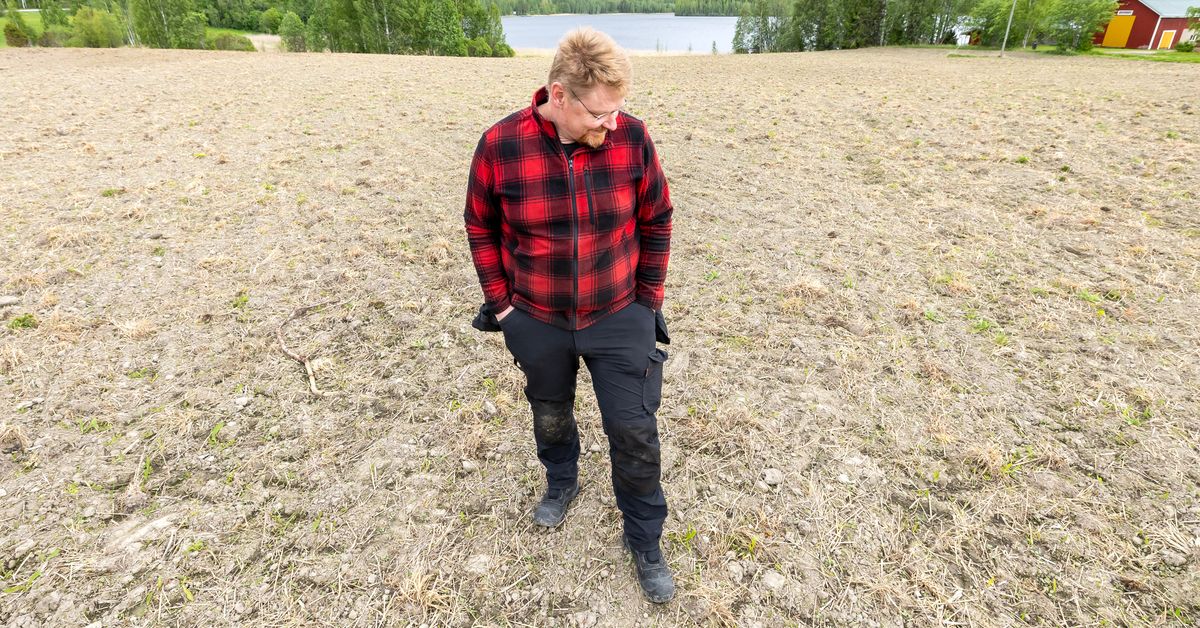
Jarkko Nurminen is experimenting with rapeseed cultivation in Putkilahti, Central Finland. Photo: Petri Aaltonen / Yle
- Riikka Niutanen
1:05
The rural landscape of Putkilahti in Korpilahti pleases the eye. Farmer Jarkko Nurminen bends down to examine the cotyledons pushing up from his field more closely. They bear the feeding marks of small beetles and fleas.
– This is one challenge that comes with climate change: pests are increasing, Nurminen explains.
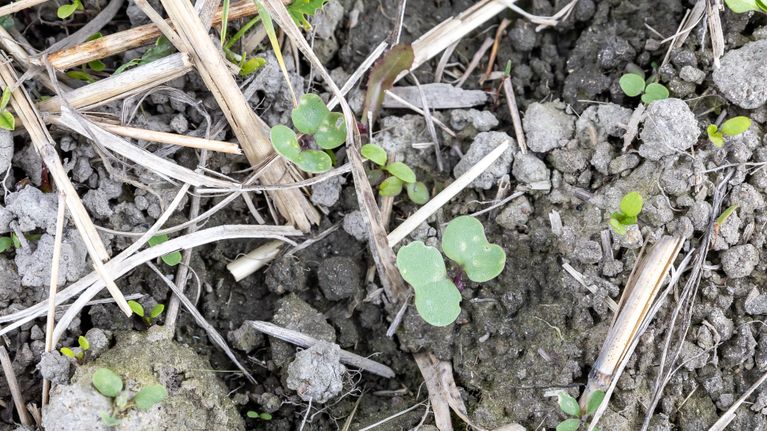
The rapeseed cotyledons have holes made by pests. Photo: Petri Aaltonen / Yle
We are on a rare rapeseed field by Central Finnish standards. Turnip rape is a familiar crop in Central Finland, but rapeseed has barely been cultivated this far north. Nurminen is piloting rapeseed cultivation in Pro Agria's forward-looking farmer project.
– Someone has to be brave enough to try something new, he says.
To mitigate and adapt to climate change, agriculture must also learn new practices.
Researchers Compiled Solutions into a Report
Finland's Climate Panel has published an extensive report that provides seven recommendations for reducing agricultural emissions in Finland.
Emissions can be significantly reduced by rewetting some peatland fields. On mineral soils, transitioning to carbon farming makes sense in many ways: soil organic matter improves and emissions decrease.
One approach is to increase the cultivation of vegetables and oil and protein crops, while correspondingly reducing animal production.
The report's first recommendation concerns all Finns.
Agricultural production structure becomes more climate-resilient when more people shift to a more plant-based diet than at present.
This means reducing meat consumption, not eliminating it.
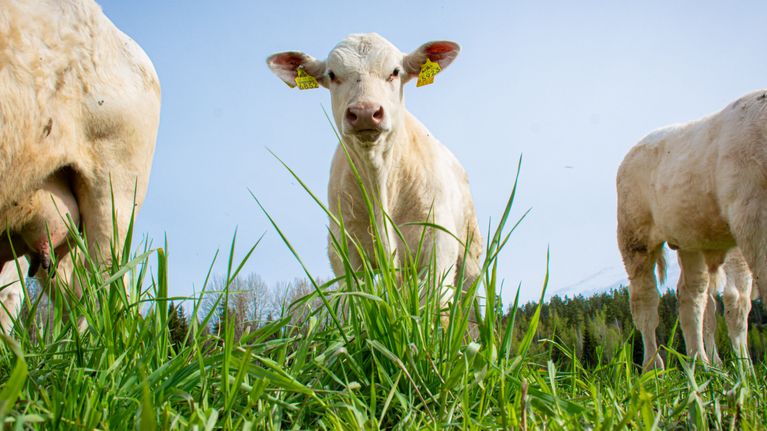
According to the report, animal production still has a place in sustainable agriculture. Photo: Vihtori Koskinen / Yle
By shifting to a plant-based diet, agricultural emissions could decrease by as much as 30–40 percent.
Increasing the cultivation of legumes and oil crops is one step towards climate-resilient food production.
Income and Food Security
Rapeseed cultivation can now be tested at Central Finnish latitudes because climate change has lengthened the growing season.

Regular documentation of crop growth is an important part of cultivation trials. Photo: Petri Aaltonen / Yle
In Finland, the production of oil and protein crops is significantly in deficit. Rapeseed meal used in cattle feed and soybean meal used for broilers are largely imported from abroad.
Jarkko Nurminen explains why oil crops are worth cultivating:
Video: Petri Aaltonen / Yle
Increasing the cultivation of turnip rape and rapeseed would boost self-sufficiency and farming profitability. It would also move food production in a lower-emissions direction without jeopardising food security.
Profitability Is Key
Numinen emphasises that farmers live from what nature offers. Most are ready to make changes if they are economically viable.
– We have the means to reduce our carbon footprint and improve sustainability, but if the farmer is the only one paying for it, the money runs out.
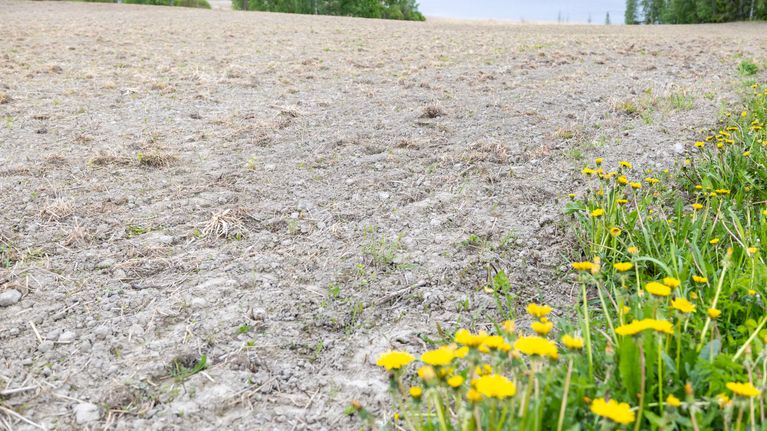
Buttercups have been left as food for pollinators. Rapeseed needs pollinators to produce a crop. Photo: Petri Aaltonen / Yle
Finland's Climate Panel report notes that the recommendations require reform of agricultural subsidies, increased incentives, and close cooperation between farmers and the food chain.
By following these recommendations, Finnish agriculture can become both low-emissions and profitable over the next 30 years.
On Nurminen's field, the rapeseed continues to grow. In the autumn, it will become clear whether the experiment produces a harvest.
– This is exciting every year, Nurminen says.